Get Full Government Meeting Transcripts, Videos, & Alerts Forever!
Get email alerts on the Education Budget topic
No spam. Unsubscribe anytime.
Meriden BOE seeks $6.3M increase as officials warn $3.9M gap could force cuts, larger classes
Summary
Board of Education leaders asked the finance committee for a 4.59% ($6.3 million) increase for FY 2627, citing rising special education tuitions, transportation and technology costs. City staff recommended a smaller increase, leaving an estimated $3.9 million shortfall that officials said could require eliminating programs or even closing a school.
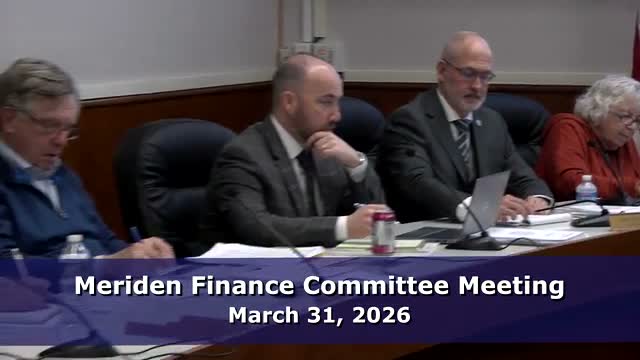
Meriden's Board of Education presented its FY 2627 budget request to the City Council's Finance Committee on Monday, asking for a 4.59% increase — roughly $6.3 million — to cover rising salaries, health insurance, special-education tuitions, transportation and technology costs.
"We have 13 schools, 8 elementary, 3 middle, 2 high schools that serve over 8,300 students," Board president Dr. Steve O'Dowen told the committee, framing the request against the district's student demographics and needs. He noted Meriden's high rates of students of color and multilingual learners and that 78% of students qualify for free or reduced-price meals.
Why it matters: district leaders said the combination of increasing special-education placements and higher vendor costs has driven the request. Superintendent Benigni told the committee that special-education enrollment has risen to about 23% of students and that the district is absorbing unanticipated costs this year — including a $1.1 million increase tied to bringing additional students into the district's STARS program.
"This year alone, we have an increase to our STARS program of 36 students," Benigni said. He contrasted per-student costs, saying in-district services run about $30,753 per student while placing a student in an outside program can cost roughly $127,000. "While this is an unanticipated $1,100,000 expense in our budget...it's still a savings to keep them in district of almost 3 and a half million dollars," he said.
The gap: the city manager's recommended budget funds a smaller increase, leaving an estimated $3.9 million shortfall relative to the BOE's request. Benigni warned of stark consequences if the board does not secure additional funding: "If we're short $4,000,000 you're closing schools," he said, adding that cuts would also mean larger class sizes and reductions in after-school programs and staff.
Board treasurer Annie Lopez Riddle summarized the revenue mix behind the budget: "Just over 60% of those resources come from state funding," she said, noting that staffing and tuitions account for roughly 82% of expenditures and that, when transportation and utilities are included, 94% of spending is committed.
Council questions and priorities: councilors pressed the BOE on what additional funds would buy. Councilor Jones asked what the district would prioritize with more money; Benigni listed smaller class sizes, more tutors, climate specialists, and subject-area coaches as immediate priorities. "Rather than our teachers, if they have 24 in a class...I'd add more tutors right away," he said.
Officials said the board has already identified 20 positions to eliminate, and that those reductions are expected to come largely through retirements and attrition. Administrators estimated the effect on elementary class sizes: several classes would rise into the low-to-mid 20s, with "none of them over 26" under current projections.
Capital requests and grants: the BOE also presented capital needs. A state grant was approved for an Edison School roof project (a roughly $3.0M grant against an estimated $4.1M project cost), and the committee heard about other CIP requests including a Washington Middle School cooling tower (estimated $425,000) and potential work at John Berry Elementary. Officials said some projects are contingent on obtaining special legislation or state approval.
State aid prospects and advocacy: multiple councilors and the mayor urged continued lobbying of the state for additional aid. Benigni and others described pending state proposals that could add between $1.7 million and $3.7 million under different bills, but they cautioned that final amounts remain uncertain.
Other operational notes: the board said it is pursuing in-district solutions where possible to avoid costly outplacements, and that transportation costs increased under a new contract with First Student; the district reported the contractor has recently improved performance but noted ongoing labor and contract risks.
What happens next: committee members pressed the administration and city manager to identify options and potential offsets before the final budget. The presentation concluded with a procedural adjournment vote.
Attribution: quotes and assertions in this report are attributable to the officials who spoke at the Finance Committee meeting and are cited by role: Dr. Steve O'Dowen (Board president), Superintendent Benigni, Annie Lopez Riddle (board treasurer) and council members who participated in the exchange.
Staff contact and documents: the committee asked to be provided the BOE's full presentation slides and budget details by email for follow-up review and final budget decisions.