Get Full Government Meeting Transcripts, Videos, & Alerts Forever!
Get email alerts on the Hoa Reform topic
No spam. Unsubscribe anytime.
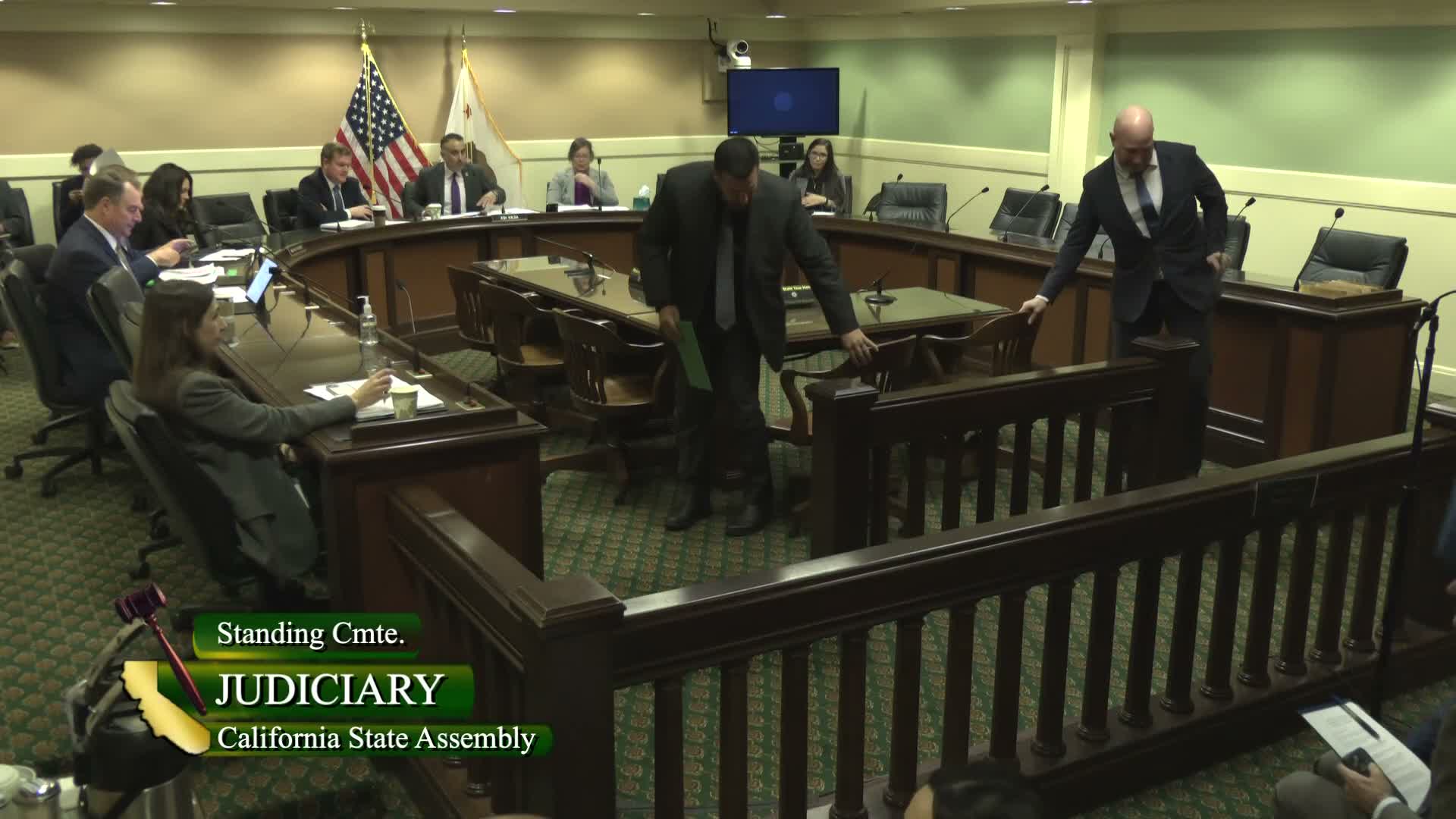
Assembly Judiciary Committee advances a slate of HOA reform bills on notices, reserves and fines
Summary
The committee advanced several homeowners‑association bills, including measures to protect homeowners’ access to air conditioning, require HOA reserve funding formulas, tighten notice and collection rules, and create a process to allow higher fines for serious health‑and‑safety violations; most bills passed as amended.
The Assembly Judiciary Committee on the morning agenda advanced a package of homeowners‑association bills addressing cooling access, reserve funding, collection notices and enforcement tools.
Assemblymember Ward presented AB 16 84 to prohibit homeowners associations from blocking homeowners from installing cooling systems that comply with building codes. Ward read a constituent account of having to obtain legal help to install a mini‑split system for a household member with a heat‑sensitive condition. Supporters said mini‑split systems are more energy efficient and can be necessary for health and safety. Louis Brown of the Community Associations Institute said the organization holds an “oppose unless amended” position over concerns about the Davis‑Sterling Act’s treatment of association property, shared wiring and utility capacity; Ward accepted amendments to clarify homeowner responsibility for damage and compliance with codes.
On reserve funding, Assemblymember Colosa’s AB 20 50 would require a formula and a six‑year ramp to reach sustainable reserve levels for common‑interest developments. Stacy Donnelly, a sponsor and CFO of a condominium management firm, said many associations are underfunded and that the bill would reduce surprise special assessments and preserve mortgage eligibility. Bank and insurer representatives testified in support.
The committee also moved AB 22 38 (addressing meritless 'failure to maintain' litigation against mobile‑home park owners) and AB 24 39 (strengthening notice requirements after changes in HOA payment processors). Authors and witnesses described real consequences when management or vendor changes left homeowners unaware of payment‑processor switches, resulting in liens and collections. Industry groups supported fixing notice gaps but objected to a blanket return‑receipt requirement and to personal liability for volunteer board members; committee members discussed alternatives such as indemnification or shifting liability to associations or management companies.
Petrie‑Norris’ AB 25 79 would let the Department of Real Estate establish a public process to define when HOAs may assess fines above the $100 cap for serious health‑and‑safety matters; supporters said the earlier $100 cap had unintended consequences for enforcement of real safety violations. The committee passed the HOA bills as amended or moved them forward on consent when appropriate.
What happens next: Most of the items were passed by the committee as amended and either sent onward or included on the consent calendar for floor action or further committee consideration. Authors said they welcome additional stakeholder conversations to refine technical language.
Votes at a glance: The committee recorded motions and “passed as amended” dispositions on multiple HOA bills during the hearing.