Get Full Government Meeting Transcripts, Videos, & Alerts Forever!
Get email alerts on the Promise Neighborhoods topic
No spam. Unsubscribe anytime.
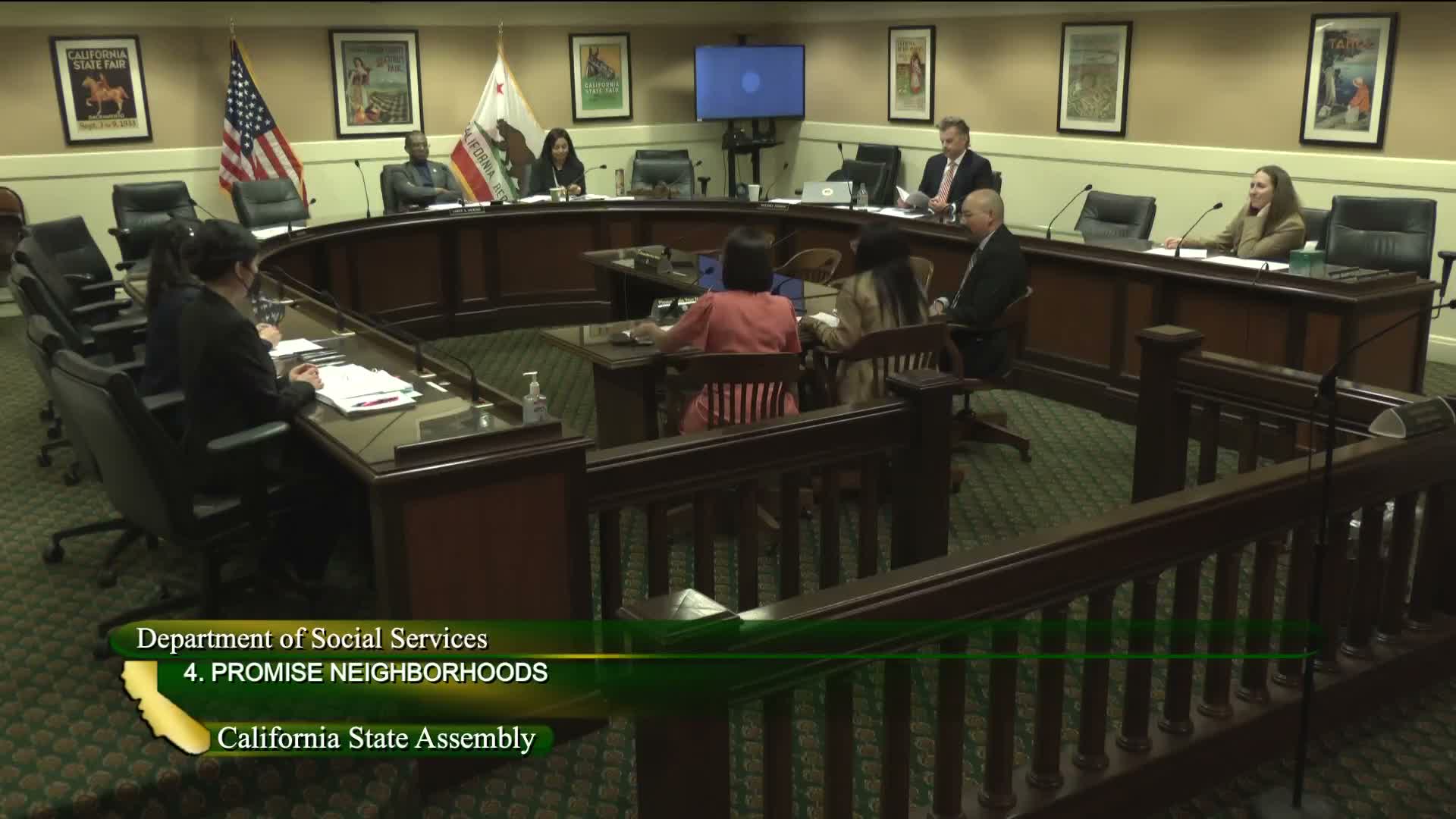
Advocates urge $200 million state incentive to preserve Promise Neighborhoods after federal cuts
Summary
Advocates and practitioners told the subcommittee the Promise Neighborhood place‑based model yields strong returns and outcomes and urged state investment and AB 1969 to prevent program closures after federal reductions; evaluation cited a near‑4:1 return on investment.
Advocates and Promise Neighborhood leaders urged the Assembly subcommittee to protect and expand place‑based cradle‑to‑career infrastructure that coordinates education, health and family supports at the neighborhood level.
Shemeika Gaskins of In Child Poverty California described the statewide network and said independent evaluation by RTI International showed "almost a 4 to 1 return on investment." Gaskins and Edgar Chavez (Hayward Promise) said local partnerships have delivered measurable improvements — including reductions in chronic absenteeism and gains in kindergarten readiness — and warned that federal funding cuts had already forced Hayward to close programs and eliminate staff.
Gaskins said she and Assemblymember Mia Bonta are working on AB 1969, a proposal to allocate $200 million in unappropriated community school funding as incentive grants to deepen partnerships between community schools and Promise Neighborhoods. Panelists argued the state investment would help leverage private philanthropy and sustain local infrastructure at risk after federal divestment.
Committee members asked for evaluations, best practices and technical assistance to craft trailer‑bill language; the subcommittee indicated interest in institution‑building rather than short‑term program funding.