Get Full Government Meeting Transcripts, Videos, & Alerts Forever!
Get email alerts on the Calfresh Implementation topic
No spam. Unsubscribe anytime.
Assembly subcommittee presses state agencies on CalFresh exemptions and county workload as HR 1 nears
Summary
Lawmakers pressed CDSS, DHCS and county officials about automation and timelines to apply exemptions before a June 1 start of federal HR 1 CalFresh time limits, and asked for written timelines, county‑level impact breakdowns and immediate county supports to avoid wrongful disenrollments.
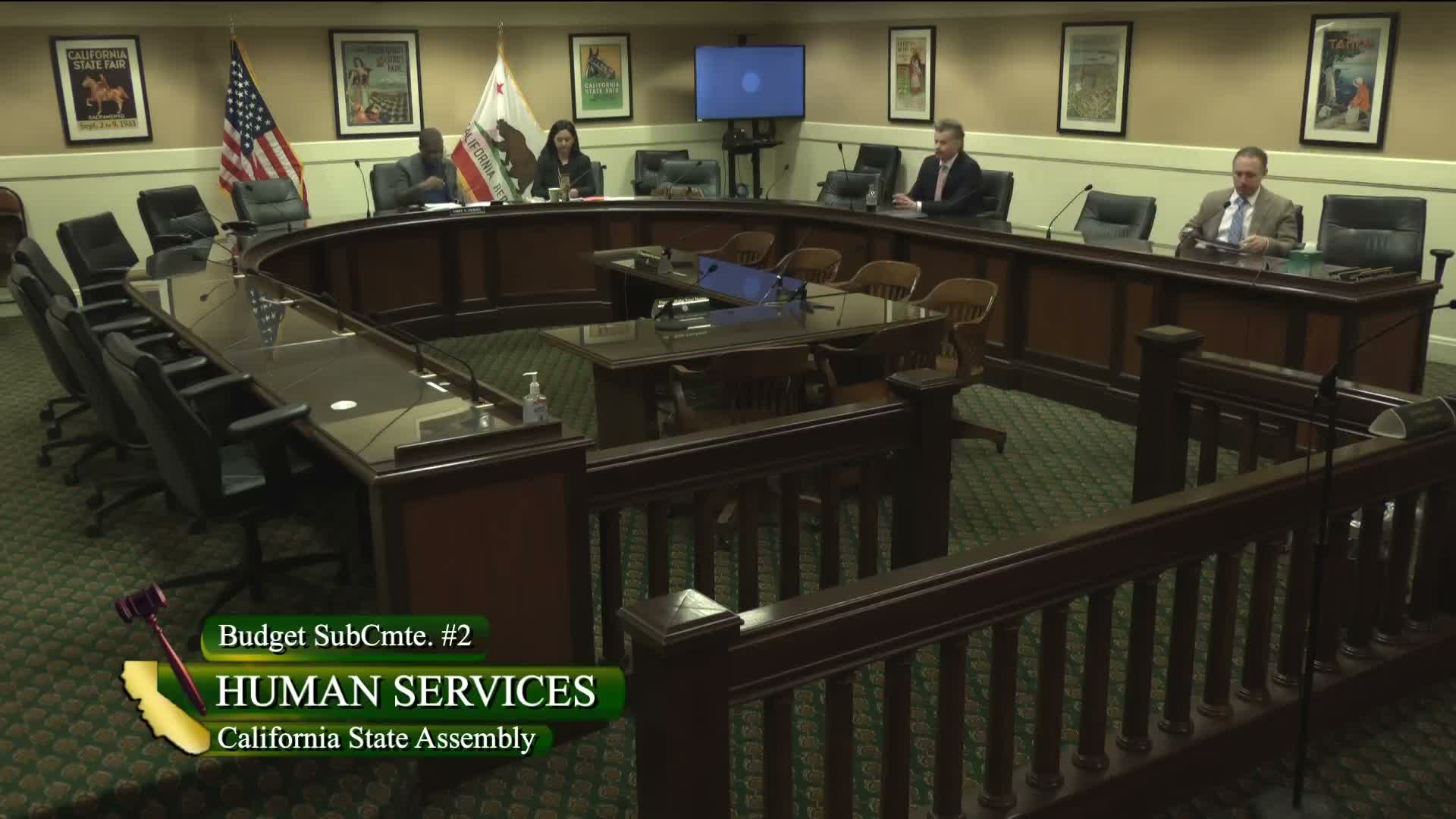
Assemblymember Jackson convened the Assembly Budget Subcommittee on Human Services to press state agencies for concrete plans to shield Californians from the effects of federal HR 1, which he warned could cause widespread hunger if not mitigated. "Make no mistake, we are under the threat of mass hunger," the chair said as he opened the hearing.
Alexis Fernandez Garcia, Deputy Director at the California Department of Social Services, told the subcommittee the administration is using administrative data to establish exemptions and estimated "about two thirds of adults ages 18 to 64 are already known to be exempt." CDSS identified roughly 955,000 adults who may be subject to the federal three‑month time limit, and said an initial administrative match could exempt about 200,000 of that group. CDSS told lawmakers it expects to have the new exemption data loaded into the CalSAWS eligibility system by mid‑August so exemptions can be applied before the first possible discontinuance in October.
Michelle Boss of the Department of Health Care Services said Medi‑Cal work and community engagement rules will phase in later and that DHCS expects to have automated exemptions ready for their implementation window in January–March 2027. Both agencies said their work depends on data‑sharing agreements, programming rules and testing to ensure exemptions are applied accurately.
County representatives pressed for staffing and outreach dollars. Carlos Marquez of the County Welfare Directors Association said county experience shows "there is no substitute for high‑touch individualized worker‑driven client engagement," and warned that without multi‑year funding counties will struggle to screen households and prevent procedural discontinuances.
Lawmakers repeatedly requested written timelines, client‑facing materials and a county‑by‑county breakdown of expected impacts so legislative offices can prepare constituent assistance and target resources. CDSS said it would provide existing client‑facing FAQs immediately and follow up with a written plan and timeline.
The hearing did not include any votes. The subcommittee directed agencies to provide technical details and trailer‑bill feedback before the May revision and requested iterative data reporting on disenrollment and exemption application as implementation proceeds.