Get AI Briefings, Transcripts & Alerts on Local & National Government Meetings — Forever.
Senate committee advances bill to bar social media accounts for under-16s amid split testimony
Summary
The Senate Labor and Commerce Committee on May 1 advanced a committee substitute for SB 262, which would bar Alaskans under 16 from holding social media accounts and limit algorithmic targeting of under-18s. Supporters cited youth mental-health harms; industry groups warned of constitutional and privacy risks.
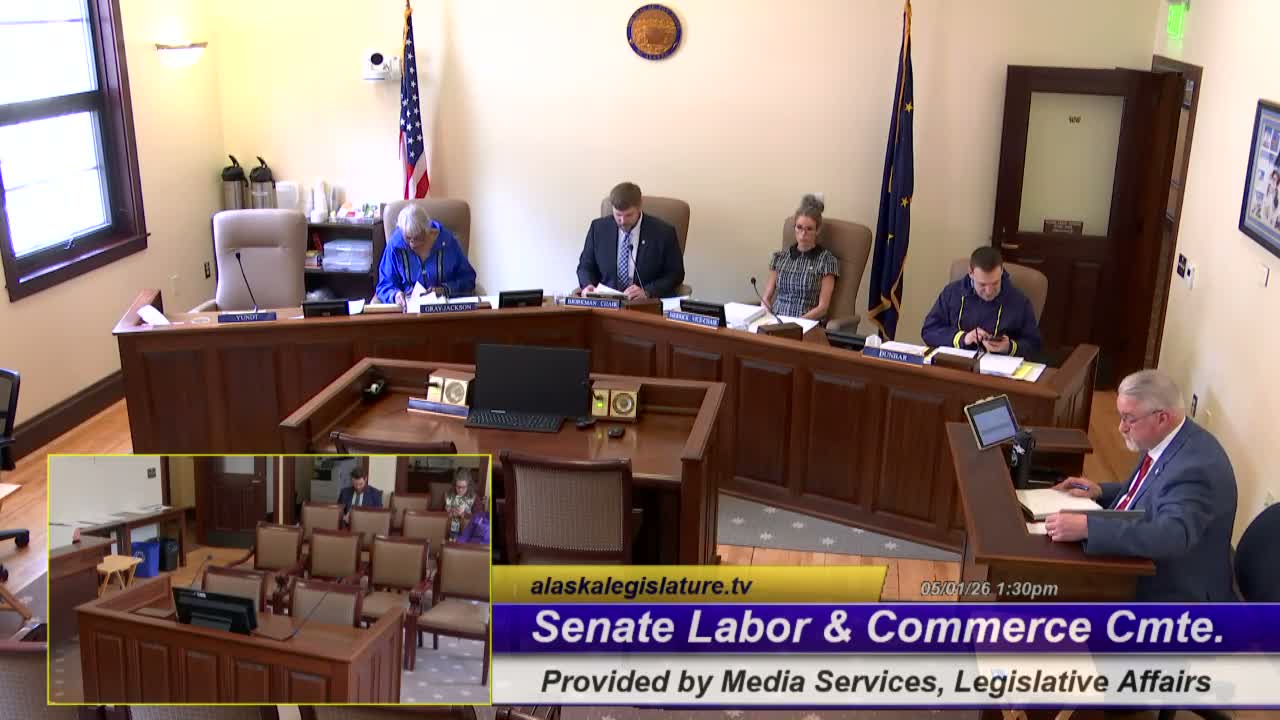
The Alaska Senate Labor and Commerce Committee advanced a committee substitute for Senate Bill 262 on May 1 after hearing hours of testimony for and against the measure.
Senator Bjorkman, chair of the committee, opened the hearing and asked staff to recap the bill. Laura Asha, staff to Senator Bjorkman, said the bill would prohibit social media companies from allowing Alaskans under 16 to have accounts and would bar companies from pushing content to Alaskans under 18. She also said the bill would give the attorney general and harmed minors statutory recourse against platforms that knowingly or recklessly allow minors on their services.
Supporters told the committee that heavy social-media use is linked to worsening youth mental health and other harms. "Social media is a leading driver of youth mental health issues," said Jeffrey D'Lesca, an attorney and youth advocate from the Kenai Peninsula, who cited Pew Research Center, Common Sense Media and CDC findings and described local incidents of cyberbullying and predation. Noah Shields, a licensed marital and family therapist, said clinicians in Alaska are seeing "increasing levels of anxiety, depression, dysregulation, and relational disconnection among youth" that correlate with excessive screen use.
Opponents representing industry and trade groups urged the committee to reject the ban or pursue narrower options. "First, it is unconstitutional," said Amy Boss, vice president of government affairs for NetChoice, citing Supreme Court protections for minors' speech and pointing to state laws that have been blocked or enjoined. Boss also argued that enforcing a blanket age ban would require broad age verification that risks creating a centralized repository of sensitive data. Aiden Downey of the Computer and Communications Industry Association echoed those constitutional and operational concerns and advocated parental-empowerment and education over outright bans.
Committee members questioned witnesses about Alaska-specific incidents and legal risks. Committee staff and witnesses pointed to recent litigation and jury findings in cases referenced during testimony; witnesses said the constitutionality of broad age bans is uncertain but that precedent and emerging cases provide some avenues for defense.
After public and invited testimony, a committee member moved to report the committee substitute for SB 262 from the committee "with individual recommendations and the attached $0 fiscal note." The motion was made without objection and the substitute was reported out of committee.
The committee will carry the committee's recommendation and fiscal note forward; any further steps, including floor action or judicial challenges, would follow the normal legislative process.