Get Full Government Meeting Transcripts, Videos, & Alerts Forever!
Get email alerts on the Budget Language Charter Capital topic
No spam. Unsubscribe anytime.
Members flag budget-language problems and question capital outlay awards to private and charter entities
Summary
Members raised concerns that budget language can be altered in later finance processes, potentially undoing committee intent; the committee also questioned capital outlay entries listing private recipients and discussed differences between locally authorized and state-authorized charter schools.
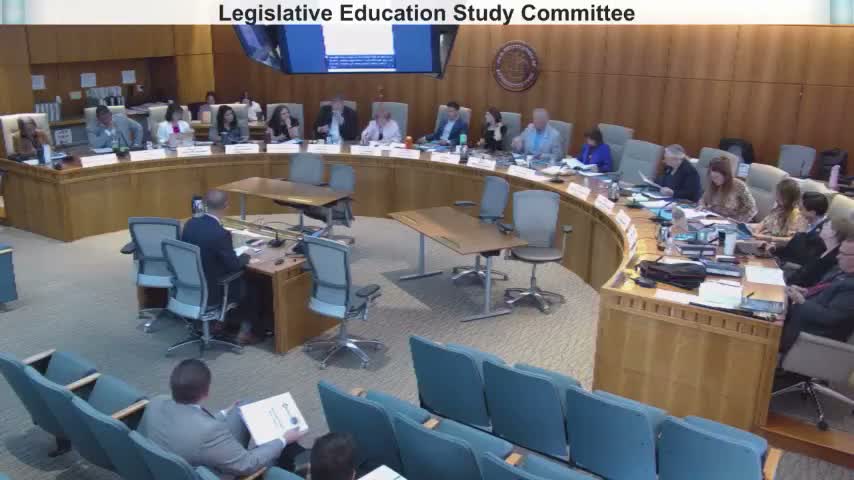
Committee members used the April 30 interim meeting to press staff on how budget language and capital outlay allocations are tracked and to raise potential eligibility and legal concerns.
Representative Joey Garrett said the committee needs better oversight of budget language, citing a past instance tied to House Bill 130 that altered school scheduling rules and later had language removed. "We really need to have a grip on the language in the budget," Garrett said, arguing that members and staff must ensure policy intentions survive amendments during the appropriations process.
John Cena, staff director, acknowledged the problem and committed to earlier coordination with appropriations and finance committees. Cena told members staff tries to draft language that clarifies intent and said he would work with members during the interim to vet language before it moves through other committees.
Members also questioned entries on a capital outlay table that listed "private" recipients. A member asked why a private entity would appear on a public capital outlay list; Cena said some allocations are the result of member-directed junior appropriations and that state charter schools have different mechanics for capital funding.
Cena explained the distinction between locally authorized charter schools, which receive budget flows through their local district, and state-authorized charter schools, "state charters," which are authorized by the Public Education Commission and act as their own local education agency for budgeting and renewal. He noted state charters cannot levy taxes and therefore have fewer sources for capital outlay funding, which can drive members to seek capital support through junior allocations.
Senator Brown raised a constitutional concern, saying some line items listing private recipients would violate the anti-donation clause and that the governor vetoed particular entries for that reason. "It would be a violation of the anti donation clause," Brown warned. Cena said staff regretted the oversight of including ineligible entities on the table and reiterated that some allocations stem from member decisions.
The committee requested that staff provide follow-up information on which capital outlay requests were vetoed and to clarify the mechanics by which state-charter facilities receive capital funding. Members said they expect the LESC to help ensure legislative intent is visible in final budget documents and to flag eligibility issues earlier in the process.
The committee recessed for a short break and planned to return to the agenda after distribution of materials and staff follow-up.