Get AI Briefings, Transcripts & Alerts on Local & National Government Meetings — Forever.
Parents and advocates urge LESC to study classroom screen use and pause AI tools for young learners
Summary
Parents and advocacy groups told LESC that classroom screen time, AI assessment tools and student data collection demand a careful study and stronger guardrails; multiple public commenters described privacy concerns and unproven learning benefits from platforms (referred to as Amira/Emera/AMIRA).
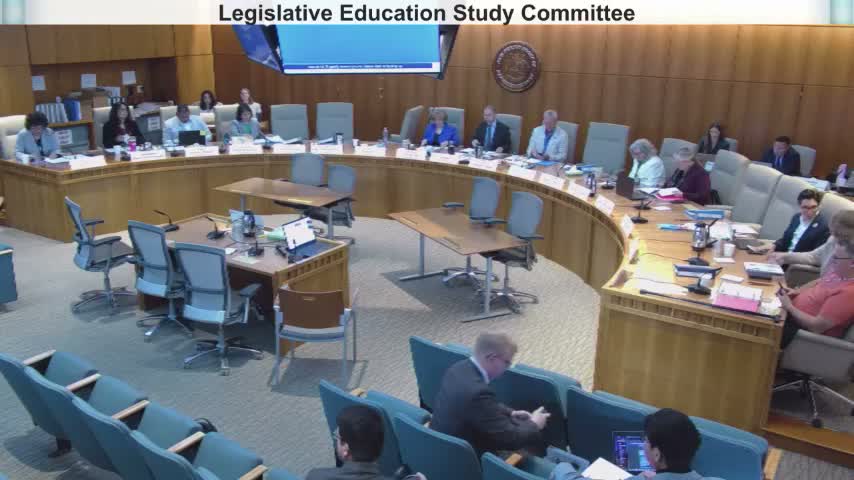
Several parents and advocacy groups used the LESC public‑comment period to press the committee to study and limit classroom screen time and to scrutinize AI assessment tools being used with elementary students.
Amanda Tupac, a parent of three Albuquerque children, asked the committee to consider not only funding amounts but the timeline districts face to implement special‑education plans and staffing: “That leaves everyone scrambling instead of being thoughtful,” she said, urging stability for students and staff.
Advocates with the Disability Coalition and BoostNM urged continued oversight of special‑education implementation and demanded deeper review of the assessment platform discussed in the hearing. Jim Jackson of the Disability Coalition highlighted Senate Bill 64 and other special‑education bills passed this session and urged the committee not to “lose track” of implementation outcomes.
Janet Resnick Wandel of BoostNM raised data‑privacy and AI concerns and cited recent research indicating risks of generative AI for students. “The influence of tech companies that have peddled their products for use in public education should be regarded with careful scrutiny,” she said.
Multiple commenters described a specific classroom tool variously named during the hearing (Emera, Amira, AMIRA). Parents recounted instances of students hearing voice prompts and feeling uncomfortable; one parent said her child described the tool as “creepy.” Advocates asked for parental notification, explicit consent where student voice or facial data is recorded, and a moratorium on AI in elementary classrooms until studies and guardrails are in place.
A child speaker, Ira (age 6), gave a brief statement about enjoying PE, art and recess, which committee members highlighted as an example of student perspective during policymaking.
Committee staff said the interim work plan includes a study of screen use and that members welcome continued public input during the interim review process.