Get Full Government Meeting Transcripts, Videos, & Alerts Forever!
Get email alerts on the Catastrophe Savings Accounts topic
No spam. Unsubscribe anytime.
Committee hears proposal to create tax-free catastrophe savings accounts for homeowners
Summary
AB 17 26 would allow California homeowners to create tax-advantaged catastrophe savings accounts to cover mitigation and recovery costs after wildfires, floods or earthquakes; the measure drew support from insurers and bankers and opposition from the California Teachers Association and was referred to the committee's suspense file.
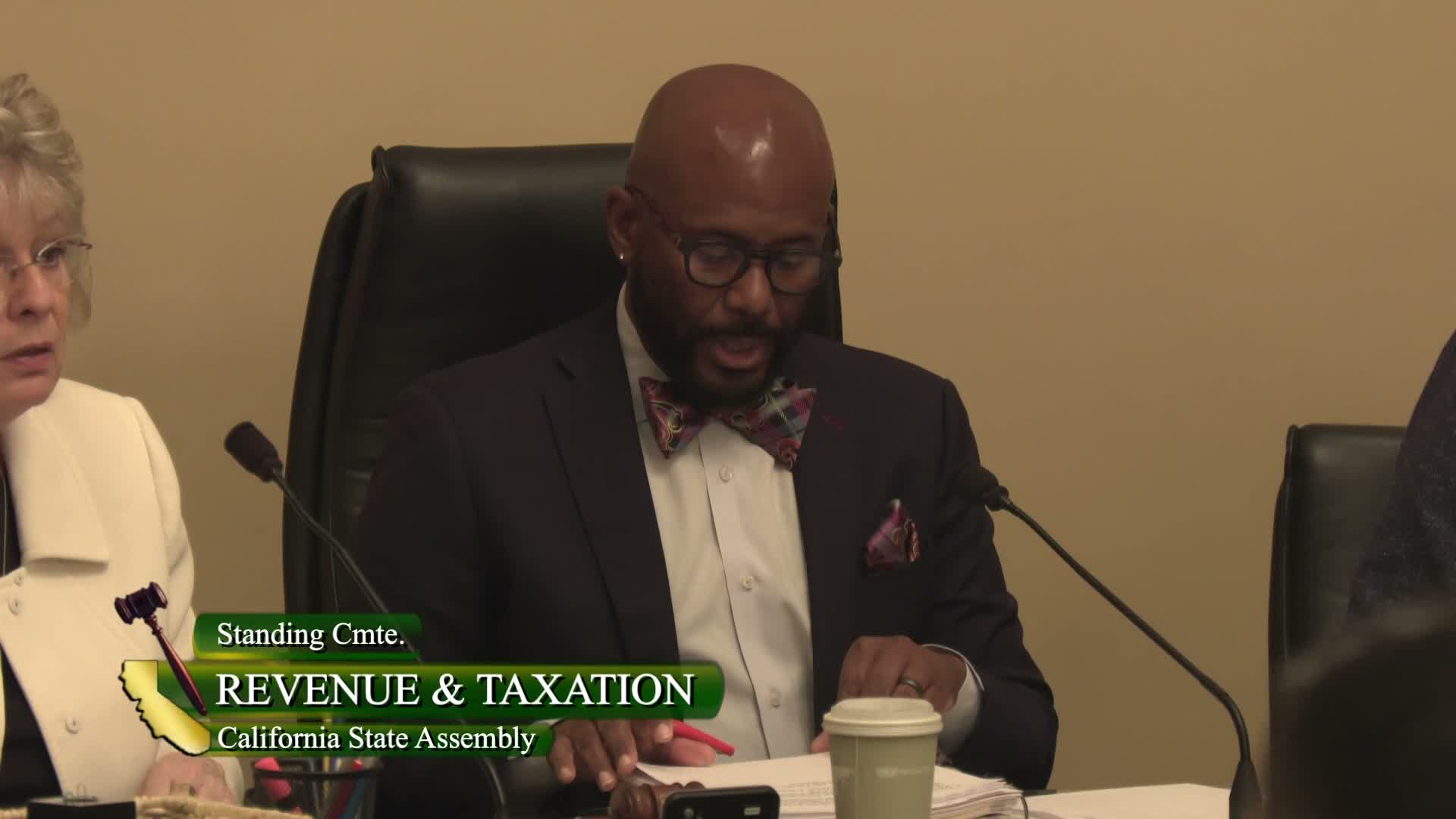
The Assembly Committee on Revenue and Taxation heard testimony on AB 17 26, a bill presented as a tool to help homeowners save for disaster mitigation and recovery costs.
A witness supporting the measure said the accounts would let homeowners contribute pre-tax dollars at local banks or credit unions and that interest would be tax exempt. "This bill seeks to provide Californians a new tool to protect their homes and accelerate their recovery," the witness said, citing wildfire, earthquake and flood risks. Claudia Milnedtner of the California Department of Insurance described the accounts as similar to health savings accounts and said they would help households pay mitigation upgrades and insurance deductibles.
Chris Schultz of the California Bankers Association told the committee that catastrophe savings accounts "check this box" for modest tax incentives that encourage practical mitigation and recovery planning.
Representatives of the California Teachers Association raised fiscal concerns. Michelle Warshaw said the association respectfully opposed the bill because "tax expenditures reduce the overall general fund that then reduces the amount going to schools through Prop 98."
Chair (speaker 3) told authors and witnesses the bill would be referred to the committee's suspense file for further consideration.
The committee took no floor vote on the bill during the regular-order portion and referred it to suspense for later action.