Get Full Government Meeting Transcripts, Videos, & Alerts Forever!
Get email alerts on the Public Safety topic
No spam. Unsubscribe anytime.
Tempe hears heated public testimony as council introduces nuisance-code amendment tied to repeated private distributions
Summary
The city attorney proposed adding a codified nuisance definition to let Tempe enforce recurring private distributions that are tied to criminal activity and substantially interfere with neighboring properties; residents near Daly Park urged action while mutual-aid groups and legal critics warned the language is broad and risks criminalizing charitable aid. A second hearing is set for May 14.
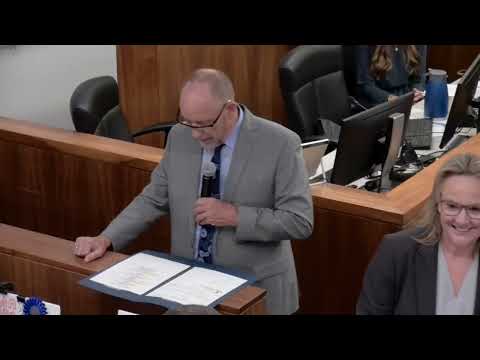
The City Attorney explained a proposed amendment to Tempe’s nuisance code that would add a narrowly worded definition to address recurring private-property activities that spill over and generate crime or repeated public-offense conditions in adjacent neighborhoods.
Under the proposed text, three conjunctive elements would need to be proven for a nuisance finding: a regularly occurring distribution of food, goods or merchandise on private property; a demonstrable tie between that distribution and criminal or other public-offense activity in the neighboring area; and a showing that those off-site effects substantially interfere with the use and enjoyment of neighboring property. The attorney said the language is grounded in Arizona case law and that codification would provide the city’s code-enforcement and court process with a clear tool to address persistent problems.
Testimony at the public hearing split sharply along local lines. Multiple Daly Park residents described escalating problems they link to regular feedings and outreach there: drug paraphernalia and used needles in park areas, public defecation, aggressive behavior, vehicle break-ins and a perceived presence of drug dealing near repeated distribution sites. "This is a crisis level," one neighborhood speaker said, urging the council to adopt the code amendment so property owners and event organizers can be held accountable.
Faith-based organizations and mutual-aid volunteers urged caution. Speakers from several congregations and outreach groups said they provide food, clothing and referral services, and argued the proposed text is overly broad and could restrict constitutionally protected expressive activity and religious ministry. Legal commenters and advocacy groups highlighted potential conflicts with state law and constitutional protections, said the text lacks objective thresholds for enforcement, and warned of equity and ADA risks if enforcement disproportionately affects people experiencing homelessness or disability.
City staff noted outreach and said an information session is scheduled (May 5 virtual at noon and 6 p.m. at the Pyle Center) and a second public hearing will be held May 14. The proposal remains in the introduction stage; no adoption vote occurred on May 1.
Why it matters: The amendment would give Tempe an explicit local tool to address repetitive private-property distributions that have measurable public impacts on nearby properties, but stakeholders warn it could chill essential charitable work unless carefully narrowed and paired with services to address root causes.