Get Full Government Meeting Transcripts, Videos, & Alerts Forever!
Get email alerts on the CalFresh Food Restrictions topic
No spam. Unsubscribe anytime.
Heated committee debate over banning sugary drinks and candy from CalFresh ends without a motion
Summary
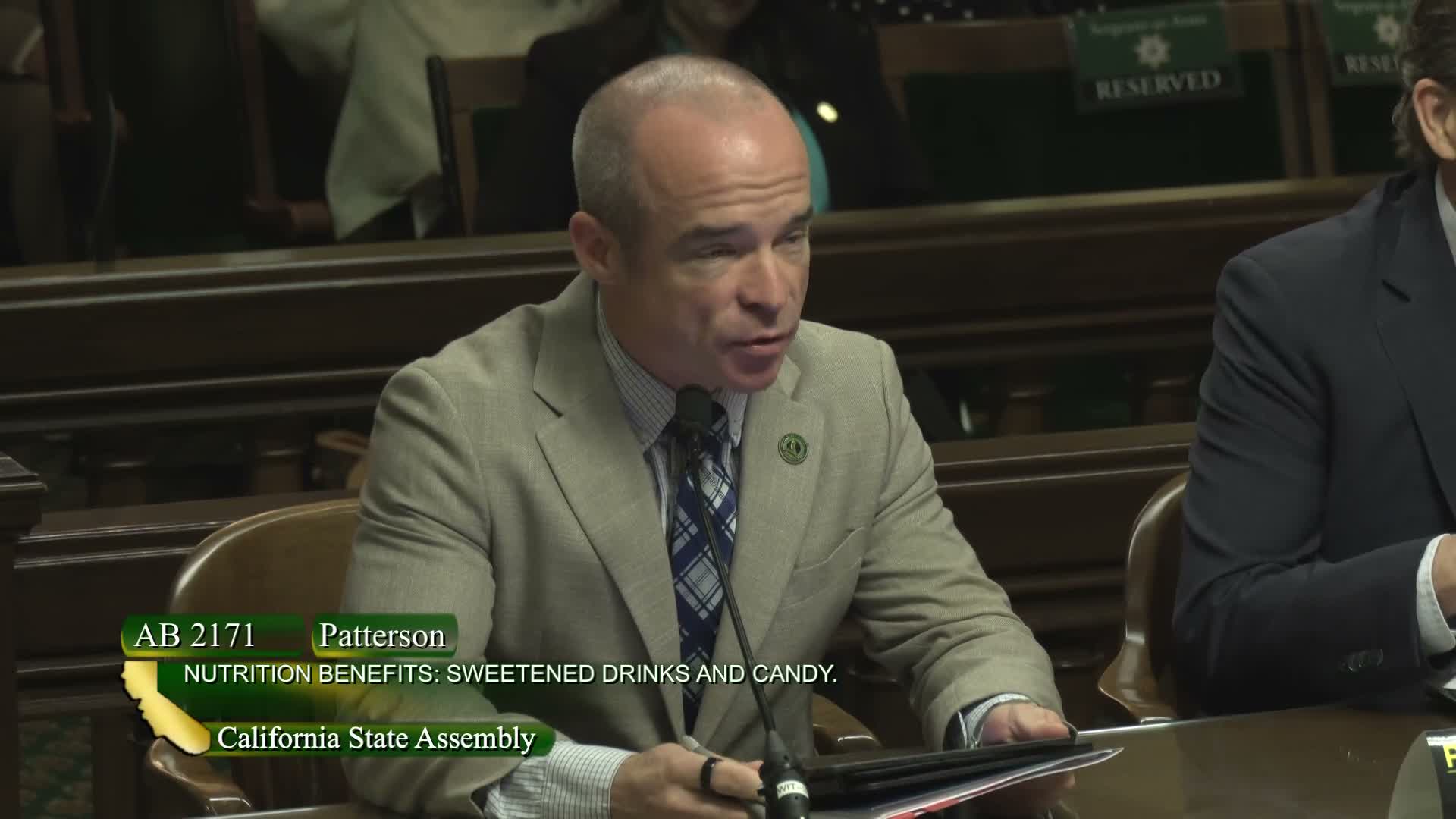
AB 2171, which would prohibit CalFresh benefits from buying sweetened beverages and candy, drew medical groups in support and a broad coalition of food banks, grocers, retailers and legal advocates in opposition; the author did not call for a motion after members questioned legal and operational feasibility.
Assemblymember introduced AB 2171 to prohibit the purchase of sweetened beverages and candy with CalFresh (SNAP) benefits. The author framed the bill as a preventive public‑health measure, and medical organizations including the California chapter of the American College of Cardiology and the California Podiatric Medical Association testified in support, citing links between sugar consumption, diabetes and long‑term cardiovascular harm.
Opponents were numerous and included the Western Center on Law and Poverty, California Association of Food Banks, grocer and retailer associations, the National Confectioners Association and labor and community groups. Opposition testimony emphasized that CalFresh is the state's largest anti‑hunger program, that restricting benefits risks stigma, may contradict state law that directs maximizing available food choices for recipients, and that USDA waiver authority for such restrictions is uncertain and currently the subject of federal litigation.
Grocers and independent retailers warned of operational complexity—checkout systems and point‑of‑sale classifications do not reliably identify sugar levels or candy categories—and of costly system upgrades and customer disputes. Anti‑hunger and legal advocates said evidence shows restrictions alone do not improve diets and could reduce program effectiveness; they urged investments in incentives, education and access instead.
Committee members pressed the author on evidence and implementation; some sympathized with the health goals but expressed concern about stigma and feasibility. The author said she was open to amendments and to working with stakeholders but did not request a committee motion; the matter did not advance at today's hearing.