Get Full Government Meeting Transcripts, Videos, & Alerts Forever!
Get email alerts on the Climate Liability topic
No spam. Unsubscribe anytime.
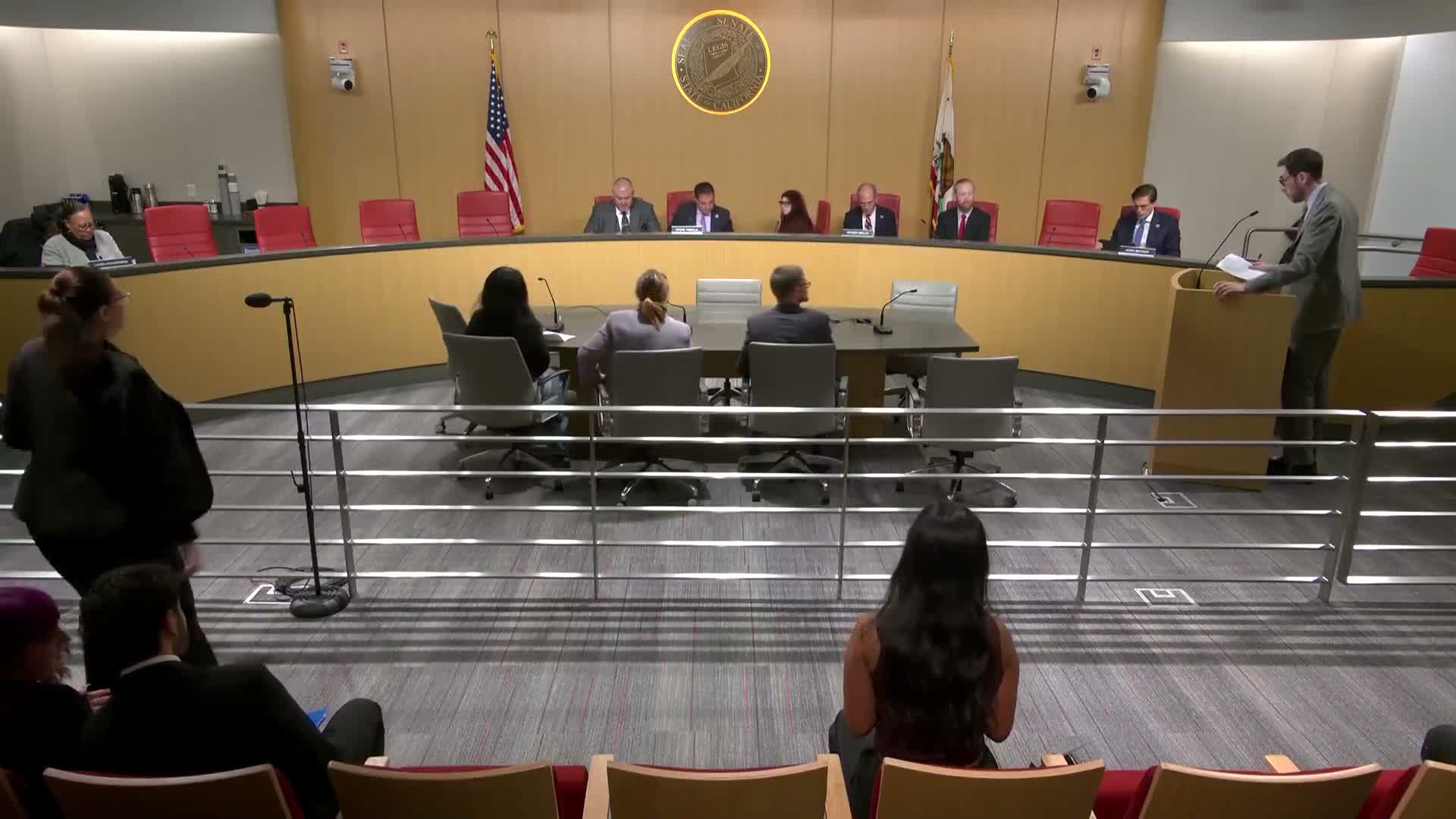
Wiener’s polluter‑liability bill draws heated debate as senators consider narrow amendments
Summary
SB 9 82 would let the attorney general seek recovery from major fossil fuel companies for climate‑attributable portions of extreme disaster costs to the FAIR plan and private policyholders; backers said it targets large events and includes credits for verified emission reductions, while business groups, trades and industry warned of legal, economic and process risks.
Sen. Wiener described SB 9 82 as a narrowly tailored measure to hold large fossil fuel companies accountable for the portion of extreme disaster costs attributable to climate change. The bill would authorize the attorney general to sue covered entities for climate‑attributable damages affecting the FAIR plan and private policyholders and would allow companies to reduce their exposure by demonstrating verifiable emission reductions (with a crediting mechanism).
Supporters framed the measure as a fairness and financing mechanism: testimony from flood and fire survivors and climate economists (including Professor Fran Moore) argued that climate‑amplified disasters have imposed large costs on homeowners, taxpayers and the FAIR plan and that targeted recovery from companies responsible for a measurable share of emissions is an appropriate remedy. The author said amendments taken in a prior committee would narrow the measure to large companies, extreme events and damages linked to climate attribution, and that credits for emission reductions would begin accruing before liability takes effect.
Opponents from trade associations, the building trades, the Chamber of Commerce and petroleum interests called the bill legally risky, potentially destabilizing for energy and construction jobs, and procedurally rushed; some witnesses warned it could be functionally equivalent to joint and several liability and would invite litigation. Several members expressed concern that late, conceptual amendments were discussed orally the prior evening and not available in print, complicating committee review.
Senators pressed a mix of policy and process questions, including (1) how a court would calculate a company’s proportional climate contribution, (2) whether credits tied to emission reductions should be limited to California programs that produce direct local environmental benefits, and (3) whether the bill’s scope and remedies would survive likely federal preemption challenges. The author and technical witnesses said methodologies would be litigated and supported by expert testimony and that the bill had been narrowed from broader earlier versions.
The committee moved the bill to Appropriations as amended; given the breadth of opposition and constitutional and procedural questions, the bill’s future will depend on floor negotiations, potential redrafting and possible legal challenges.