Get Full Government Meeting Transcripts, Videos, & Alerts Forever!
Get email alerts on the Emergency Communications topic
No spam. Unsubscribe anytime.
Emergency Communications director pushes in-house Emergency Medical Dispatch and wins approval for two dispatch positions
Summary
Director David Boyce outlined plans to implement Emergency Medical Dispatch in-house starting July 1, 2026, estimated an up-front implementation cost (~$78,000) and ongoing maintenance (~$23,000), and the personnel committee approved two additional dispatch positions to meet minimum staffing and support EMD.
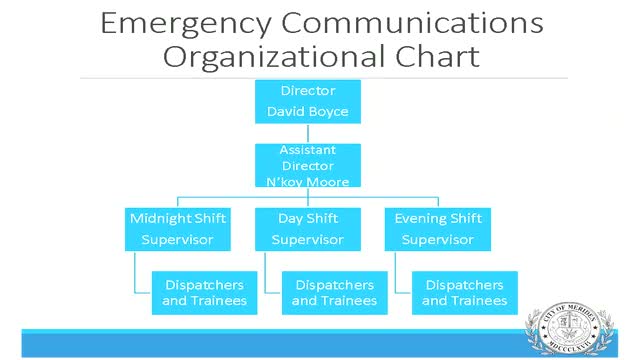
Director David Boyce gave the emergency communications presentation and described staffing, system upgrades and an in-house Emergency Medical Dispatch (EMD) proposal. He said the department currently has 14 clear dispatchers, two part-time dispatchers and two trainees and is requesting two additional full-time positions to reach a staffing complement that would allow the city to operate EMD without heavy overtime.
Boyce said adopting EMD in-house (mandatory to meet state protocols for medical call protocols) would improve triage and reduce unnecessary fire responses: "This will allow the fire department to be available for calls that they are truly needed for," he told the committee. He said state funding for EMD is expected to increase "from 12,000 to a minimum of $219,000 annually," which would offset much of the ongoing personnel and overtime cost after initial implementation.
Implementation costs for the first year were presented as just under $78,000 (one-time); combined maintenance costs across police, fire and emergency communications thereafter were estimated at about $23,000 annually. Boyce said the state requires dispatcher certification for EMD (Public Act 151, 2004) and that Meriden's dispatchers are certified though the program has not been used in-house until now.
Councilors asked how EMD would affect the existing contract with Hunter's Ambulance Service. City staff said the Hunters contract expires June 30 and the city expects to renegotiate scope and costs as some medical-call processing shifts to the city. Councilors also sought metrics to quantify how many medical calls would be downgraded from a fire response; Boyce and Fire Chief Christina Sheck said they had begun tracking injuries and call types and agreed to expand metrics to measure EMD impact after implementation.
In the personnel-only part of the meeting members voted in favor of adding two full-time dispatcher positions to the emergency communications complement to help operate EMD and reduce overtime; the motion carried by voice vote.