Get Full Government Meeting Transcripts, Videos, & Alerts Forever!
Get email alerts on the Land Use topic
No spam. Unsubscribe anytime.
Planning director urges research, consultant briefing as commissioners consider data centers and battery storage moratorium
Summary
Planning director Amanda Webb briefed commissioners on data centers and battery energy storage systems, citing water, energy and fire-safety concerns and urging more study. Commissioners agreed to seek more information and staff said a temporary moratorium resolution will be brought forward for consideration.
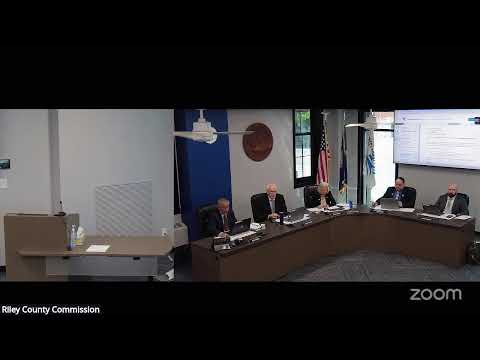
Amanda Webb, Riley County planning director, told the Board of County Commissioners during its May 4 meeting that she has gathered “middle‑of‑the‑road” resources to start local conversations about data centers and battery energy storage systems and recommended further technical briefings before any permitting decisions.
Webb said communities nationwide have taken many approaches—permitting some data centers, imposing moratoria or adopting bans—and that Riley County can set local standards in the absence of comprehensive state or federal regulations. She flagged two primary local concerns: water use and energy demand. "Water and energy are… some of the bigger questions," Webb said, noting cooling systems vary and that some jurisdictions require operators to supply their own water or conduct water‑use studies.
Commissioners raised site suitability, noise and agricultural impacts. One commissioner warned that high decibel levels and large footprints could affect nearby farming operations; another asked whether data centers could rely on on‑site solar instead of drawing county power. Webb suggested the county consider standards such as separation distances, production of on‑site water, and water‑use thresholds tied to permitting.
Webb also noted that batteries—battery energy storage systems (BESS)—pose distinct risks, particularly fire concerns, and should be addressed alongside data centers in any local code. She recommended inviting a consultant she and Commissioner Ford previously met to give a more technical presentation to the commission.
Commissioners and staff discussed next steps. One county official said a moratorium is being drafted so the board can “hit that 6 month” period and have time to develop code; the staff lead indicated the moratorium will be brought forward for formal consideration. Webb said she will coordinate a consultant briefing and circulate a white paper from Sedgwick County and other resources to the commissioners.
What happens next: staff will circulate the consultant materials Webb referenced and schedule a technical presentation. County staff signaled intent to present a moratorium resolution for the board’s consideration so the county can draft regulatory options before any permit applications arrive.