Get Full Government Meeting Transcripts, Videos, & Alerts Forever!
Get email alerts on the Housing topic
No spam. Unsubscribe anytime.
Glendale council accepts RHNA progress report after staff flags zero moderate‑income permits
Summary
Councilors and staff reviewed Glendale’s sixth-cycle RHNA progress, heard that no moderate‑income permits have been issued so far, and accepted a progress report by unanimous roll call; staff said ADUs account for a large share of recent production.
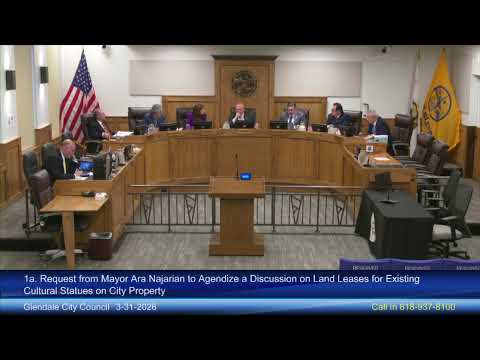
Councilors on the Glendale City Council voted unanimously on March 31 to accept a progress report on the city’s sixth‑cycle Regional Housing Needs Allocation, after staff told the council the city has issued no building permits for moderate‑income housing so far in the cycle.
The report, discussed at length during public questioning and staff presentation, showed roughly 2,317 permitted units to date in the cycle and staff said accessory dwelling units have been a major contributor: “In 2024, we had 288 building permits for ADUs,” staff said, and across the RHNA period staff estimated roughly 900 ADU permits. Council member Garpetian raised a separate affordability tally the report lists — about 7,851 low, very‑low and moderate units among a total RHNA of approximately 13,400 — and calculated the city’s estimated per‑unit investment to produce 100% deeply affordable units at roughly $135,000–$145,000 per unit. Garpetian said that delivering the full low/moderate target by relying on city investment alone would imply an order‑of‑magnitude cost of more than $1.1 billion.
Staff told the council that moderate‑income housing is typically the most difficult affordability level to achieve and reiterated that many market factors — land costs, labor and materials costs and interest rates — constrain production despite local regulatory and streamlining efforts. The staff presentation also noted that Glendale’s rate of progress is comparable to neighboring jurisdictions in Los Angeles County.
Mayor Arun Najarian and several council members urged that future staff reports include comparative charts showing peer cities’ progress to clarify how much of the shortfall reflects regional market conditions rather than local policy. Council members also asked staff for an air‑quality comparison from 1995 to the present for the city’s optional air‑quality element and for a future analysis of local levers that could increase missing‑middle and ownership housing production.
The council moved to accept the progress report; the motion passed on a roll call with all councilors recorded as voting yes. The council did not adopt any new regulations at the meeting; staff indicated they will continue to monitor pipeline projects and return with additional information and comparative metrics.