Get Full Government Meeting Transcripts, Videos, & Alerts Forever!
Get email alerts on the Board Orientation And Ethics topic
No spam. Unsubscribe anytime.
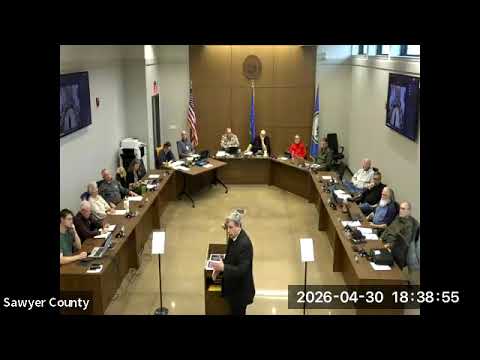
Attorney briefs Sawyer County supervisors on duties, ethics and open-meeting rules
Summary
A visiting attorney told Sawyer County supervisors that their legislative powers derive from Chapter 59 of the Wisconsin statutes and stressed duties including preparedness, confidentiality, fiscal oversight and limits on administration; he also warned about social-media risks and practical open-records procedures.
Steve Sorensen, an attorney who described himself as a long-time municipal counsel and the temporary city attorney for Rhinelander, spent the bulk of the meeting outlining what supervisors may — and may not — do as a county board.
Sorensen told the board that the county's powers are statutory: "Your powers as a board are defined by chapter 59 of the Wisconsin statutes," he said, and urged supervisors to rely on both state law and the county's own ordinances when setting policy. He emphasized that supervisors are legislators "only when you're in this room" and that administration of programs rests with hired staff and the county administrator.
He laid out several recurring responsibilities: be prepared for meetings, be on time, respect colleagues, maintain confidentiality for closed-session information and exercise leadership in the community. "Anything that you receive in confidence, you must keep in confidence," he said, and warned that repeated disclosure or social-media attacks could become ethics violations.
On ethics and conflicts of interest, Sorensen said formal rules typically cover voting conflicts but that the broader risk is using office for personal gain. He urged trained, citizen-inclusive ethics committees and reminded supervisors that only the full board may impose penalties on board members for ethics violations.
Supervisors asked about recordings and online posting. Citing concerns about altered or AI-manipulated video, Sorensen said posting recordings publicly is not legally required and recommended caution: keep local copies for the record but consider limiting public posting to materials controlled on the county website. "You should put everything out there" was offered as the standard transparency line, but he added, "Do you really want to fight that bad?" when asked about possible manipulation.
On open records, Sorensen advised a pragmatic approach to requests: ask requesters to narrow scope, use forms to clarify what is sought, and charge reasonable fees for copying or staff time when locating records is time-consuming. He also recommended county-controlled accounts and IT oversight for official social media and urged supervisors to avoid using personal phones or accounts for county business when possible to reduce open-records exposure.
The presentation included practical examples (committee work, budget oversight, and handling citizen complaints) and a question-and-answer period on topics from voice-mail retention to training for ethics committees. Sorensen closed by urging supervisors to read materials in advance and to use committees for detailed policy work so the full board can set priorities.
The presentation functioned as an orientation for newer supervisors and a reminder to returning members about legal limits and best practices; it concluded before the board moved on to committee appointments and other business.