Get Full Government Meeting Transcripts, Videos, & Alerts Forever!
Get email alerts on the Radio Encryption topic
No spam. Unsubscribe anytime.
Montgomery County police defend plan to encrypt radio traffic, stress MPIA access and regional parity
Summary
County police said full encryption of dispatch and patrol radio channels is necessary to protect victims and officer safety amid easy public access to scanner apps; staff said recordings will remain available through MPIA and public information channels and municipalities on the county system will be included at no cost.
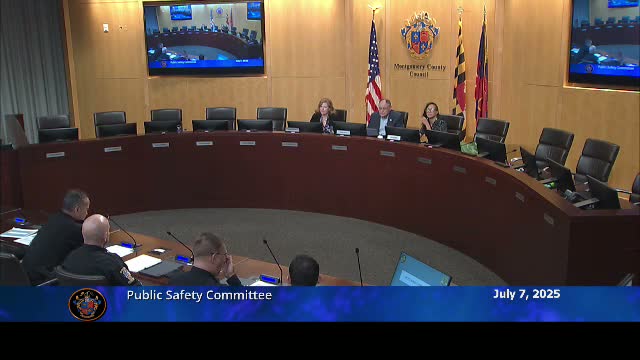
Chief Mark Yamada and senior Montgomery County Police Department officials told the County Council’s public safety committee on July 7 that moving to full radio encryption is a necessary step to protect victims, officers and sensitive information.
“Moving towards radio encryption has become a necessity for law enforcement, not just regionally, but nationally,” Chief Mark Yamada said, framing the change as a response to new consumer apps and criminal tactics that let people monitor first-responder transmissions.
The department’s technical briefing explained how encryption works and why staff say it matters. “Radio encryption is securing our transmissions via a key across the department and limiting the ability for public or outside users to listen to those transmissions,” Assistant Chief Nicholas Ognstein told the committee, saying dispatch channels are now being encrypted after tactical channels were secured earlier.
Why it matters: presenters cited concrete risks from unencrypted dispatch traffic — apps that broadcast call details, incidents of ‘swatting,’ exposure of medical or identifying information, and one high-profile school incident in which public access to radio information complicated response and endangered bystanders and responders.
Transparency and public access: officials repeatedly stressed that encryption will not erase records. Ognstein and staff emphasized that transmissions will continue to be recorded and available under the Maryland Public Information Act (MPIA) and that the county’s public information office will continue to provide verified updates. Council staff warned that public materials should not claim compliance with unrelated privacy statutes; a councilmember noted that MCPD is not a HIPAA-covered entity and asked for clarity in public-facing language.
Interoperability and cost: the department said municipalities that use the county radio system will be included in the encryption rollout at no additional cost and that regional partners in the National Capital Region already use encryption. Staff also said existing radios are capable of encryption and vehicle encryption is in the final phase.
Remaining questions: council members pressed staff about potential delays in public release of dispatch information, staffing for MPIA redaction, and whether public-friendly incident summaries would be produced. Department leaders said they have redaction staff and can bring on contractors if needed, and they discussed expanding decentralized public information coverage to provide timely updates.
Next steps: the committee closed the briefing after a short Q&A. No vote was required for the radio-encryption briefing; staff said the department is in the final implementation phase and will report back if additional resources or policy changes are needed.