Get Full Government Meeting Transcripts, Videos, & Alerts Forever!
Get email alerts on the Local Public Safety topic
No spam. Unsubscribe anytime.
Bear Creek Fire chief outlines FY27 budget, warns housing and water shortages threaten volunteer ranks
Summary
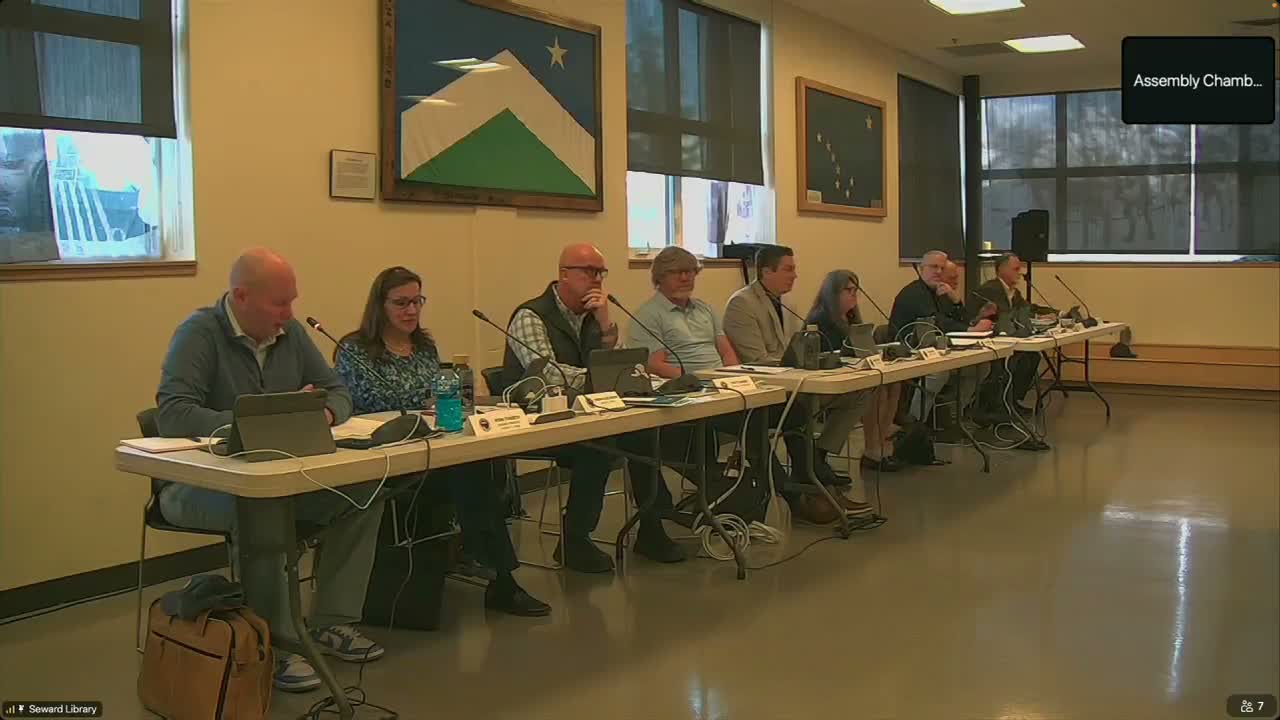
Fire Chief Richard Bracken presented the Bear Creek Fire Service Area FY27 budget to the Kenai Peninsula Borough Assembly’s Committee of the Whole, citing a 3.25 mill rate, a $46,529 (4.16%) budget increase driven by wages and insurance, and long‑term concerns about housing, staffing and limited water in three subdivisions.
Fire Chief Richard Bracken told the Kenai Peninsula Borough Assembly’s Committee of the Whole that the Bear Creek Fire Service Area’s proposed fiscal year 2027 budget is funded by a 3.25 mill rate and reflects a $46,529 increase, or about 4.16 percent, driven primarily by personnel and insurance costs.
The presentation, delivered in Seward, said the service area currently has three paid staff (a fire chief, a full‑time fire technician and two three‑quarter positions covered in part by FISA funds) plus volunteers and maintains a fleet that includes two pumpers, three tankers, one support truck, two ambulances and six ATVs for search and rescue. Bracken said the department took delivery of a new ambulance and used volunteer nonprofit status to secure no‑cost shipping that saved $7,275.
Bracken described line‑item changes in FY27: personnel costs increase roughly $17,335 (regular wages contributing about $17,124), supplies rise about $310, training costs increase by $860, and insurance premiums jump by $13,568 after the borough adopted replacement‑cost valuation for insured items. He said the service area added $1,000 for physical examinations and $1,000 to cover cell stipends for fire technicians because remote Internet calling sometimes forces staff to use personal phones.
The chief reviewed capital items and out‑year replacements: ongoing projects include purchases or replacements for air packs, radio equipment, an ambulance and a tanker; a planned command vehicle replacement is estimated at about $75,000 in FY30, and the service area has an estimated replacement gap of about $1,398,000 in FY31–FY35.
On operational goals, Bracken said Bear Creek has raised volunteer certification levels, adding in‑house courses and instructors, and aims to move from a basic life support (BLS) model toward advanced life support (ALS) response by 2027. He reported progress on response time benchmarks (targeting under five minutes for non‑work‑hour responses) and said the service reduced some working‑hour response times toward that goal.
Bracken highlighted long‑term concerns that could affect capacity: a local housing shortage that reduces the pool of volunteers and causes turnover; limited administrative staff and an eventual need for a deputy chief (currently unfunded); and inadequate, seasonal water supplies in three subdivisions — Old Mill, Cuesta Woods and Camelot — that complicate firefighting and could require establishing dedicated water sources.
During questions, Assemblymember Bracken and borough staff discussed the 2007 bond that added 1 mill for a multiuse facility; borough staff explained the bond was paired with roughly $3.8 million in grant funding, the first debt service began in 2014, and a 2021 refinance reduced the interest cost, leaving current annual debt service lower than earlier estimates. Chief Bracken said many cost increases (utilities, maintenance and insurance) were not anticipated when the bond was approved.
The Committee did not take any formal vote on the Bear Creek budget during the work session. The Assembly moved next to presentations on other service areas.