Get AI Briefings, Transcripts & Alerts on Local & National Government Meetings — Forever.
District proposes 4.29% preliminary levy increase as health-benefit spike outpaces state aid
Summary
Administrators presented a preliminary 2026 budget that would raise the local tax levy by 4.29%, citing a roughly 20% rise in health-benefit costs and lingering state-aid shortfalls; the board moved to approve the preliminary budget for submission to the county but no recorded final vote appears in the transcript.
The North Hunterdon-Voorhees Regional High School District presented a preliminary budget that proposes a 4.29% increase in the local tax levy for the general fund, driven chiefly by a sharp increase in employee health-benefit costs.
Presenter (who opened the meeting) told the board the district is facing multiple budget pressures, including a health-benefit increase of about 20% this year and state funding that ‘‘is not keeping pace with the actual cost’’ of transportation, special education and security. He said the district had identified roughly $1.6–$1.7 million in cuts and restructurings, lowering the proposed levy from the district’s 4.6% taxing authority to 4.29%.
Rich, who led the discussion of budget goals, said protecting comprehensive academic and extracurricular programs and maintaining safe, functional facilities remained top priorities. He said the budget also focuses on attracting and retaining qualified staff and exercising ‘‘fiscal responsibility and cost containment.’’ Rich noted some practical details—‘‘fresh air is pretty important’’ in large buildings—when describing investments in HVAC and facilities maintenance.
Board members pressed administration on the state funding formula and its predictability. The Presenter described the formula as using a six-year rolling enrollment average but said that how the state chooses to fund the formula in dollar terms is the principal uncertainty. Several members expressed frustration at that unpredictability; one committee member characterized the funding implementation as ‘‘garbage,’’ and others said the county office can sometimes provide advance signals about likely state funding levels.
Administrators described steps taken to reduce out-of-district costs and other spending pressures, including proposing an in-district ESL program, supporting in-district special-education options, rightsizing noninstructional staff, streamlining security operations and expanding vocational cohorts without adding building staff. Those changes, along with attrition and other reductions, were presented as the means to bridge the gap created by rising costs and softer state aid.
The presentation also included enrollment details: base enrollment at both the Voorhees and North campuses is described as slightly declining, while shared vocational programs and Polytech cohorts help stabilize total head counts. Officials explained that shared-program students may be counted differently for state enrollment calculations, which affects aid distribution even when the district continues to provide core academic instruction and receives related tuition.
On revenue mechanics, the Presenter said the proposed levy increase would generate a banked cap of $171,975—taxing authority that can be used over the next three budget years but is not cash in a district account. He and board members emphasized that banked cap represents future taxing authority and warned it is not ‘‘free money’’; drawing it down reduces future flexibility. The Presenter also explained that leftover referendum monies had been used to reduce the district’s debt-service assessment on tax bills, effectively acting as a credit to taxpayers tied to the referendum line on the bill rather than a general-fund rebate.
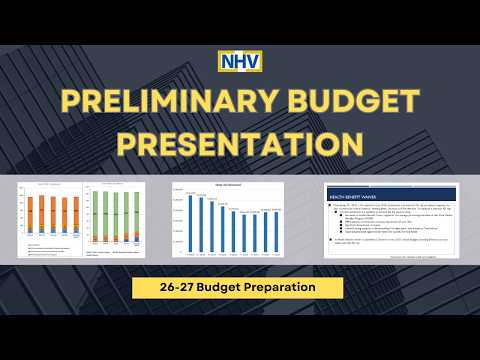
Administration described a health-benefit waiver mechanism at the state level that opens an adjustment when the state health-benefit plan increase exceeds 2%. Locally, the Presenter said roughly 18 percentage points of the district’s 20% increase qualified as an allowable health-insurance adjustment, producing an available $1.4 million allowance above the 2% floor.
Next steps outlined by administration: the board’s preliminary-budget approval would allow staff to submit the budget to the county office for review, publish required public-notice advertisements in April, hold the public hearing and the April 28 meeting to certify taxes, and implement the budget beginning July 1 if adopted. A board member moved to enter the motion for preliminary-budget approval and members praised the administration’s work; the transcript records the motion and discussion but no final recorded vote.