Get Full Government Meeting Transcripts, Videos, & Alerts Forever!
Get email alerts on the Civil Commitment topic
No spam. Unsubscribe anytime.
Appeals court hears challenge to involuntary commitment based on intermittent explosive disorder
Summary
Counsel for the appellant argued the district court misapplied the mental‑health regulation by treating mood effects as the condition itself; the state said expert testimony showed the disorder met the regulation and no less‑restrictive option would protect others. The panel reserved decision.
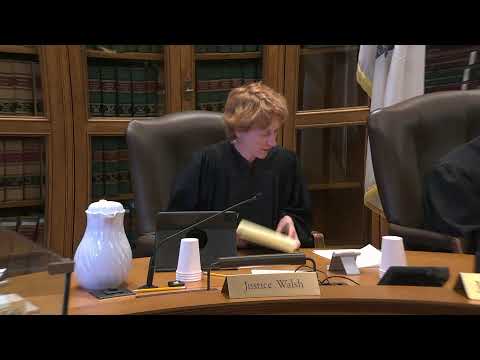
My name is Justice Walsh and today the panel consists to my right of Justice Hirschfang, to my left is Justice D'Angelo.
Attorney Susan Ennis told the three‑judge panel that the district court erred when it found the appellant subject to involuntary civil commitment. "To satisfy due process concerns, the court must strive to find the least burdensome or oppressive controls over the individual that fulfill the purposes of the mental health statute," Ennis said, arguing the experts described intermittent explosive disorder and autism spectrum disorder and that those diagnoses are conduct‑based rather than "a substantial disorder of mood." She urged the court to construe the regulation in light of the DSM‑5 categories and to limit commitment to conditions that are primarily mood‑based.
For the state, Alexander Weiss from the Attorney General's office urged the panel to affirm. Weiss said the district court could credit the hospital expert's testimony that the appellant's violent, uncontrollable outbursts "constitute a mood" and that those symptoms "grossly impair" judgment and ability to meet ordinary demands of life. He argued that precedent, including the court's treatment of expert testimony in similar cases, allows a finding of mental illness when a disorder severely affects mood and behavior. Weiss also said the record supports the state's view that no less‑restrictive alternative—Department of Developmental Services (DDS) housing or a DMH respite—would adequately protect the appellant and others.
The panel pressed both sides on two central points: (1) whether the regulation's reference to DSM‑5 categories restricts the judge to those categories when deciding what counts as a "substantial disorder of mood," and (2) whether testimony that a condition "affects mood" can satisfy the first prong of the regulation rather than only the second prong that addresses effect on functioning. The court also asked whether prior case law (cited by both sides) constrained the district court's assessment of expert testimony.
Both counsel also addressed rehabilitation and procedural safeguards. Ennis warned that the appellant has been repeatedly recommitted and argued that he needs DDS services rather than confinement; Weiss responded that the hospital expert testified rehabilitation is possible in the facility and that periodic hearings are available to reassess commitment.
The case was submitted for decision after the state completed argument. The panel thanked counsel and said decisions will be forthcoming.