Get Full Government Meeting Transcripts, Videos, & Alerts Forever!
Get email alerts on the Education Referendum topic
No spam. Unsubscribe anytime.
Glendale River Hills school leaders outline $5 million-a-year referendum to cover special education and inflationary shortfalls
Summary
District treasurer Karen Cronnell and Superintendent Anna Young told the council the April 7 operational referendum would authorize the Glendale River Hills School District to exceed state revenue limits by $5,000,000 per year for four years to address a roughly $4.9M annual funding gap driven by inflation and special-education costs.
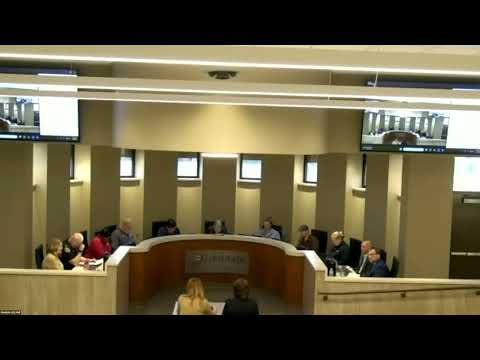
Glendale — District officials came before the Glendale Common Council to explain a proposed operational referendum on the April 7 ballot that would allow the Glendale River Hills School District to exceed its state-imposed revenue limit by $5,000,000 a year for four years beginning with the 2026–27 school year.
Anna Young, the district superintendent, said the ask responds to a multiyear inflationary shortfall and rising special-education costs. "By 2025, 85% of districts in the state will have used operational referendums," she said, explaining how state revenue limits have not kept pace with inflation and why local referendums are the vehicle districts are using to maintain programs.
The district reported enrollment of 973 students (an increase of about 10 from the prior year), a per-pupil spending figure of $22,104, and that roughly 18% of students have individualized education programs (about 170 students). Michelle Brown, the district's director of business services, said Wisconsin reimburses no more than roughly 35% of special-education costs, leaving the district to fund the remainder locally.
Young and Brown said those factors, together with an estimated inflationary shortfall, drove the $5,000,000 annual figure. Young read the ballot language: "Shall the Glendale River Hills School District be authorized to exceed the revenue limit specified in section 121.91 by $5,000,000 per year for four years?" She said the referendum is intended to preserve class sizes, intervention services, music and STEM programs, staff compensation and building maintenance.
Council members asked practical questions about tax impacts and the district's prior referenda. Young and Brown said the proposal largely replaces a prior $4,500,000 referendum that will fall off and represents a net increase of about $500,000 spread across the district. Officials presented an example mill-rate impact and estimated an annual tax increase of about $164 for a $400,000 home for the extra $500,000; they noted that actual costs depend on property values and that the district will publish detailed mill-rate and household-impact tables.
The presenters offered additional community engagement: an in-person session March 11 and virtual sessions on March 16 and March 23, and they said staff would post the presentation packet online for residents who want more detail. Young emphasized that failure of the referendum would require an immediate $5,000,000 annual reduction — roughly 25% of the district's budget — likely leading to staff reductions, fewer curricular resources, higher school fees and deferred maintenance.
The council did not take a vote on the referendum itself (it is a public ballot measure), but members used the presentation to ask clarifying questions about reimbursement rates, the district's special-education percentage relative to its peers and how the referendum figure was developed. The district committed to making supportive materials available online and to hold neighborhood outreach sessions before the April 7 vote.
Next steps: The referendum will appear on the April 7 ballot; district staff said they will maintain public outreach through community sessions and by posting the packet and explanatory materials on the district website.