Get Full Government Meeting Transcripts, Videos, & Alerts Forever!
Get email alerts on the Allied Recycling License topic
No spam. Unsubscribe anytime.
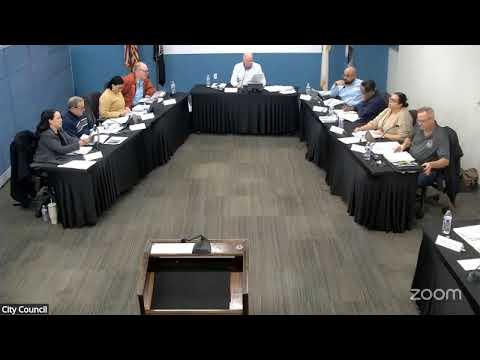
Pawtucket board denies Allied Recyclinglicense after hourslong public hearing and widespread opposition
Summary
After more than five hours of testimony, the Board of License Commissioners voted 9to0 to deny Allied Recycling CenterInc.'s application for a wholesale-junk (metal recycling) license at 55 Concord Street amid resident health, traffic and enforcement concerns.
The Board of License Commissioners denied Allied Recycling Center Inc.'s application for a wholesale junk license for 55 Concord Street by a 9to0 roll-call vote following an extended public hearing and technical presentations.
Allied president Ed Jamieson and counsel Tanesa Azar presented the company's plan and engineering controls, saying the facility would handle ferrous and nonferrous scrap, use rail to reduce truck trips and operate under Rhode Island Department of Environmental Management (DEM) stormwater permits. Jamieson described Allied as a long-running operator in Walpole, Massachusetts, and told the board that the Pawtucket site would be a smaller, satellite operation with bunkers, landscaping screening and active stormwater treatment systems.
Opponents packed the hearing. Dozens of residents from Pawtucket, Providence and nearby communities warned of noise, dust, truck congestion and risks from lithium-ion batteries and other contaminants, and several neighborhood groups and the Providence City Council sent formal opposition letters. Representative Sherry Cruz (remote) and Providence City Councilor Justin Royas urged the board to reject the application because of the site's proximity to day-care centers and Nathaniel Greene Elementary School and the cumulative industrial burden along the Concord Street corridor.
Engineers for Allied and Geosyntec summarized preliminary analyses: about 20to25 trucks per day (the applicant estimated), a typical industrial-zone perimeter noise limit of 75 decibels, and multisector general-permit (MSG-P) stormwater controls including monitoring and active treatment. Geosyntec noted the facility was not planned to include a shredder (a major noise driver) but acknowledged a shredder could be contemplated later and that the design would require additional review if operations changed.
Neighbors and abutters repeatedly cited Allied's regulatory history in Massachusetts, including prior consent orders and settlements, and said the company's record undercut confidence in long-term compliance. Attorney Monica Horan, representing nearby business Cello's Realty, also raised procedural concerns from the zoning process and supplied the council with the zoning hearing transcripts and referenced enforcement documents.
Councilors weighed those concerns against the limited legal grounds for denial under Rhode Island law. Several members said the zoning appeal process and past local decisions left them uneasy about the project's compatibility with this neighborhood. Councilor Stokovic moved to deny the license; the motion was seconded and the board recorded a unanimous 9yes vote to deny.
The board's decision ends this licensing application at the local level but does not preclude judicial review or an appeal by the applicant. Allied's representatives said they would review the decision and look into the regulatory records cited by speakers.
The most recent factual development is the board's formal denial; the applicant may pursue administrative or judicial remedies. The council also reiterated that environmental and DEM approvals would be required for any future changes.