Get Full Government Meeting Transcripts, Videos, & Alerts Forever!
Get email alerts on the State Budget topic
No spam. Unsubscribe anytime.
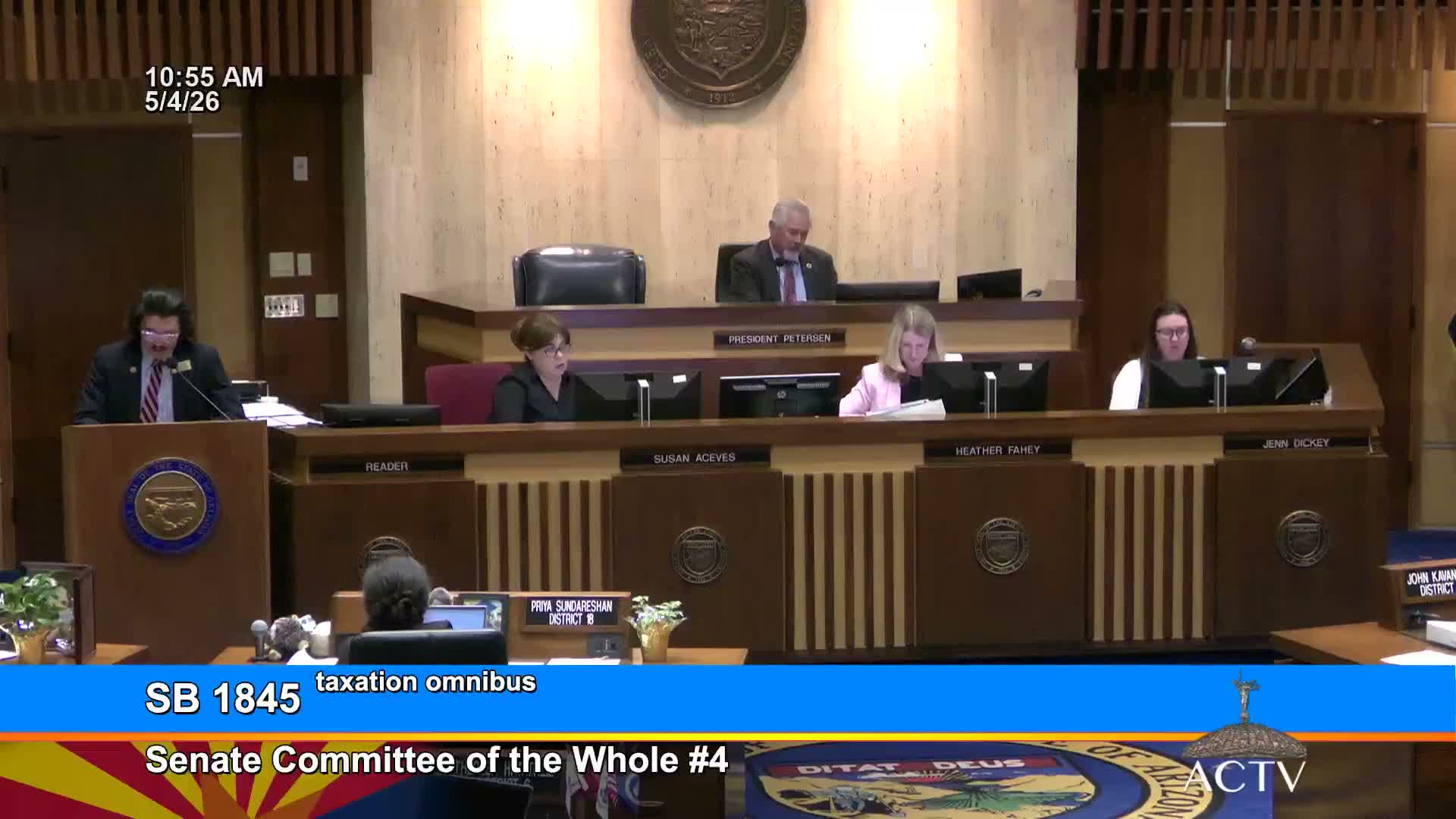
Arizona Senate approves Republican budget and tax package after hours of debate
Summary
The Arizona Senate on May 4 approved a suite of substituted House bills including the General Appropriations Act and a tax omnibus after lengthy floor debate over data-center tax exemptions, Medicaid cuts, education and housing fund sweeps. Key measures passed largely on party lines.
The Arizona State Senate approved a multi-bill budget and tax package on May 4, passing the General Appropriations Act (House Bill 41-38) and a related tax omnibus (substituted House Bill 41-52) after extended debate over tax conformity, data-center exemptions and cuts to programs including Medicaid (Access), K–12 and higher education.
Senators voted to substitute a set of House bills for earlier Senate bills and moved the package to third reading; House Bill 41-38 (the General Appropriations Act) passed on a recorded vote of 16 ayes, 12 nays, 2 not voting. The broader set of substituted bills covering appropriations, taxation, capital outlay, health, education and transportation similarly passed on third reading votes.
Why this matters: Opponents said the package ‘‘prioritizes corporations over Arizonans,’’ arguing that the tax omnibus fully conforms to federal HR 1 provisions and preserves industry-favored exemptions such as the data-center sales tax treatment. They warned such choices would forfeit hundreds of millions in federal matching dollars for Medicaid, cut food and housing supports and reduce university research funds. Supporters said the bills deliver tax relief and affordability measures—such as increases to the standard deduction and removal of taxes on tips and overtime—that benefit many Arizona households and small businesses.
Floor exchanges highlighted a handful of concrete points. Several Democratic senators noted that the package does not include proposals to close the data-center sales tax exemption and said that closing it previously had been estimated to raise tens of millions annually; Republican supporters countered that the bills remove some targeted grants and preserve tax provisions that help taxpayers avoid re-filing. "If I had to ascribe one word to this budget, it would be affordability," said Senator Kavanaugh in explanation of his yes vote. Opponents framed the package differently: "This is a reckless and unbalanced Republican budget," said Senator Miranda as she explained her no vote.
The session recorded many floor explanations of vote. Democrats repeatedly warned that cuts to Access (Arizona’s Medicaid program), to SNAP summer feeding (SunBucks) and to housing trust funds could produce immediate harm to vulnerable residents and to rural hospitals; Republicans said the package includes targeted protections for core services, keeps certain one-time items settled for negotiation and reduces tax burdens to increase take-home pay.
What passed: The package included House Bill 41-38 (General Appropriations Act) and a long list of substituted House bills (41-39 through 41-53) that corresponded to Senate bills on topics from amusement regulation to transportation. The tax omnibus (HB 41-52) was adopted on third reading as part of the package. Recorded tallies were logged in the Senate journal for each third-reading item and multiple senators filed explanations of their votes on the floor.
Next steps: The passed House bills will be transmitted back to the House as required and the package moves toward enrollment and transmittal to the governor. Senators on both sides signaled further debate and negotiation may follow in conference and implementation phases.
Votes at a glance: House Bill 41-38 (General Appropriations Act) — passed, recorded vote 16 ayes, 12 nays, 2 not voting. Multiple other substituted House bills (HB 41-39 through HB 41-53) passed on third readings with recorded tallies entered in the journal.
The Senate also adopted House Concurrent Resolution 2066, a death resolution for Luis Clement Gaspar, and observed a moment of silence before adjourning into recess.