Get Full Government Meeting Transcripts, Videos, & Alerts Forever!
Get email alerts on the Levy Survey topic
No spam. Unsubscribe anytime.
Prior Lake‑Savage Area Schools board debates levy survey and a $7 million ‘floor’ to maintain services
Summary
Board members reviewed a proposed short community survey and levy-size scenarios; administration recommended a $7 million operating-levy as the minimum to maintain services after planned cuts and presented costing examples (class-size reduction and specialist support) for the community to consider.
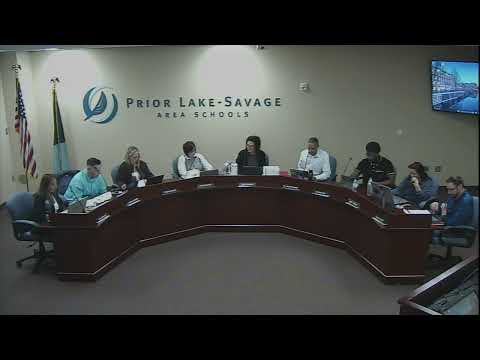
The Prior Lake‑Savage Area Schools board spent most of its meeting reviewing a draft community survey and levy-size scenarios aimed at informing whether to pursue an operating referendum.
Doctor Thomas, presenting the survey plan, told the board the two-part instrument would verify respondents’ residency before asking two brief substantive questions: priorities for what voters want protected or restored and their willingness to support those priorities financially. Thomas said administration avoided embedding dollar figures in the packet to prevent premature anchoring but will include succinct costing examples and return a revised survey for board review.
Why it matters: administration recommended a $7 million operating-levy option as the ‘‘floor’’ that would preserve current services only after the district implements about $3 million in annual reductions. Thomas warned the district faces enrollment decline and other cost pressures and said the $7 million scenario is effectively maintenance after those cuts. “We’re gonna be in this perpetual reduction cycle,” Thomas said, urging the board to consider multi-year projections and the assumptions underlying them.
What was proposed: staff outlined several levy scenarios and their first‑year tax impacts for an illustrative $525,000 home — roughly $32 per month for a $7 million operating-levy option, higher amounts for $10 million and $15 million scenarios, and an example of combining a $3.3 million measure with a $7 million measure to create a $10 million tax‑impact profile. Staff emphasized these figures represent first‑year impacts and do not include automatic inflation adjustments unless the ballot language specifies them.
Stepped language and program costing: Directional language for a stepped levy (modeled on other districts’ ballot language) was introduced, allowing smaller initial asks with scheduled step-ups at predetermined years. In parallel, administration shared cost estimates for instructional priorities: reducing K–2 class sizes toward a 1:18 ratio would require about 22 additional FTEs after consolidation, and adding targeted specialists (math, reading) or paraprofessionals were offered as alternative investments with different costs and trade-offs.
Board reaction and requested changes: several directors urged clearer, less technical survey wording for general voters, inclusion of a comment box asking why respondents would not support a levy, and concrete examples tying levy amounts to likely classroom or program changes. Some board members argued for a conservative ask that ensures 10‑year solvency; others supported the administration’s view that the $7 million floor is needed to keep services at the current level after planned cuts.
Survey mechanics and timeline: staff said the district will distribute the survey via the district newsletter, school emails, QR codes, libraries and city partners, and that open-enrolled families can be included and screened in the analysis. Administration will email board members a revised survey and costing details for individual feedback and plans to return a final draft for board consideration at the next scheduled meeting, with distribution to the community targeted for the second or third week of April.
Next step: administration will revise ballot and survey language to add clearer examples and costing, solicit board feedback individually, and present the refined survey at the board’s next review. The board did not take a formal vote on a levy question during this meeting.