Get Full Government Meeting Transcripts, Videos, & Alerts Forever!
Get email alerts on the Charter School Facilities topic
No spam. Unsubscribe anytime.
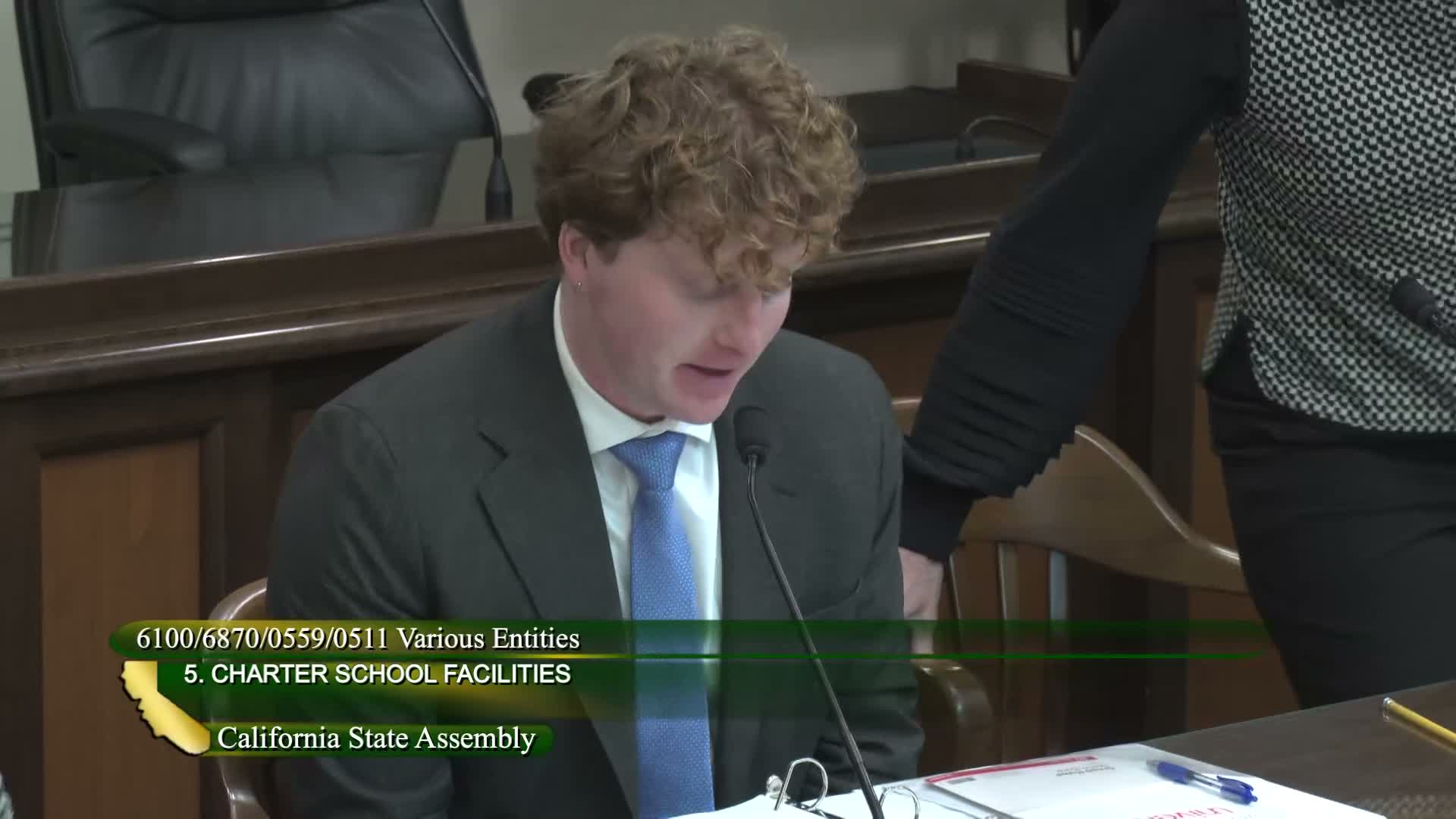
Treasurer's office defends Charter School Facility Grant program as lawmakers raise oversight concerns
Summary
The governor proposed a $9.2 million ongoing Proposition 98 increase for the Charter School Facility Grant program. The State Treasurer's Office defended program administration and described audit follow‑ups; lawmakers and union representatives raised concerns about public dollars funding privately held facilities and sought stronger authorizer oversight.
The subcommittee reviewed the governor's proposal to increase ongoing Prop 98 funding for the Charter School Facility Grant (CSFG) program by $9.2 million to cover a cost‑of‑living adjustment and current service level increases.
Ethan Schroeder of the Department of Finance explained the calculation: the program receives a statutory COLA and an adjustment tied to qualifying charter school ADA growth and changes in eligible lease costs. "We take ADA and multiply that by the current year COLA rate," a DOF presenter explained during committee questioning about how service level adjustments are calculated.
Katrina Johanchan from the State Treasurer's Office (CSFA) outlined program safeguards and recent audit findings. CSFA said it relies on authorizer certifications of good standing, appraisals for new facilities, and statutory caps to guard against improper awards and that the program has implemented the state auditor's recommendations.
Several members and public commenters pressed for more accountability after discussion of Highlands Charter (a focus in prior audits). Speakers asked whether awards for tenant improvements to privately owned facilities risk creating long‑term private benefit if a school closes or moves. CSFA responded that the CSFG program is an annual reimbursement program that looks at fair market value, appraisal caps and authorizer certifications, and that other programs (bond finance) have longer encumbrance or securitization mechanisms.
Public commenters and stakeholders were split: charter advocates argued the program provides necessary parity for charter schools that lack access to district bond proceeds, while unions and some members urged reforms to address title‑holding and conflicts of interest for related‑party leases. Committee chairs held the discussion open for further staff follow‑up and possible program reforms.