Get AI Briefings, Transcripts & Alerts on Local & National Government Meetings — Forever.
Budget panel rejects administration trailer language to change long‑term English‑learner definitions and refers matter to policy committee
Summary
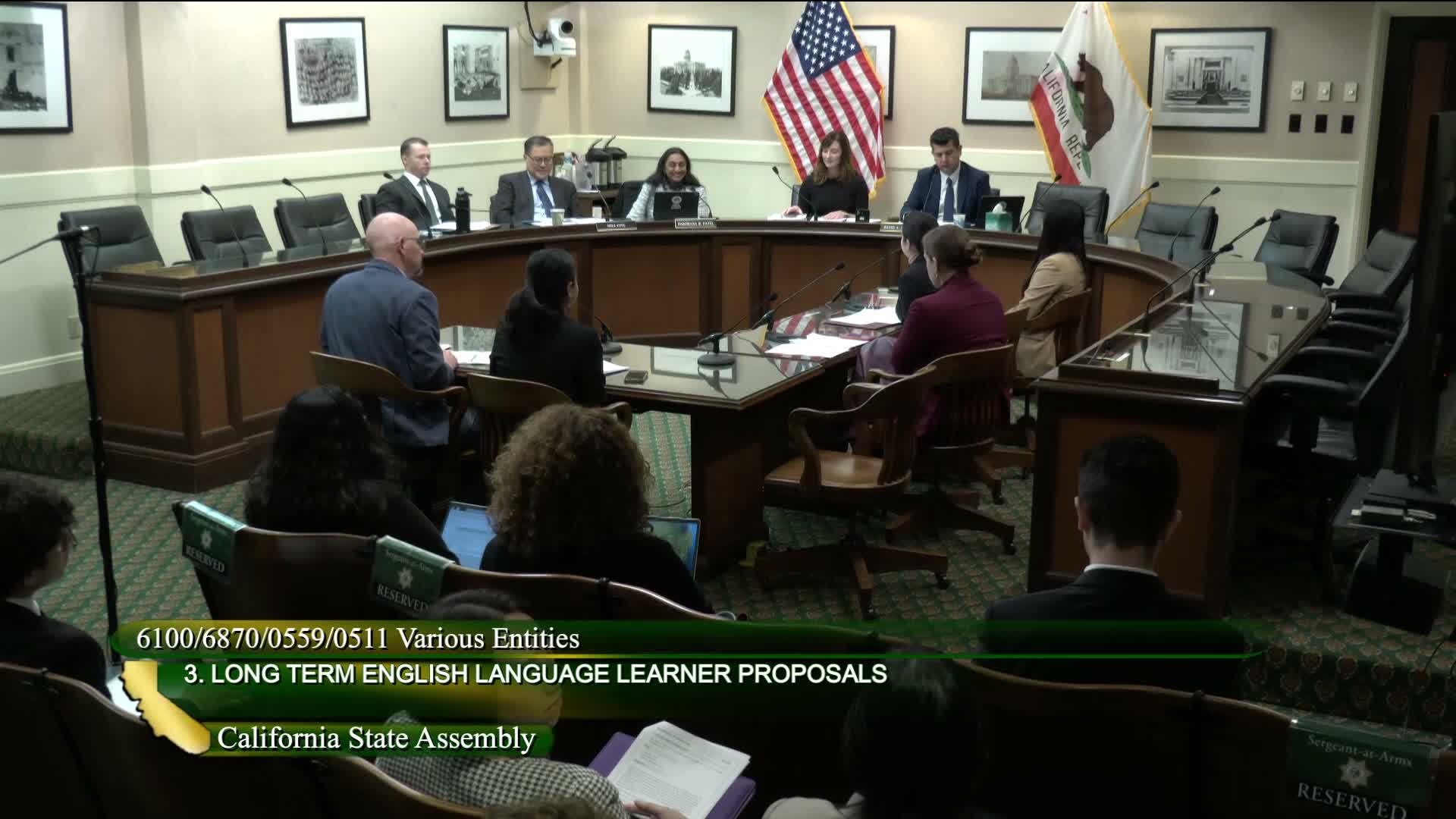
The subcommittee voted to reject the administration's trailer bill language that would align LTEL and RTEL definitions to a 7‑ and 6‑year timeframe and referred the proposal to policy committee after members and many advocates expressed concern that the change would delay intervention for students.
The subcommittee voted to reject and refer to the policy committee proposed trailer bill language that would align the long‑term English learner (LTEL) definition to students who have not achieved English proficiency within seven years and define at‑risk (RTEL) students as those not proficient within six years.
"The administration is proposing to clarify and update these definitions to better identify and meet the needs of California English Learner students," Shadi Nari of the Department of Finance said, describing alignment with the English Learner Roadmap and research suggesting a 5–7 year normative period for English acquisition. The Department of Finance said the change would reduce confusion between dashboard and DataQuest reporting systems.
School districts, advocacy organizations and many committee members pushed back. "Waiting until year 6 means many students will have missed out on the critical supports they deserve," public commenter Natalie Shen of Californians Together said, urging rejection. California Department of Education staff acknowledged the alignment benefit but said the field expressed concerns that the change could result in delayed identification and missed interventions.
The subcommittee made a motion to reject the proposal and refer it to the policy committee; the motion passed by recorded roll call. The committee said policy review would allow deeper stakeholder engagement on the tradeoffs between aligning reporting definitions and preserving early identification and support.
The rejection leaves the administration's alignment proposal under policy review; DOF representatives said they would continue to work with the legislature and consider field input ahead of the May Revision.