Get Full Government Meeting Transcripts, Videos, & Alerts Forever!
Get email alerts on the Youth Vote topic
No spam. Unsubscribe anytime.
Oakland youth leaders present evaluation of Measure QQ, urge OUSD to adopt voter-education and preregistration practices
Summary
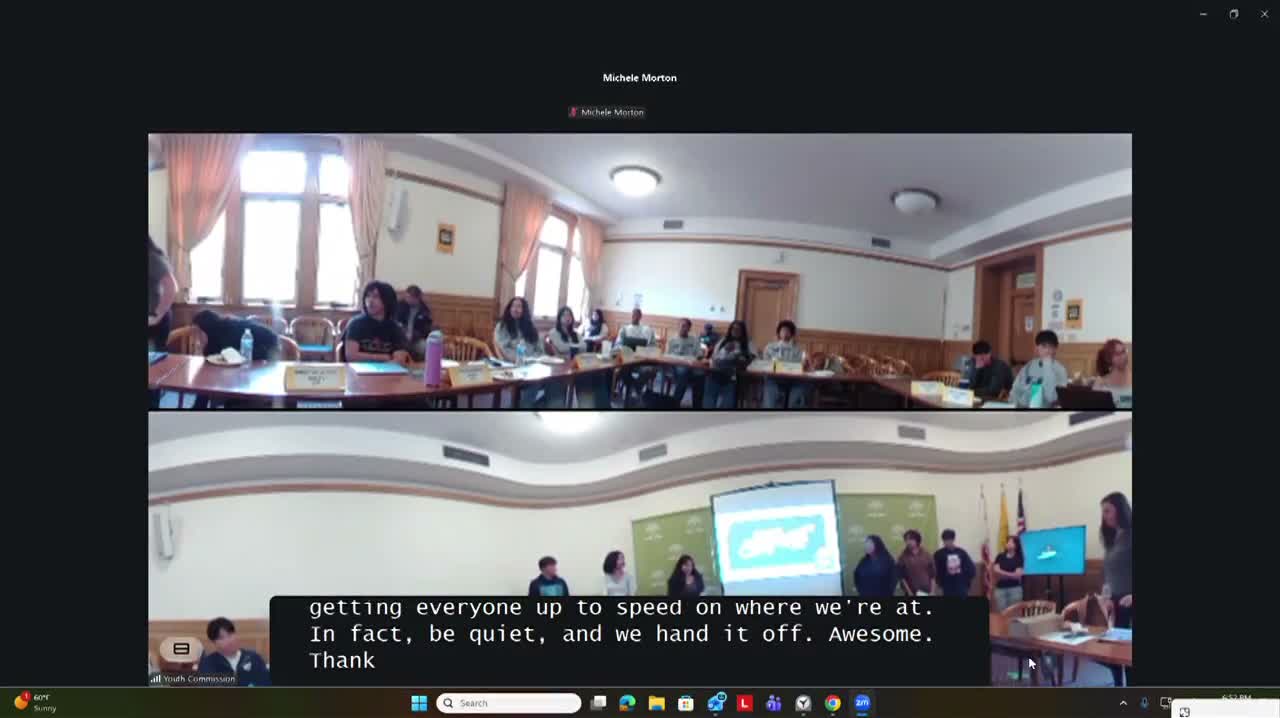
Oakland Youth Vote Coalition students summarized an evaluation of first-year Measure QQ implementation and urged the Oakland Unified School District to adopt civic-education curricula, an opt-out preregistration system with in-class paper forms and stronger outreach with election officials.
Members of the Oakland Youth Vote Coalition presented an evaluation of the city’s youth-vote effort to the Youth Commission and offered three core recommendations for school and district leaders: adopt a civic-engagement curriculum in high school social-studies classes, institute an opt-out preregistration system with in-class paper forms and volunteer support, and strengthen partnerships with election officials to provide drop boxes and use high schools as voting centers.
"We're here to give you a brief overview of the report and share some of our key takeaways and recommendations from the first year," said Anara, one of the youth presenters. The coalition described outreach and evaluation work that began after the 2019 campaign, a reported measure-passage milestone in an earlier cycle and a series of interviews with students, teachers and officials to assess implementation.
The presentation set out concrete practices the coalition says would boost participation and accessibility: deliver culturally relevant civic-engagement instruction in 11th- and 12th-grade classes; designate class time for registration with teacher support; use paper registration forms provided in class (with an option to leave them blank rather than requiring students to request a form); and offer volunteer help from nonpartisan groups such as the League of Women Voters.
For outreach and logistics, the group recommended using school communication channels (ParentSquare, newsletters and social media), holding candidate forums at high schools, and ensuring drop boxes and on-site voting options where feasible. The coalition also recommended that the school board direct district communications and administrators to carry out those actions and to track implementation.
At the meeting, commissioners and presenters recounted a public comment that questioned the legality and administration of youth voting and registration; youth leaders and commissioners said the report and the coalition’s outreach address those concerns and that they plan to present detailed findings to the school board next week. The presenters asked commissioners for feedback on their materials and suggested shortening slides and emphasizing talking points for audiences such as school-board members and teachers.
Next steps: The coalition said it will present the evaluation to the Oakland Unified School District's school board and invited commissioners to attend and provide feedback. The coalition left copies of the evaluation report and asked for continued partnership to implement the recommendations.