Get Full Government Meeting Transcripts, Videos, & Alerts Forever!
Get email alerts on the Probation topic
No spam. Unsubscribe anytime.
Probation chief warns budget shortfalls as state shifts youth responsibilities to counties
Summary
Chief Probation Officer E.C. Mancraus told supervisors that closure of the Division of Juvenile Justice and changes to the juvenile realignment funding formula are increasing costs for higher-needs youth; staffing shortages in juvenile hall risk coed housing and program reductions if state funding does not align with new responsibilities.
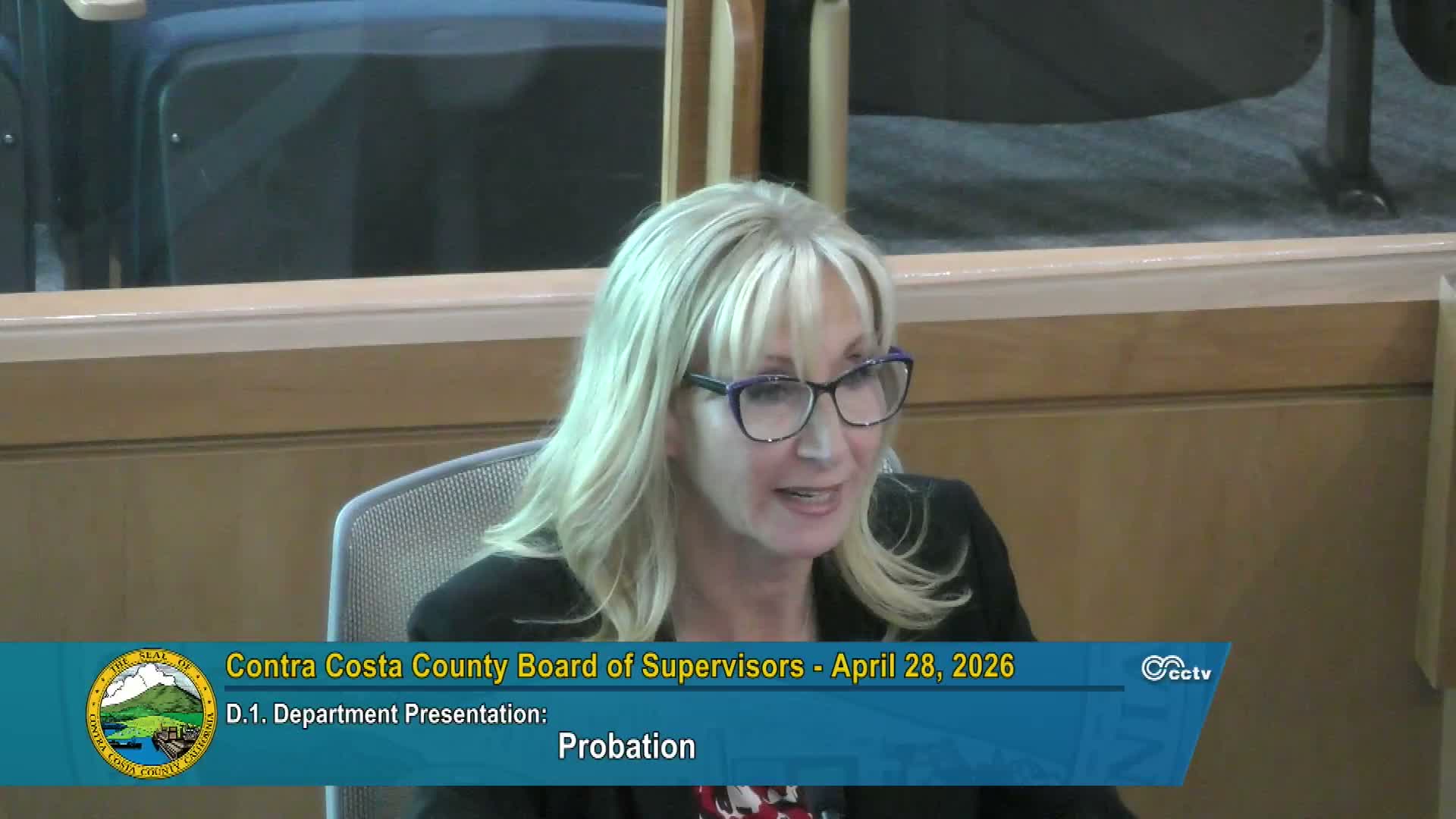
Chief Probation Officer E.C. Mancraus presented the Probation Department's FY26-27 budget and operational update, telling the board that recent legislative and system changes have increased county responsibilities for higher-need youth and strained resources.
Mancraus said the department manages three primary areas (programs and services, operations and administrative services) and that juvenile-custodial staffing shortfalls have forced a coed housing arrangement that juvenile judges have flagged. He said the county currently operates coed housing units in part because minimum staffing levels prevent opening a separate girls' unit, and warned that a court order to separate the population would require significant overtime and shift resources away from beneficial programs.
Mancraus described fiscal impacts tied to the closure of the state's Division of Juvenile Justice and a revised juvenile realignment formula that reduces available funding compared with program costs. He said the county currently realizes about $5 million in JJ realignment block grant funding but that custody costs alone exceed that by roughly $2 million.
The department is using Measure X allocations for a restorative-justice pilot focusing on youth and school-based alternatives and plans to complete the pilot by December 2027 without requesting more Measure X funds. Mancraus urged continued state advocacy for revised funding and said the department is examining discretionary contracts and program adjustments to absorb cuts if necessary.
Supervisors asked for comparative caseload and trend data; Mancraus pointed to public dashboards that track juvenile and adult caseloads and outcomes and committed to follow-up.