Get Full Government Meeting Transcripts, Videos, & Alerts Forever!
Get email alerts on the Elections topic
No spam. Unsubscribe anytime.
Clerk‑Recorder briefs board on June primary readiness, outreach and potential voter ID impacts
Summary
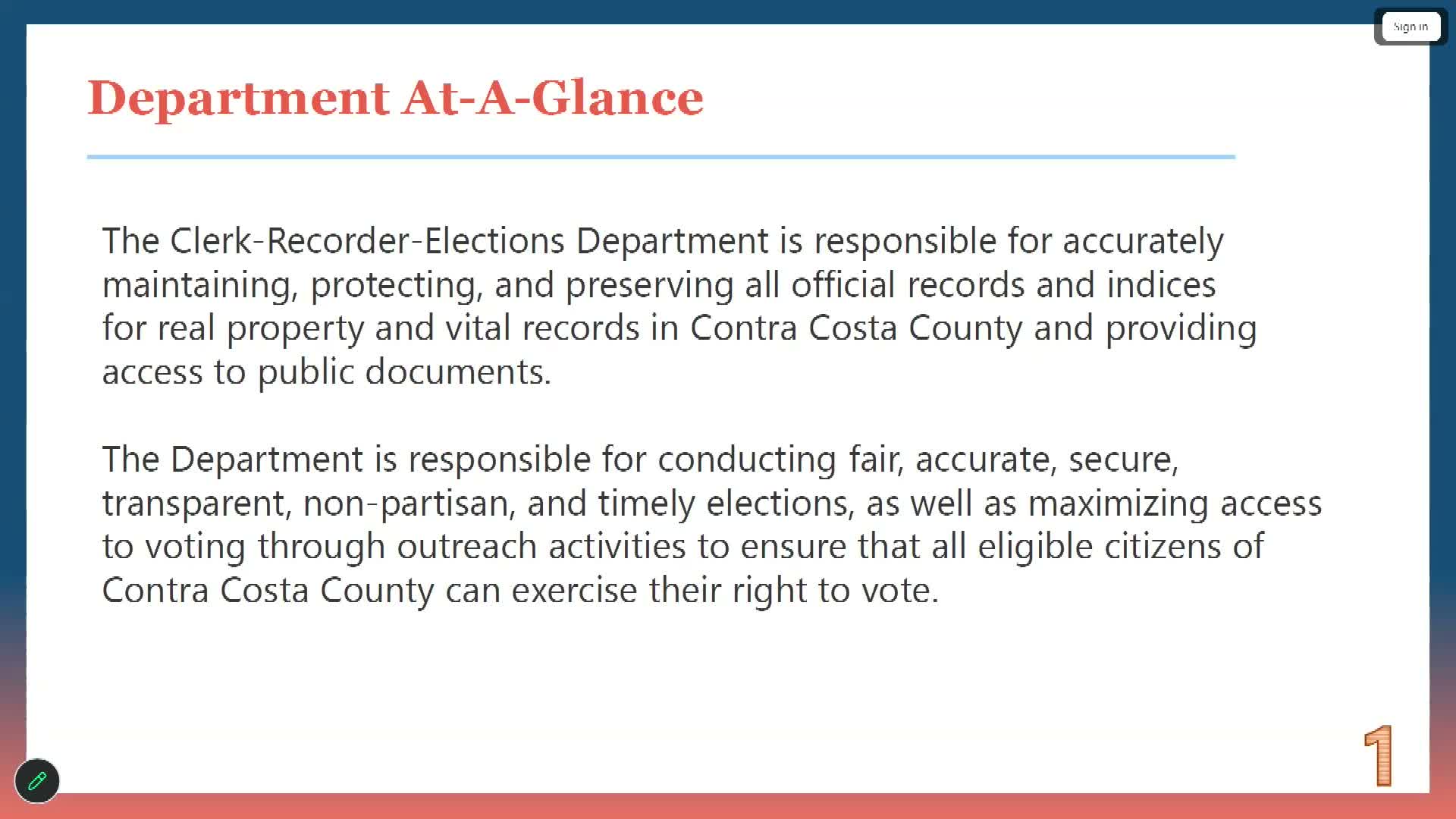
Clerk‑Recorder and Registrar Kristen Connolly briefed supervisors on operational readiness for the June 2 direct gubernatorial primary (E‑36), expanded early voting and outreach plans, and the county’s work mapping and redacting racially restrictive covenants; she flagged implementation uncertainties if a statewide voter ID initiative or changes to vote‑by‑mail rules pass.
Kristen Connolly, the county’s clerk‑recorder and registrar of voters, told the board the Elections Division is preparing for the June 2 direct gubernatorial primary, with voter information guides being mailed and early voting opening soon. Connolly said the office is opening for in‑person early voting and will deploy 45 drop boxes next week; every registered voter in the county will be mailed a ballot.
Connolly outlined outreach efforts to increase turnout in low‑participation areas (for example, San Pablo) and a youth engagement program that mails packets and pre‑registration materials to 16‑ and 17‑year‑olds. She also described a University of Minnesota partnership to map and identify racially restrictive covenants in recorded property records and a redaction process the office is implementing.
On potential election‑administration impacts of ballot measures, Connolly warned that a prospective voter ID initiative — as currently written — could require new processes and costs if voters must include Social Security or driver’s license numbers on envelopes. She noted operational uncertainty (for example, whether the requirement would be prospective or retroactive for already registered voters) and said the office is preparing contingency plans and assessing security needs for any new requirements.
The board and Connolly discussed poll worker pay, the county’s status as a polling‑place county versus a Voters Choice Act county and the operational implications of potential legal or ballot changes affecting vote‑by‑mail deadlines.