Get Full Government Meeting Transcripts, Videos, & Alerts Forever!
Get email alerts on the County Budget topic
No spam. Unsubscribe anytime.
Contra Costa unveils $7.248 billion recommended budget and warns of structural gap
Summary
County finance director Adam Nguyen presented a $7.248 billion recommended FY26–27 budget, saying it balances on paper but relies on fund balances in health and human services and faces structural pressure from state and federal policy changes. Board members heard department‑level presentations and public pleas to protect safety‑net programs.
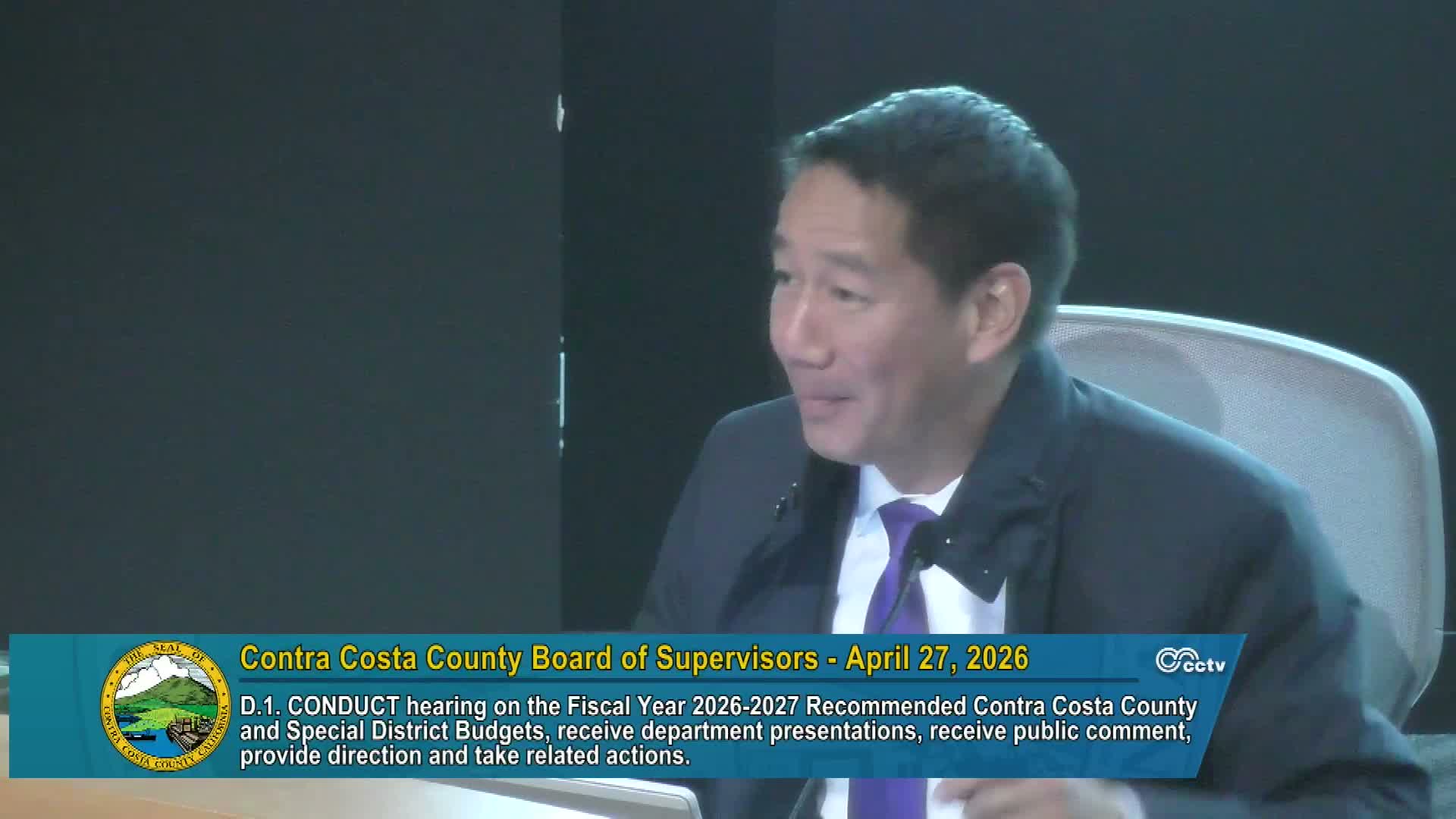
Adam Nguyen, Contra Costa County finance director, presented the recommended fiscal year 2026–27 county budget on April 27, saying the plan totals $7,248,000,000 and “authorizes 11,261.25 FTE.” Nguyen told the Board of Supervisors that the budget balances across all funds on paper but is structurally imbalanced at the department level, requiring use of fund balance in the county’s two largest departments, Health Services and Employment and Human Services.
Nguyen highlighted discrete revenue and cost drivers: roughly $22.6 million from 4% property tax growth, modest Measure X growth, and $65 million in interest income that could evaporate if federal rates fall. He said the county’s discretionary general purpose pool is about $845 million and “even within that bucket there’s very little flexibility.” The presentation flagged rising salary and benefit costs, labor contract negotiations, and large technology and infrastructure needs as near‑term risks to fiscal stability.
The finance director outlined steps taken to balance the budget this year, including interdepartmental cost containment, rate adjustments for internal service lines, and paying off about $79 million in debt to reduce future interest costs. He also introduced a new digital budget book and longer‑term capital planning updates that extend some facilities planning from one to three years.
Board members pressed administration for context on how Contra Costa compares to peer counties; county officials said rural counties and those with hospitals face the most severe strain and emphasized the county’s comparatively strong reserves and credit rating that allow limited flexibility. Supervisors and department heads agreed that much depends on two external items coming this spring and summer: the state budget allocations and the outcome of the June revenue measure (Measure B).
The hearing set the stage for two more days of departmental presentations and public comment. The board took no final budget vote during this session; staff expect to return with budget amendments and allocation details after the governor’s May revise and any final state allocations are received.