Get Full Government Meeting Transcripts, Videos, & Alerts Forever!
Get email alerts on the 100 And Fifth Redevelopment topic
No spam. Unsubscribe anytime.
Blaine council approves 100 and Fifth financing package and authorizes master agreements despite dissent over parking costs
Summary
The Blaine City Council on April 6 approved tax-abatement bonds and a suite of agreements tied to the 100 and Fifth redevelopment — including a $15 million, 600-stall west parking facility — after lengthy debate over funding sources and potential impacts on property taxes.
The Blaine City Council voted April 6 to authorize financing steps and legal agreements needed to advance the 100 and Fifth redevelopment, approving both the property-tax abatement resolution and a parameters resolution that clear the way for bond sales and an amended master development agreement.
Manager Thorvig told the council the west parking facility would be a 600-stall structured garage with an estimated project cost of $15,000,000, a 20-year bond term and projected annual debt-service around $1.2 million. He said the first debt payment would be due in 2028 and that the city would not immediately decide the funding mix: “It is not something that needs to be decided tonight,” Thorvig said, listing possible repayment sources including excess district revenues, franchise fees, EDA levy increases and, as a last resort, the general fund levy.
The decision followed extended discussion about risk and fiscal exposure. Council member Ford said she opposed placing the obligation on property taxpayers: “I am not willing to add that debt to the citizens' property taxes,” she said, pointing to uncertainties over franchise-fee revenue, cannabis-related receipts and other district revenues that staff listed as possible backstops. Council member Newland said he was uncomfortable with the scale but would support the overall development; Council member Robertson argued the package is necessary to keep the multi‑component district on schedule.
Attorney Eric Larson, the city attorney, framed the vote as a broader endorsement of the whole redevelopment rather than a standalone parking vote: “What you’re voting here in my judgment is not the West Parking. You’re voting for this development as a whole concept,” he told the council, adding that staff and bond counsel will finalize the legal documents and return if any material changes arise.
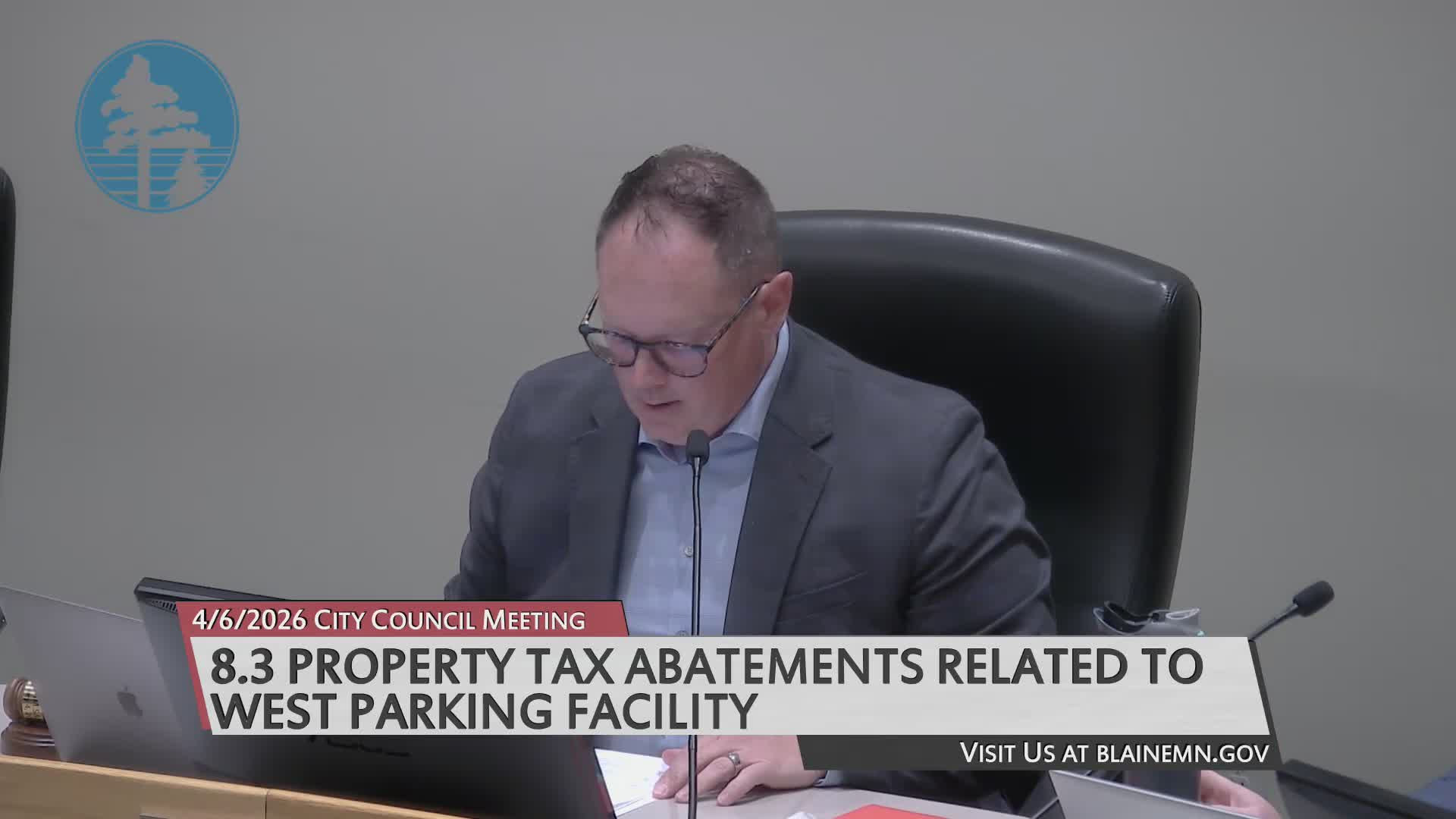
The council approved the public-hearing resolution for the tax abatement (8.3) by roll call (four yes, three no) and then passed the parameters resolution (10.3) and the overarching authorization for the package of agreements (10.4). The adopted documents set conditions for future bond sales (including developer commitments, final platting and signed design/construction documents) and describe a draw-based dispersal of bond proceeds held in city custody until project invoices and milestones are verified.
Why it matters: The authorized financing and contracts move a multi‑year, multi‑piece district toward construction and create a repayment structure that depends heavily on growth in district revenue and several still‑uncertain revenue sources. Council members who opposed the parking bonds said their ‘‘no’’ votes reflected the potential for future pressure on property tax levies if projected revenues do not materialize.
What’s next: Staff, bond counsel and the developer will finalize the agreements and proceed toward a possible bond sale this summer if the parameters and conditions are met; the initial debt service would begin in 2028 if bonds are issued in 2026.