Get Full Government Meeting Transcripts, Videos, & Alerts Forever!
Get email alerts on the Zoning And Planning topic
No spam. Unsubscribe anytime.
Collierville board approves zoning cleanup on second reading, delays final vote after developer and residents raise concerns
Summary
The Collierville Board of Mayor and Aldermen on April 13 approved an omnibus zoning and town-code cleanup on second reading but voted to defer the third and final reading until after a scheduled work session after developers and nearby residents raised concerns about traffic studies, drive‑through rules and pedestrian impacts.
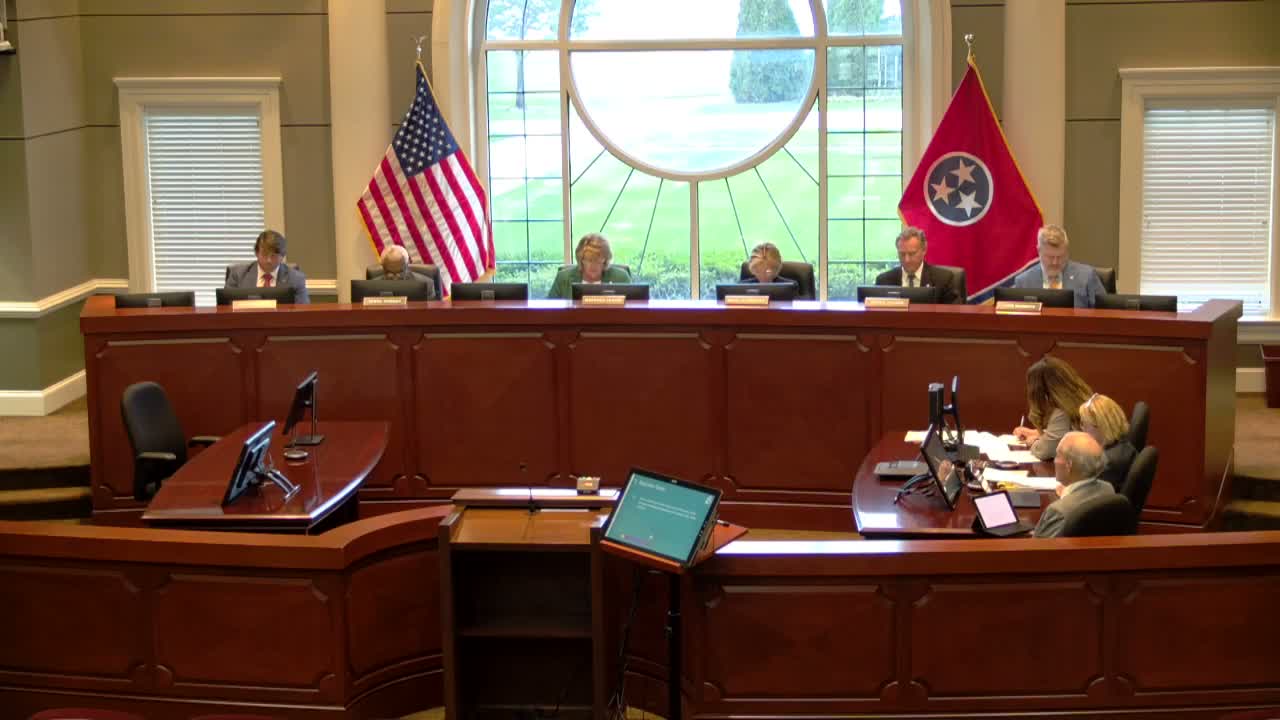
The Collierville Board of Mayor and Aldermen approved a package of zoning and town-code changes on second reading Thursday but voted unanimously to postpone the third and final reading until a staff-led work session could address several contested sections.
Town planner Jamie Groves told the board the changes—assembled in exhibit 4—are principally a technical cleanup and alignment with state law, but include several substantive shifts: expanded neighborhood meeting requirements for rezonings and conditional use permits, a new alternative-equivalent compliance path for design standards, a requirement that drive‑through uses proceed through a conditional use permit (CUP) and earlier submission and review of traffic studies so construction drawings match mitigation measures.
“Most of the changes are to the zoning ordinance,” Groves said, and staff recommended approval. He described the traffic-study change as a process improvement: the town will aim to see a traffic study 30 days before a formal development application so consultants and staff can coordinate mitigation strategies before construction drawings are finalized.
The presentation prompted questions about timing and cost. Developer and member of the Board of Zoning Appeals Steven Williams said he supported the broad cleanup but warned three sections—identified in his remarks as sections 3, 18 and 19—could add months and significant expense to development projects. Williams told the board a recent traffic study his group completed cost “about $40,000,” and said adding CUP processes and additional pre-application requirements could discourage investment or shift discretion heavily to elected officials.
Williams asked the board to approve the package but either delete or postpone the three sections he identified so staff and stakeholders could study them in more detail. “I would encourage you tonight to make a motion to approve this ordinance … and either delete or table those three items that I just said,” Williams told the panel.
Board members debated options: defer the entire ordinance, approve the second reading and delay the third to allow a work session, or approve portions now and pull specific sections for further study. Several members voiced comfort with approving the second reading to preserve momentum on needed code fixes while scheduling a work session to refine the flagged language.
Alderman Marshall moved to approve the ordinance on second reading and hold the third reading until after a work session; the motion was seconded and passed on a unanimous roll-call vote.
The ordinance package includes provisions addressing parking maximums and minimums, loading requirements, solar- and EV-related language, clarified pool-permit requirements that will require a design professional to submit engineered drawings to evaluate drainage, and new references for food-truck permitting. Groves said staff will post updated forms and checklists related to pools and neighborhood meetings on the town website.
Next steps: staff will schedule the work session, notify interested parties and return the ordinance to the board for a third reading at a later, publicly noticed meeting. The board did not adopt the ordinance tonight; it advanced the measure to the point where the third reading will follow additional review and possible edits.