Get Full Government Meeting Transcripts, Videos, & Alerts Forever!
Get email alerts on the Housing Safety Hra topic
No spam. Unsubscribe anytime.
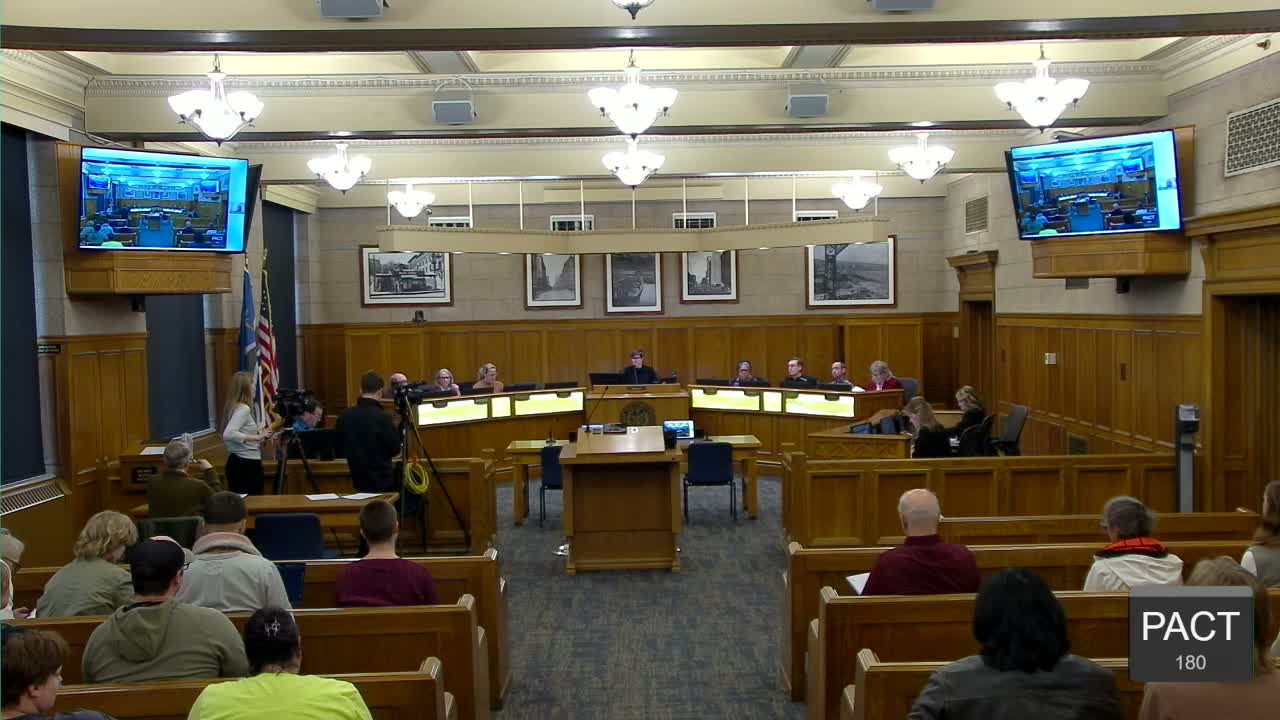
Duluth council approves five-year HRA-funded housing officer after heated debate
Summary
The Duluth City Council approved Resolution 248 to accept $559,719 from the HRA to fund a community-based lease officer — a five-year agreement that drew public opposition and an unsuccessful amendment to limit the term to one year. The final roll-call vote was 7–2.
The Duluth City Council voted 7–2 to approve Resolution 248, a five-year host-site agreement with the Housing and Redevelopment Authority (HRA) to fund a publicly owned and managed community-based lease officer at HRA properties, accepting $559,719 to fund the position over five years.
The vote capped a lengthy public-comment period and council debate centered on whether the role emphasizes surveillance and policing of HRA tenants or whether it provides needed safety and coordination for high-density housing. Public commenters urged the council to reconsider or rework the position: Julia Covert, a first-district college student, said the job description in agenda item 11 prioritizes monitoring and surveillance rather than investments in community infrastructure; Karen White asked councilors to "table and reenvision" the measure, questioned police involvement and cited past complaints about police culture; Andrea Hanick, an HRA resident and former commissioner, asked that the item be returned to administration and raised concerns about "knock and talks," eviction assistance language and lack of social-worker involvement.
Council debate reflected the split. Councilor Dirwachter moved a friendly amendment to limit the agreement to one year to allow additional review; that amendment failed on a roll-call vote, 3–6. Supporters said the HRA is the funding source and residents have asked for the service. Vice President Kennedy, who voted yes, said the HRA had requested the service and advocated pursuing parallel work to reduce police presence by increasing social services. Councilors opposing the five-year term cited legal risk, problematic language in the job description, increased funding compared with prior approvals, and the perception that a long-term agreement sends the wrong message to the public.
Director Culhane clarified that under the agreement the HRA pays the city to reimburse for the officer and that a 5% annual escalator was included; she also noted the city may terminate the agreement upon written notice. Advocates for the measure said it is a continuing program with prior approvals and that extended term provides budgeting certainty for planned escalators.
After the amendment failed, the council voted on the resolution as written. The clerk recorded the final roll-call as 7–2 — resolution passed. Several councilors asked staff and community partners to continue work on alternatives such as adding social workers and improving community-based responses.
The council’s action authorizes city officials to execute the HRA host-site agreement; the resolution’s implementation details, notification of termination provisions and any planned oversight or reporting will proceed through the city’s administrative process.