Get Full Government Meeting Transcripts, Videos, & Alerts Forever!
Get email alerts on the School Finance topic
No spam. Unsubscribe anytime.
Hillside board approves finance, labor items after warnings a state fiscal monitor could assume control
Summary
The Hillside Public School District board approved several finance and labor agenda items during a late meeting despite concern that failing to adopt a recommended budget could prompt state appointment of a fiscal monitor with broad override powers; record shows multiple abstentions on key votes.
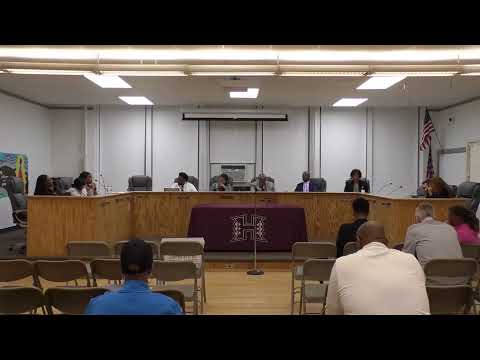
The Hillside Public School District Board of Education approved several finance and labor agenda items Tuesday night after a lengthy discussion in which members and a presenter warned that failing to approve the recommended budget could trigger state intervention.
Board president Dr. Howard opened the meeting and asked for final comments before votes. A board member asked what happens if the board declines to approve the recommendations, and a presenter who said he had professional experience representing a district under a fiscal monitor warned that the monitor could take control of district fiscal decisions. “The fiscal monitor would have control of everything,” the presenter said, adding that a monitor can override board votes and the superintendent’s recommendations and that, in his experience, appointment of a monitor is effectively final.
Mr. Shapiro moved items 1 through 3 under the finance agenda and later moved labor items 1 and 2. The clerk called the votes and announced that the motions carried. The meeting record contains inconsistent tallies in the audio/transcript: at one point the chair summarized “3 with 2 abstentions and 1 no,” and the clerk later read the record as “3 yeses, 5 abstention.” The clerk confirmed the motions carried; the meeting minutes were recorded for the official record. The labor items were announced as passed after the vote was called.
In closing remarks, Dr. Howard urged residents to contact state legislators about New Jersey’s school funding formula, calling it “unbalanced” and urging action in Trenton to prevent repeated cuts that affect students and staff. Several board members thanked teachers and staff for their work and acknowledged the difficulty of making personnel and program cuts.
The board’s discussion included a practical warning about legal and operational limits: when asked whether a board has recourse if a monitor is appointed, the presenter replied, “If a monitor is appointed, no. I’ve never seen where you can prevent it from happening.” That exchange framed several members’ decisions to record abstentions rather than oppose the motions outright.
The board adjourned after the votes and final remarks. Where the transcript contained inconsistent vote counts, this article reports the tallies as read aloud in the meeting and notes the discrepancy for transparency; official minutes should be consulted for the final certified vote record.