Get AI Briefings, Transcripts & Alerts on Local & National Government Meetings — Forever.
IOM launches World Migration Report 2026, warns narrowed legal pathways are driving riskier routes
Summary
The International Organization for Migration released the World Migration Report 2026 at a United Nations briefing, highlighting that 3.7% of people live abroad, internal displacement hit about 83.4 million in 2024, and that shrinking safe migration routes is pushing people into more dangerous, irregular journeys.
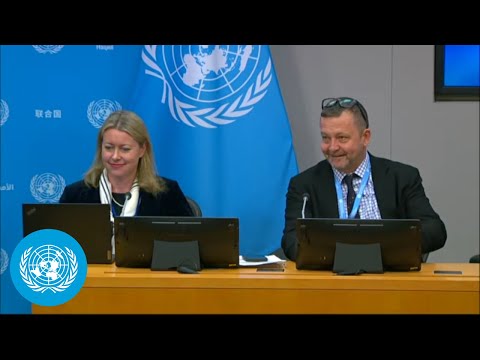
The International Organization for Migration released its World Migration Report 2026 at a press briefing at United Nations headquarters, where agency spokespeople urged evidence‑based cooperation to manage migration and warned that narrowing safe pathways is raising risks for migrants.
Zoe Brennan, spokesperson for the International Organization for Migration (IOM), summarized the report’s broad findings: "When migration is well managed, it supports jobs, economic growth, stability, and social cohesion." She told reporters that "today, around 3.7% of the world's population are international migrants," and that "by 2024, an estimated 83,400,000 people were internally displaced within their own countries," numbers the agency presented as central to the report’s analysis.
The report, IOM officials said, is a global compendium meant to inform member states, media and the public. "We do not go into country specific data and analysis in the report," Stuart Russell Campo of IOM’s research team said, noting the publication relies on global reference figures (for example, UN DESA migrant stock data referenced to mid‑2024). The report complements other IOM data projects, including the Missing Migrants Project, which Stuart cited to illustrate rising dangers on certain migration routes: despite a recent drop in attempted crossings on the Central Mediterranean, the number of migrants who went missing or were found dead there doubled, he said.
Report authors and UN network officials framed the launch to coincide with the second International Migration Review Forum (IMRF) at the United Nations, where member states and some 400 stakeholders are discussing drivers, border management, and how to combat trafficking and smuggling. Jonathan Prentice, head of the UN Network on Migration, described the IMRF as a space for cooperative action under the Global Compact for Safe, Orderly and Regular Migration, the voluntary framework adopted in 2018.
During a broad Q&A, reporters pressed officials on several issues: the treatment of migrants in U.S. facilities, the links between tightened border policies and deaths at sea, the role of climate change in mobility, whether bilateral labor‑mobility agreements (such as recent deals India signed with several countries) could be models for others, and how the rise of right‑wing politics in some countries affects asylum and refugee protections. IOM speakers repeatedly emphasized the need to pair policy choices with cooperation and local investments. "When states cooperate at regional and global level, there are better outcomes," Zoe Brennan said in response to concerns about political shifts in destination countries.
On climate and mobility, Pablo Rojas Copari, a researcher on the IOM team, pointed reporters to chapter 6 of the World Migration Report, saying it shows migration can function as an adaptation strategy and highlights the importance of investing in local actors and diasporas. On outreach and media use, Stuart said IOM is updating a World Migration Report Fact Checkers toolkit and expects to release it by the end of the summer or fall to help journalists access and use the report’s data responsibly.
The report’s authors were careful to note limits: the World Migration Report synthesizes available global data and peer‑reviewed analyses rather than providing up‑to‑the‑minute policy trackers for individual countries. Stuart advised reporters to consult the glossary in the report for formal definitions distinguishing migrants and refugees under international law.
The World Migration Report 2026 is available on the IOM website. The International Migration Review Forum continues at United Nations headquarters through the week, with member states expected to press for cooperative steps on safer pathways and anti‑trafficking measures.