Get Full Government Meeting Transcripts, Videos, & Alerts Forever!
Get email alerts on the Springfield 2051 topic
No spam. Unsubscribe anytime.
Organizers present ‘Springfield 2051’ plan after more than 1,500 survey responses
Summary
At a city work session, organizers Marta Wojcick and Kevin Rose told the Springfield City Commission that the citizen-led Springfield 2051 initiative collected 1,572 in-depth survey responses and produced seven strategic pillars; next steps include pillar-focused town halls and an implementation plan.
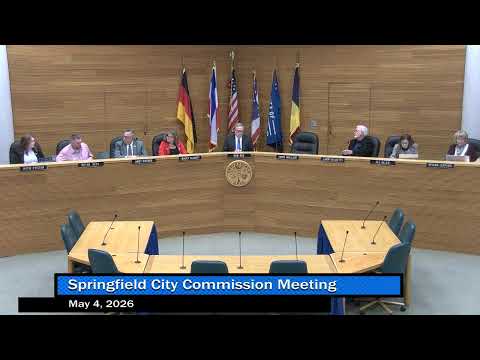
Organizers of the citizen-led Springfield 2051 effort updated the Springfield City Commission in a work session presentation, saying extensive public outreach produced the foundation for a multi-decade community plan.
"We reached 1,572 community survey results," Marta Wojcick told commissioners, describing the survey as an in-depth instrument that helped clarify residents' priorities and concerns. Kevin Rose said the team paired that quantitative work with listening and visioning sessions across neighborhoods and the county.
The presenters said the effort produced seven strategic pillars: fostering strong neighborhoods and community well-being; creating youth opportunities; activating Southside revitalization; elevating arts, heritage and culture; capitalizing on recreation and natural assets; enhancing downtown and corridors; and stimulating strategic economic growth. "Those 7 of these were so important in this region that we heard from our citizens that these were so important that we couldn't merge them," Rose said.
Wojcick and Rose said the project is emphasizing implementation: each pillar will be the focus of dedicated sessions to craft short- and long-term actions, and organizers plan additional town halls and outreach. They also highlighted new public-facing resources, including a podcast recorded in Springfield and the project website (springfield2051.com), to make background materials accessible.
Commissioners asked about measurable outcomes and timelines. Wojcick said early measures of success include the breadth and depth of community engagement and partner buy-in; tangible projects will follow once implementation plans are developed. Rose said the effort is nongovernmental in origin and that broad community and institutional ownership will be needed to carry projects into action.
The presenters did not request immediate legislative action; they asked the commission to continue listening and to support outreach and coordination as the project moves toward implementation.