Get Full Government Meeting Transcripts, Videos, & Alerts Forever!
Get email alerts on the Maternal Child Health topic
No spam. Unsubscribe anytime.
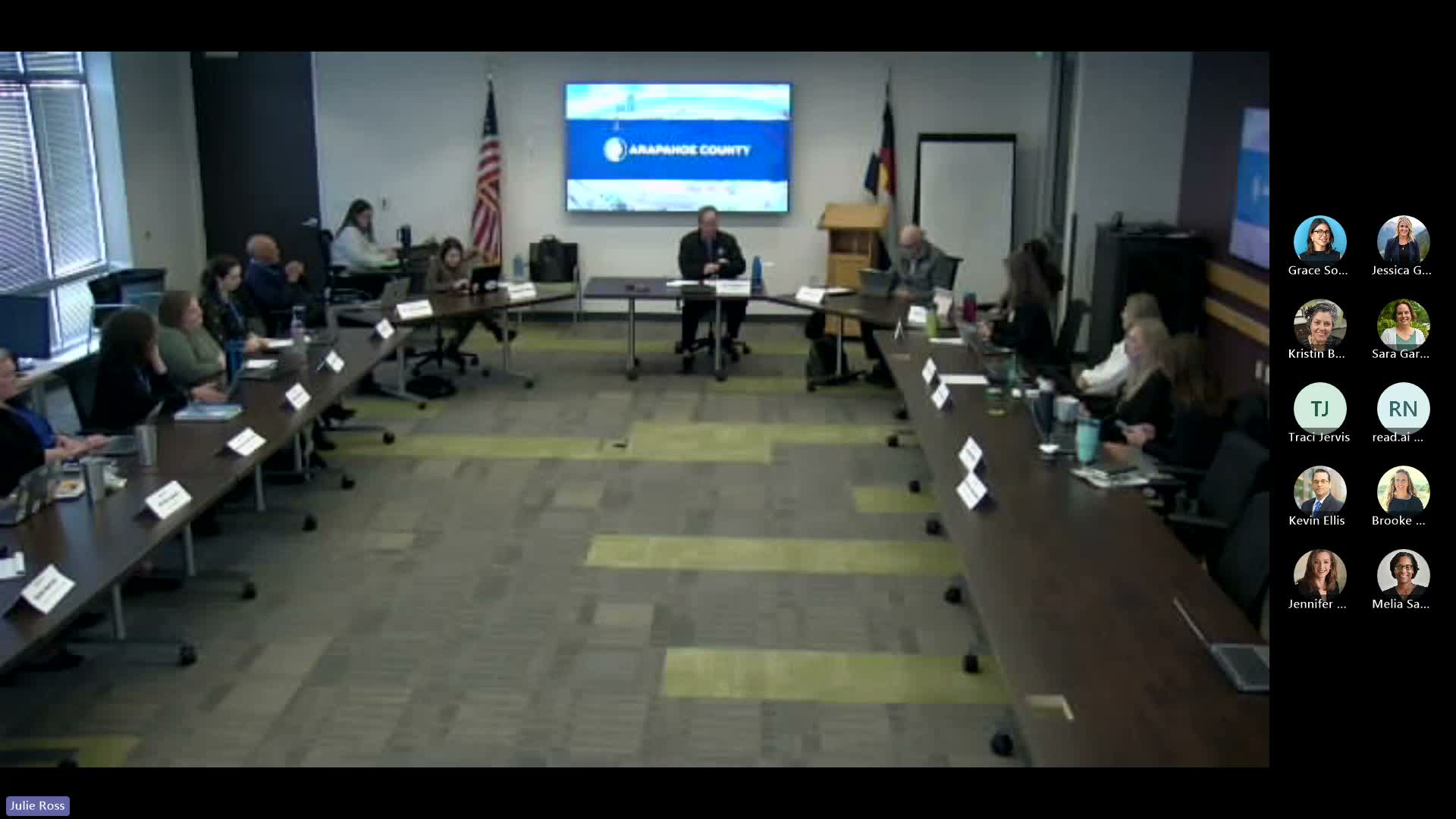
Arapahoe County Public Health spotlights doulas, Family Connects pilot and community partnerships
Summary
At a study session, Arapahoe County Public Health staff described a growing maternal-child health effort that trained 22 doulas, launched a Family Connects nurse home‑visitation pilot serving new parents, and leaned on small community sponsorships and braided funding to extend services while seeking additional nurse FTEs and grants.
Arapahoe County Public Health detailed recent work to expand maternal and child supports at a board study session, highlighting a doula training initiative, a Family Connects nurse home‑visitation pilot, and small grants to community partners.
Program leaders said the county sponsored a four‑day training that enrolled 22 doulas and provided stipends and follow‑up mentorship to support their enrollment as Medicaid providers. "We were able to train 22 doulas through that," said Mikayla Brands, a community health promotion specialist, describing bilingual training and planned mentorship to help new doulas complete enrollment and clinical experience.
The board heard that Family Connects — a voluntary, no‑cost nurse home‑visitation program — launched for families who give birth at Denver Health and live in Arapahoe County, a catchment the presenters estimated at about 840 births a year. "In the first three months ... we're now at 47 families served in about six languages," Brands said, adding that staff trained two certified lactation consultants and created a resource binder to support visits. Staff reported an 85 percent survey completion rate among participating families.
Presenters told the board the maternal and child health program approaches its work as systems improvement, using core state and national measures to shape quarterly action goals. "Our maternal child health funding is to focus on the system," said Michelle Evendick of the maternal child health program, noting the program tracks percent of key activities completed each quarter and uses braided funding across at least five streams.
Staff emphasized the limits of current capacity. The Family Connects pilot currently has one full‑time nurse; leaders said they have applied for three additional grants to add nurse FTEs so the program can reach more families. "We just have one full time nurse on this program, and there are enough babies being harmed that we definitely need at least two," Evendick told the board.
Board members asked how the doula training connects to Medicaid billing and quality measures. Program staff said Medicaid requires doulas to be certified by one of the HCPCS‑approved organizations, complete three births and other onboarding steps; program partners are helping trainees get the clinical referrals needed to enroll. Staff also said they are monitoring outcomes tied to doulas, including cesarean rates, breastfeeding and postpartum mental health, as workforce tracking develops.
The presentation included examples of small community grants — several under $5,000 — for mental‑health caregiver circles, first‑birthday celebration events that raise awareness about Black maternal and infant health, disability‑inclusive activities, and lactation training. Presenters said modest sponsorships have high reach through trusted community organizations.
The board did not take formal action on the programs during the session. Staff said they will return with funding updates and follow‑ups at six‑ and 12‑month milestones for the doula cohort and continue pursuing grants to expand Family Connects.