Get Full Government Meeting Transcripts, Videos, & Alerts Forever!
Get email alerts on the Ev Charging topic
No spam. Unsubscribe anytime.
Arapahoe County adopts land‑use changes to allow electric‑vehicle charging stations
Summary
The Board of County Commissioners unanimously approved amendments to the county Land Development Code and Development Application Manual to permit and regulate electric vehicle charging stations countywide, following staff presentations and a motion by Commissioner Baker.
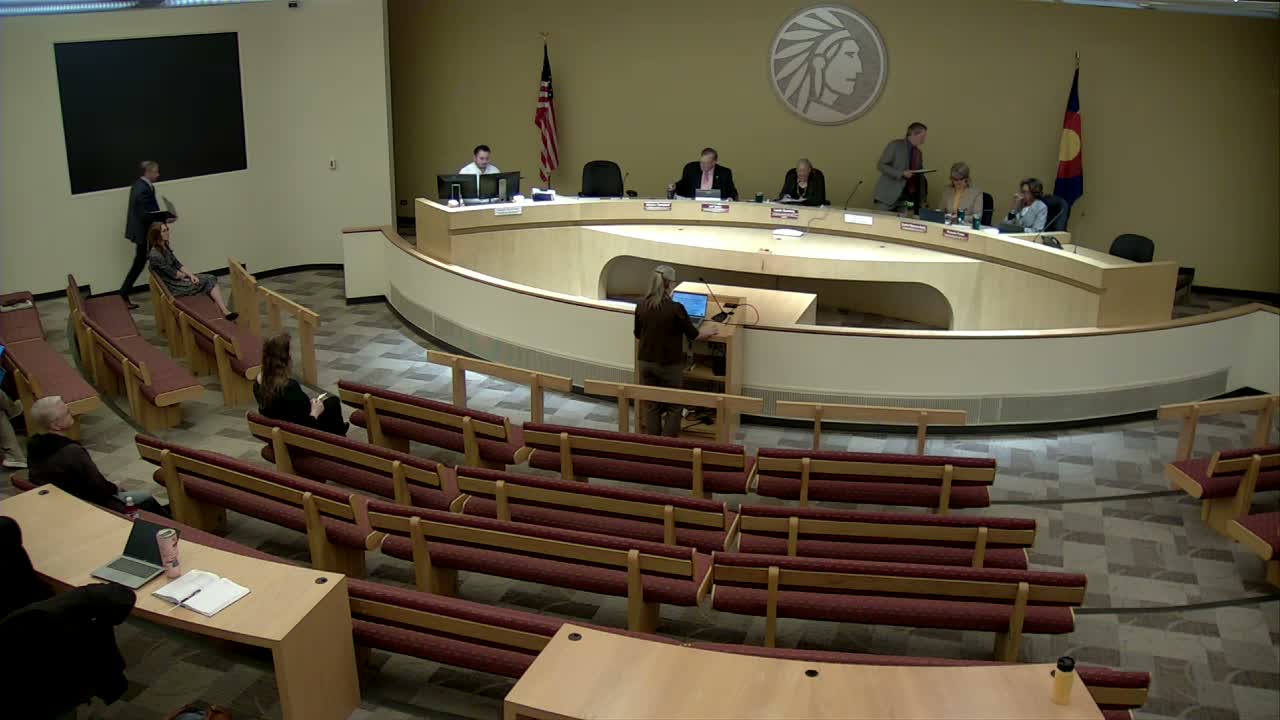
Arapahoe County’s Board of County Commissioners voted March 10 to adopt amendments to the county Land Development Code and the Development Application Manual to regulate electric vehicle (EV) charging stations across multiple zoning districts.
Staff said the changes implement a state law cited in the presentation as “House Bill, 20 four‑eleven 73” and update three chapters of the code: the permitted‑use tables, Chapter 3 (transportation) with a new Section 3.11b for electric vehicles, and Chapter 7 definitions. Molly Orkel Larsen, principal planner in Public Works and Development, told the board the Development Application Manual was revised to add EV requirements to six application types.
Ray Fields, a planner with the department, described the practical effects: EV charging stations would be allowed as principal uses in commercial and industrial zones, allowed as accessory uses in most other districts (with the floodplain as a stated exception), and subject to updated setbacks and equipment placement rules. Fields showed examples including a primary charging station (similar to a gas station model) and smaller accessory installations at retail sites. He said canopies and solar integrations are permitted under specific conditions and that maintenance responsibility rests with the property owner or station operator.
Staff also reported two public comments received during the September 2025 public‑review period — one regarding virtual waivers for multifamily development (which staff forwarded to the building division) and one about potential fire hazards. Fields said his research found a low rate of annual fire incidents for electric vehicles relative to similar uses and that EV installations must comply with the National Electrical Code and National Fire Protection Association standards; fire districts contacted indicated they had training and equipment to respond.
Commissioners asked technical questions about setback exceptions, whether EV stations would supplant gas stations (staff said the rules are intended to add EV infrastructure, not replace existing fuel stations), and how multifamily building requirements intersect with electrical code updates. With no callers in the public comment queue for the hearing item, Commissioner Baker moved to adopt the resolution approving the amendments; the motion was seconded and the board approved it by voice vote.
The board did not record a detailed roll‑call vote in the meeting transcript. Staff said the county has coordinated with the Colorado Energy Office and used model land‑use guidance to shape the amendments. The adopted changes aim to streamline permitting and provide clear standards for siting, design, and safety of EV charging infrastructure across Arapahoe County.