Get Full Government Meeting Transcripts, Videos, & Alerts Forever!
Get email alerts on the Legislative Procedure topic
No spam. Unsubscribe anytime.
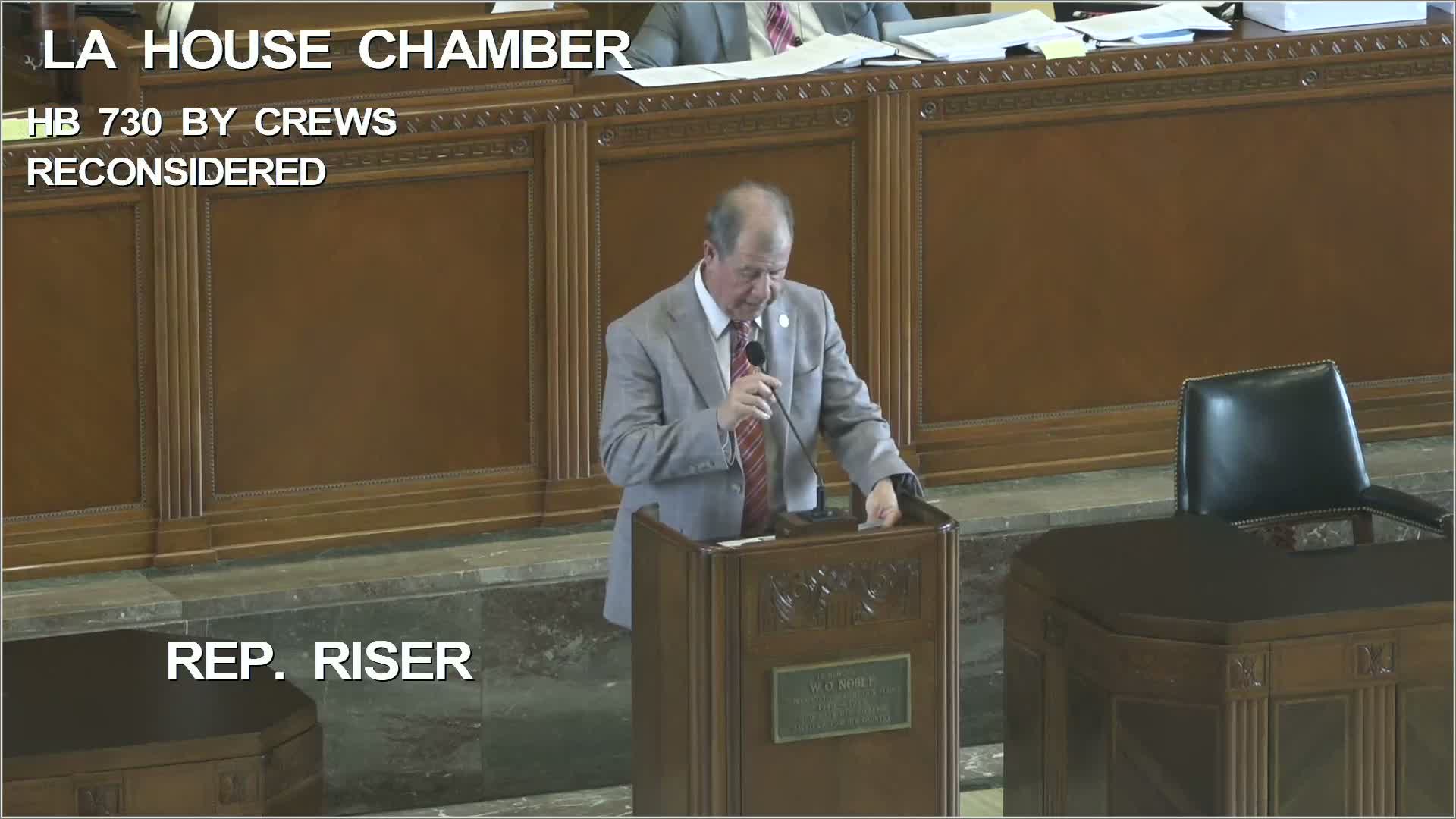
House suspends rules to permit reconsideration of previously failed measures after contentious floor vote
Summary
A motion to suspend House rules to reconsider previously-failed bills drew objections and a lockout/quorum exchange but ultimately passed, setting reconsideration for next Tuesday. The episode highlighted procedural tension over bringing bills back after two failures.
Representative Reiser moved on the floor to suspend the rules to reconsider the vote on a previously-failed bill (HB 730) and associated measures. Representative Green objected to bringing a bill back a third time, citing the House rule that a bill failing twice cannot be brought up again without a rule suspension. The House proceeded to a roll-call sequence that included a brief quorum/lockout before the suspension vote passed.
During the exchange, members asked for clarification of the threshold for a suspension vote. The presiding officer explained a rule-suspension requires two-thirds of those present and voting. After the vote tabulations and some members changing recorded votes, the clerk announced the motion passed (the floor record shows "70 votes, the motion passes"). The House then conducted the motion to reconsider the prior failed vote; that reconsideration was scheduled for the next Tuesday floor call.
Representative Green voiced the primary objection on procedural grounds, telling the chamber that the bill had already failed twice and that bringing it back required suspension; the floor followed the suspension process and set the reconsideration for further action.
Why it matters
Suspension of rules to permit reconsideration is a standard parliamentary procedure but can become politically contentious because it changes the ordinary limits on how often a failed measure may be raised in a single session. The adoption of the suspension vote means members who opposed the earlier outcome will have another opportunity to debate and vote on the identified measures at the next scheduled calendar call.
Provenance
Based on the April 29 House floor transcript, motion and objection sequence and clerk tallies (noted in SEG 2223'SEG 2425).