Get Full Government Meeting Transcripts, Videos, & Alerts Forever!
Get email alerts on the Housing topic
No spam. Unsubscribe anytime.
Arapahoe County delays short‑term rental ordinance after an hours‑long hearing; board sets new public comment date
Summary
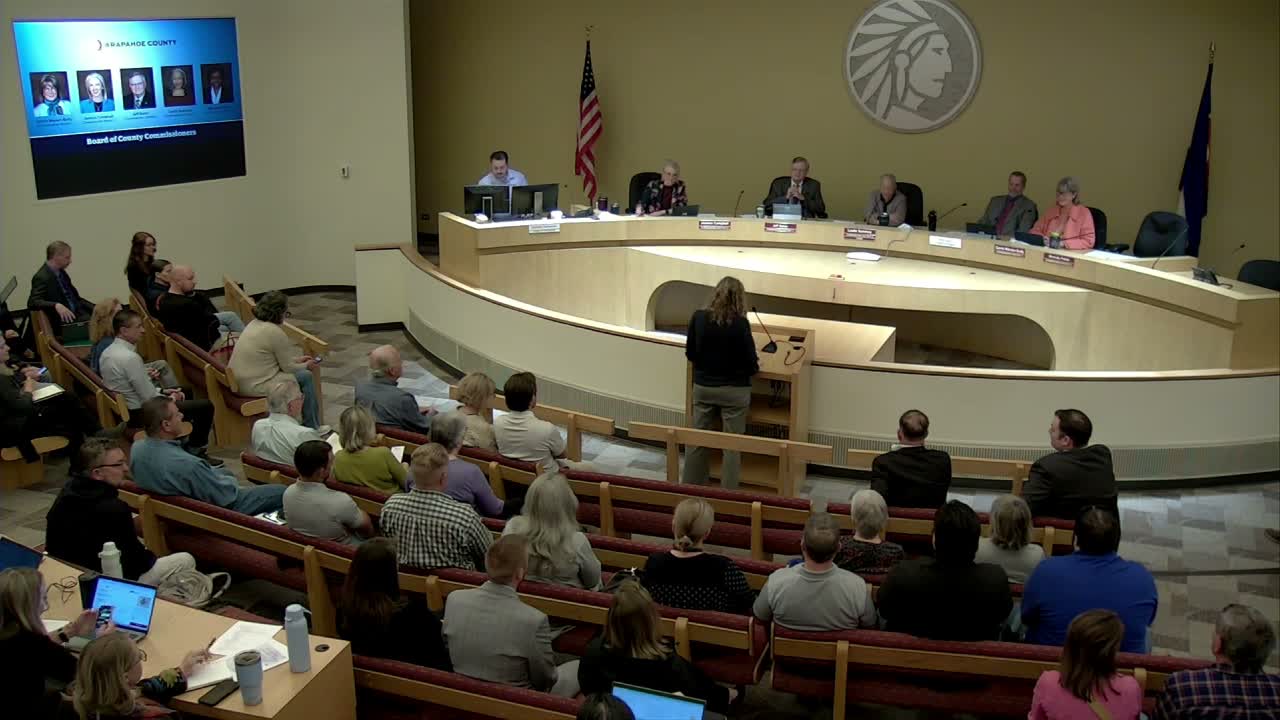
After a multi‑hour presentation and two rounds of public comment, the board initially approved a short‑term rental ordinance and land‑development code amendment but then voted to reconsider and continue both items to May 12, 2026 so virtual commenters can be heard.
The Arapahoe County Board of Commissioners moved through a long public hearing on a proposed short‑term rental licensing ordinance (ORD 2026‑01) and a corresponding land development code amendment, heard dozens of in‑person public comments from both opponents and hosts, voted to approve the measures, and subsequently reconsidered those votes and continued both items to May 12, 2026 to permit additional virtual public participation.
Caitlin Mars, zoning and code manager with Public Works and Development, presented the ordinance and the land development code changes. She described an administrative licensing program that would require annual licenses tied to an operator (nontransferable), a primary‑residency requirement with a legacy exemption for existing operators, a proposed 500‑foot separation for new rentals, a multifamily cap of 100 licenses, occupancy limits, life‑safety inspections and a requirement that a local responsible agent answer calls within 15 minutes and arrive within 60 minutes when necessary. Staff proposed an initial $200 application fee and a $350 annual licensing fee.
Public comment included substantial opposition from neighborhood homeowners who said the LRA response time, the 500‑foot buffer and the legacy window could unfairly remove responsible hosts or create inequities; hosts and managers argued the 15‑minute response and 60‑minute arrival rules are unrealistic for many legitimate operators. Other commenters backed strict rules to protect residential character, safety and parking.
Commissioners asked detailed legal and operational questions about legacy documentation, the appeals process (to the Board of Adjustment), OWTS/septic inspections and the scope of authorized public inspectors. Staff and the county attorney’s office explained that enforcement is intended to be education and voluntary‑compliance first, with civil infraction notices, fines and due‑process appeal rights available when violations persist.
The board initially voted to approve the ordinance and the land‑development code amendment; later in the meeting, citing technical difficulties that limited online participation, commissioners moved to reconsider those approvals and to continue both items to May 12, 2026 to allow additional virtual public comment. No final ordinance or code change will take effect until the board reconvenes and re‑votes on the continued items.