Get Full Government Meeting Transcripts, Videos, & Alerts Forever!
Get email alerts on the Public Comment topic
No spam. Unsubscribe anytime.
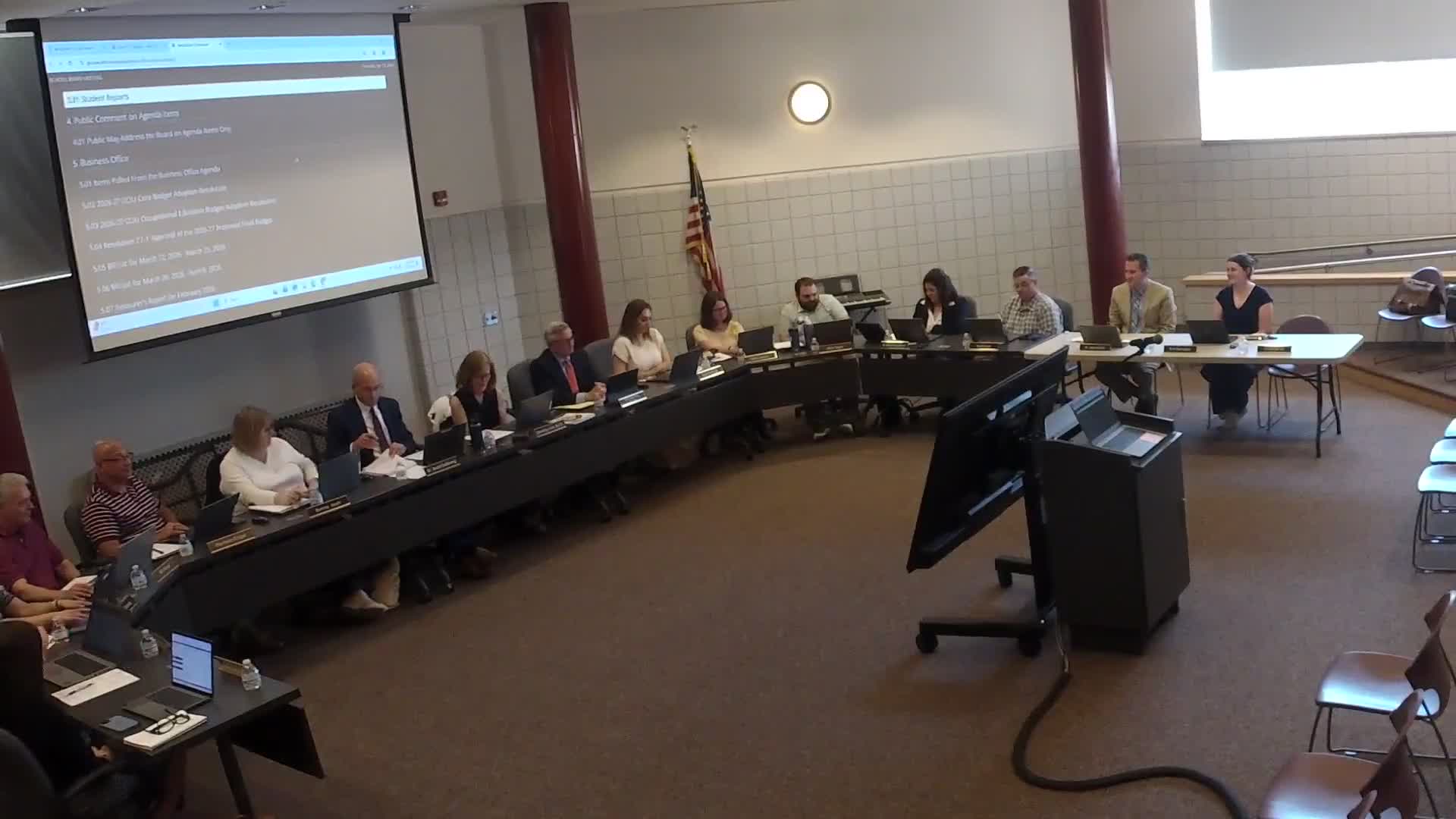
Public commenters press Avon Grove board on immersion spending, social-media policy and student bullying
Summary
Residents challenged the board April 23 over the cost of the dual-language immersion program and a proposal to limit public comment on the district Facebook page, and urged more attention to bullying and trauma supports for students.
Several members of the public used the meeting's public-comment period to press the board on spending priorities and social-media policy.
Resident Jerry LaMastra of London Grove Township asked why taxes are increasing and requested the top five areas where funding is rising. Superintendent Dr. Tijon responded on the record that the district's primary cost drivers are salaries and wages (including costs driven by collective bargaining), student-support services (noting an increase in students receiving special-education services and higher-intensity supports), charter-school tuition, rising transportation costs and mandatory retirement contributions. LaMastra also asked about citizenship-status data for students; the superintendent said federal law prohibits collecting that information.
Jacqueline Smiro criticized district spending on the dual-language immersion program, saying the program employs seven teachers at a cost she characterized as "almost $900,000" for roughly 195 students (about $5,000 per student) and urged reallocating funds to classroom teachers. The superintendent replied that immersion students would otherwise be in regular-education classrooms with average class sizes of about 25 in grades K—3, and that the district would need the teachers regardless of the immersion program.
Katie Cogdell followed during the second public-comment period, questioning a prior board comment about not allowing public comment on the district Facebook page and arguing that the remark imported politics into a board decision. Cogdell described a personal family case of student bullying, criticized perceived lack of trauma-support resources and asked whether the board has discussed updating the code of conduct to better address bullying.
Board members thanked commenters but did not announce immediate policy changes; the trustees noted the public-comment rules and encouraged follow-up contact for additional information.
Next steps: Comments will be part of the public record; any formal policy changes (for social-media comment rules or bullying/code-of-conduct updates) would require committee review and board action.