Get Full Government Meeting Transcripts, Videos, & Alerts Forever!
Get email alerts on the Student Wellbeing topic
No spam. Unsubscribe anytime.
County prevention official: Avon Grove youth report largely positive school climate despite mental-health pockets
Summary
Chester County prevention manager Kathy Collier presented preliminary student-survey results showing declining lifetime alcohol use, high feelings of safety in Avon Grove schools, but continuing mental-health concerns affecting roughly one-third of youth; trustees asked for building- and grade-level breakdowns.
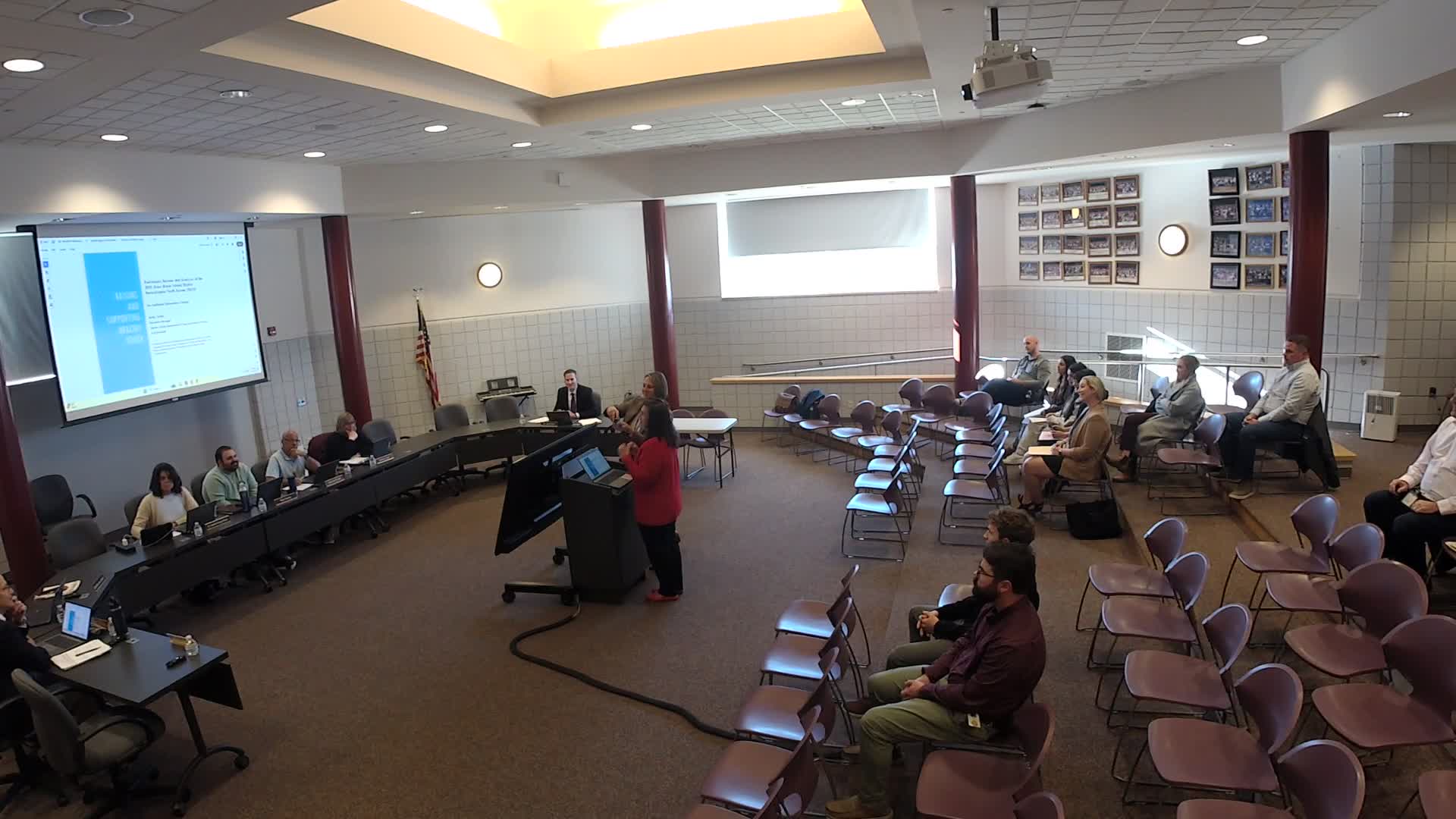
Kathy Collier, prevention manager at the Chester County Department of Drug and Alcohol Services, told the board on April 7 that preliminary survey results show Avon Grove students generally report feeling safe at school and declining lifetime substance use, but that mental-health struggles remain a serious concern.
Collier said the county administers the survey in schools to reach the largest sample of youth and that the tool includes validity checks “so if a student says yes to [a fake substance] they are very clearly lying in that answer,” a measure the county uses when interpreting trends. She urged caution in reading preliminary lifetime-use numbers and said the county usually emphasizes 30‑day-use measures to understand current behavior.
Why it matters: School leaders use the survey to plan prevention, counseling and family supports. Collier told trustees that the data help identify where district and county programs should focus resources.
The presentation highlighted several concrete findings Collier said were encouraging: “90 percent of them never been threatened while at school” and “95 percent of them have never experienced violence while at school,” she said. Collier added that lifetime alcohol use has trended down and that marijuana use patterns are shifting — “marijuana has been catching up to alcohol as a primary substance of choice” countywide — though vaping and cartridge-based THC remain points of concern because contents are poorly regulated.
Board members pressed for more granular results. One trustee noted a slide showing only 46 percent of respondents report they “enjoy being in school” and asked whether building-level or grade-level breakdowns are available; Collier said the county provides aggregate (6–12) data to the district and that grade-level results are possible, with building-level reporting closer but not identical.
Collier emphasized the survey’s broader value beyond substance counts: it captures perceptions and protective factors — whether students have caring adults and where they turn for help — information county and district preventionists use to design supports. She also cautioned that lifetime-use responses can include one-time experimentation and recommended focusing on 30-day measures for current-use decisions.
Next steps: District staff said the full 100‑page report will be available to trustees and that they will examine building- and grade-level breakdowns in the final report to guide the district’s comprehensive planning and student-support strategies.