Get Full Government Meeting Transcripts, Videos, & Alerts Forever!
Get email alerts on the Comprehensive Plan Amendments topic
No spam. Unsubscribe anytime.
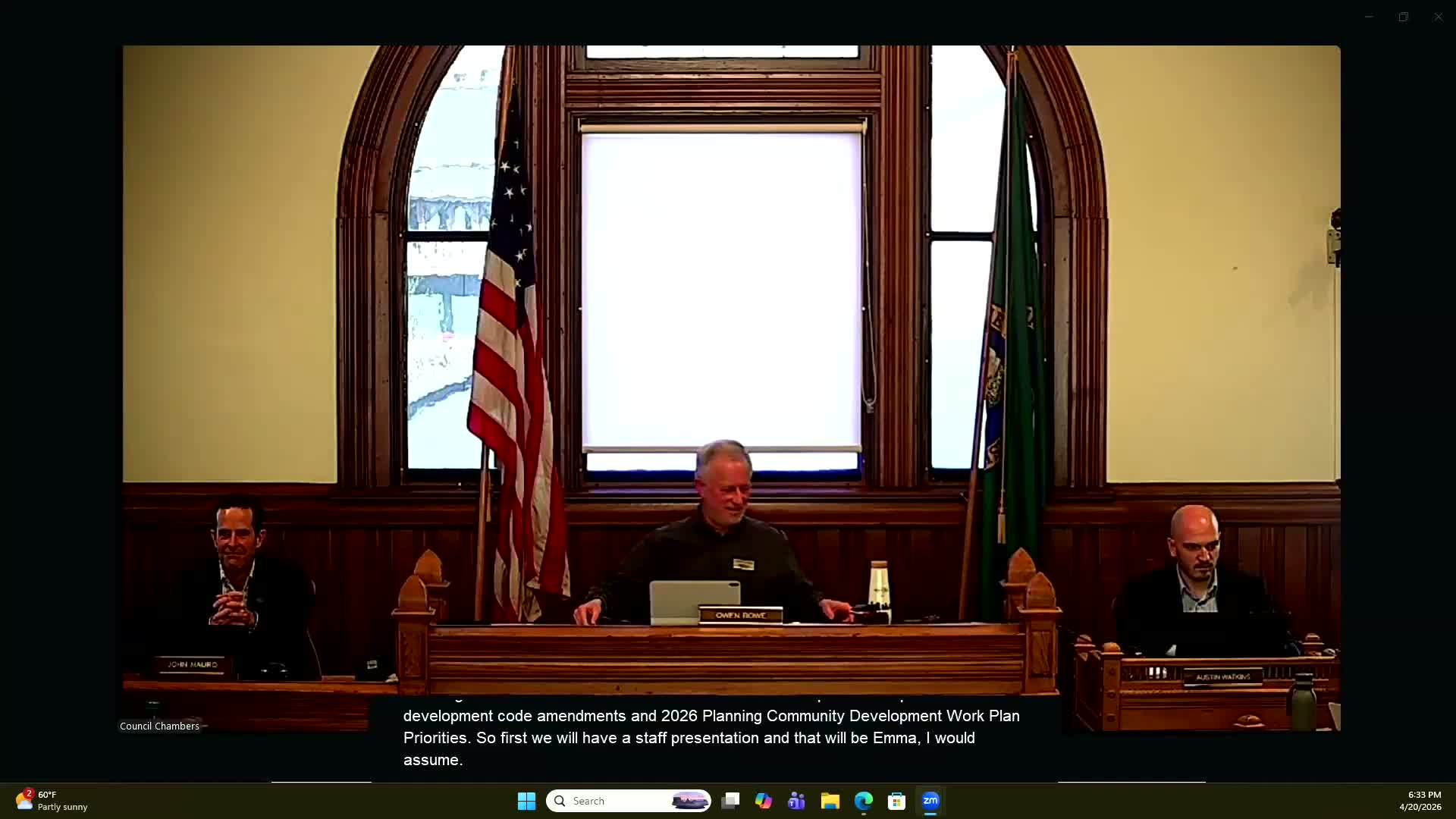
After hours of testimony, Port Townsend council declines to reopen 2026 comp‑plan docket for agriculture amendments
Summary
City planners warned that reopening the 2026 comprehensive plan amendment docket would trigger large legal and staffing obligations; after more than an hour of public testimony from growers and residents, the council voted not to reopen the 2026 docket and encouraged further community–staff work and potential inclusion on the 2027 work plan.
City planning staff recommended against reopening the 2026 comprehensive plan amendment docket after detailing legal and resource obligations under state law and the city's annual amendment cycle. Planning Director Irma Villan told the council that reopening the docket mid-cycle could require a land-capacity analysis and programs such as transfer-of-development-rights, and that 2026 staff capacity is already committed to statutorily required items including housing and permit-processing work.
The recommendation drew a lengthy public-comment period and robust attendance. Farmers, food‑system advocates and residents urged action on a trimmed package of amendments forwarded by the Planning Commission and a Quimper Growers Network proposal that would recognize and support urban agriculture, expand options for on-site farm sales and community gardens, and create opt-in recognition programs for qualifying farms. Testimony emphasized food security, local economy benefits, and existing community investments; several speakers also asked for municipal water access considerations and discrete code changes to reduce permit friction.
Council members engaged staff on technical constraints: how water rights differ between municipal and agricultural use; the degree to which conservation easements and deed restrictions are private transactions; and which items could be advanced administratively or as targeted code edits rather than as a full comp‑plan amendment. Staff reiterated that some proposals (definitions, opt‑in recognition, limited code tweaks) could be considered outside of the docket, while others would trigger large analyses required by the Growth Management Act.
After deliberation, the council declined to reopen the 2026 amendment docket. Members stressed the importance of the topics and asked staff and community members to continue work through narrower task groups and to bring refined, implementable proposals to July work‑planning and the 2027 docket process. The decision was framed as a prioritization driven by legally mandated work and limited staff capacity, not as opposition to the goals of supporting local agriculture.
Next steps outlined by council included convening smaller working groups, advancing some non‑docket policy items where feasible, and reassessing priorities for the 2027 amendment cycle.