Get Full Government Meeting Transcripts, Videos, & Alerts Forever!
Get email alerts on the Energy Policy topic
No spam. Unsubscribe anytime.
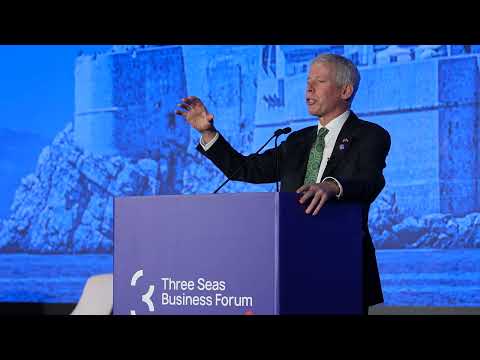
Presenter defends U.S. 'energy dominance' and criticizes net-zero 2050 at 3C summit
Summary
At the 3C summit the Presenter praised the U.S. shale revolution and the administration's "energy dominance" agenda for lowering costs and boosting exports, criticized net-zero 2050 targets as unrealistic and "massively destructive," and called for building alternative energy systems before dismantling existing infrastructure.
The Presenter used his 3C summit address to highlight what he called the success of U.S. energy policy and technology, saying a shale revolution transformed the United States from an importer to the world's largest producer and exporter of oil and natural gas. "We went from the world's largest importer of natural gas to, by far and away, the world's largest exporter," he said, and cited efficiency gains in drilling activity.
He credited policy changes under President Trump with supporting increased production and said the administration embraces "energy dominance" — a phrase he described as meaning the United States will produce so much energy that domestic prices fall and allies can be supplied without making others "subservient." "Dominance does not mean that others are subservient," he said.
Turning to European energy policy, the Presenter argued parts of Western Europe have reduced electricity production and seen higher unit costs, which he tied to deindustrialization. He called the EU's embrace of net-zero 2050 an "activist slogan" and said the Intergovernmental Panel on Climate Change's economic analysis, in his words, shows pursuing that pathway without first building cheaper, cleaner alternatives would be "massively, massively destructive."
On nuclear power, the Presenter argued public fear and political opposition have limited its role: he noted nuclear fell from about 6.5% of global energy in 2000 to under 5% today and called for renewed support for the technology. He framed climate change as "real" with roughly 1'C warming over the last century but said extreme-weather deaths have declined sharply over time, citing an asserted fall from about 500,000 annually a century ago to about 10,000 last year.
The remarks mixed policy advocacy and contested claims; the speaker did not cite specific laws, proposed regulations, or funding packages during the address. The session closed without motions or votes.