Get Full Government Meeting Transcripts, Videos, & Alerts Forever!
Get email alerts on the Accreditor Governance topic
No spam. Unsubscribe anytime.
Draft rules would tighten governance and conflict-of-interest controls for accreditors; commenters warn of costs and chilling expert participation
Summary
The Department proposed stricter separation between accreditors and related trade associations — covering finances, shared personnel, office space and standards-setting bodies — to reduce capture and conflicts. Stakeholders asked for clarity and raised cost and statutory-limit concerns.
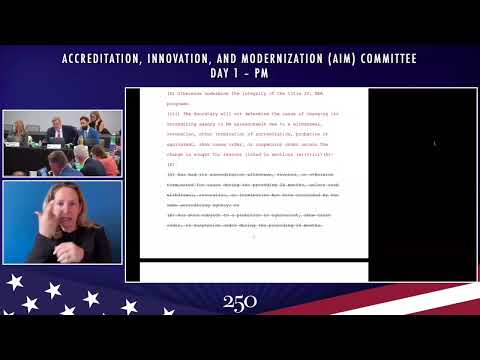
The Department presented draft language that would strengthen governance expectations for accrediting agencies to prevent undue influence by related trade or membership organizations. The proposed changes replace loose “guidelines” with mandatory policies and “controls” covering conflict-of-interest disclosures, recusal rules, and separateness for finances, personnel and facilities. Jeff and Jake (Department counsel) said the aim is to prevent situations in which an accreditor is effectively controlled by a related trade association through shared staff, budgets or facilities.
Panelists broadly agreed on the goal but debated particulars. Jennifer Bloom and others warned that too-strict rules could chill useful peer review and exclude subject-matter experts; they urged careful drafting so subject-matter experts can advise standard-setting processes without creating conflicts. Bill Hathaway and others cautioned that requirements for separate incorporation, separate office space, or strict financial separation could impose significant costs on smaller programmatic accreditors and asked the Department to review existing compliance models and examples before finalizing language.
Specific points raised included whether waiver language in statute (applies to agencies recognized on or before a statutory date) should remain visible in the regulations, how to treat shared administrative services such as IT and housekeeping, whether preaccreditation activities should be counted towards recognition experience, and whether anonymous complaint channels should be routed to the Department rather than the accreditor for some kinds of allegations.
Next steps: Department staff invited stakeholders to provide examples of governance arrangements that they believe meet the draft’s goals without undue cost, and to suggest drafting tweaks (including preamble language) to clarify how controls would apply in practice.