Get Full Government Meeting Transcripts, Videos, & Alerts Forever!
Get email alerts on the Programmatic Accreditation topic
No spam. Unsubscribe anytime.
Panel presses Department to tighten 'federal link' for programmatic accreditors
Summary
Draft rules would require programmatic/specialized accreditors to demonstrate an active federal-program link rather than a historical or speculative connection; participants debated a risk-based review and whether a two-year timing expectation should remain.
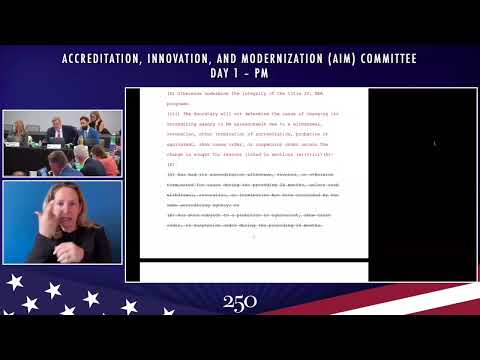
Department staff told the committee the proposed changes to Part 602 are intended to strengthen the statutory ‘federal link’ requirement for programmatic (specialized) accreditors so that recognition is reserved for agencies with an active, demonstrable link to federal programs. Beth (Department staff) said the Department’s view is that some agencies claim a federal link that is historical or nominal, and the draft seeks to ensure the link is real and current, consistent with statutory limits the Department cited during discussion.
Committee members offered alternatives. Rebecca suggested a risk-based review that weights past and anticipated federal funding to avoid imposing the heaviest review burden on low-impact programmatic accreditors. Several participants asked about the practical effect of a two-year expectation (that an agency demonstrate institutions will rely on it within two years) for initial recognition; Jeff said the two-year rule has been used as practice but is not statutory, so the draft removes a blanket two-year requirement while preserving staff ability to insist on concrete evidence before recognition.
The Department asked for written proposals and legal rationales for suggested risk-based approaches. Panelists also discussed preaccreditation and whether preaccreditation status should be counted toward the timeline; Beth noted the draft already contemplates preaccreditation activity as part of the recognition process.
Next steps: staff invited concrete edits and legal rationales for any risk-based review proposal and said they would consider clarifying language about the timing and the evidence required for initial recognition.