Get Full Government Meeting Transcripts, Videos, & Alerts Forever!
Get email alerts on the Early Childhood Expansion topic
No spam. Unsubscribe anytime.
School board studies early‑childhood hubs and asks for financial analysis to expand preschool access
Summary
At a May 5 study session the Salt Lake City School Board reviewed research on pre‑K benefits, discussed using underused district properties for early‑childhood hubs and community learning centers, and agreed to form a small working group with city and county partners and to request a financial sensitivity analysis.
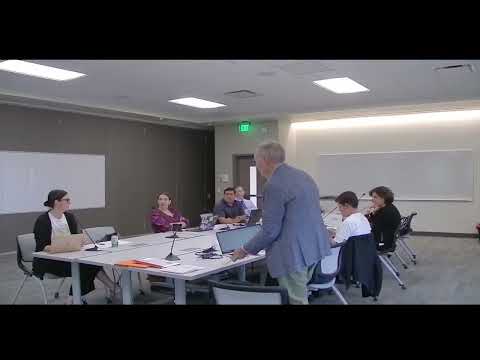
The Salt Lake City School Board on May 5 held a study session to consider expanding early‑childhood education and community learning center (CLC) options on district property, with board members asking staff to model costs, partners and enrollment impacts.
Doctor Grant, invited to open the discussion, summarized decades of research showing long‑term societal gains from high‑quality preschool, while noting academic test‑score advantages often "fade out" by about third grade. "For practically every dollar you put in you get more than $10 of return for society," Doctor Grant said, citing long‑term outcomes tied to dispositions, school persistence and employment rather than only test scores.
Board members framed the proposal as both a student support strategy and a potential tool to address declining enrollment. "One strategy we should consider is trying to get families embedded in a system," Board member Ashley said, arguing that adding pre‑K and wraparound services can make families more likely to enroll and stay in the district.
District staff outlined current program structure and limits. Tiffany, an early‑childhood staffer, explained the district operates two models: a tuition‑based option (typically on the East Side) and sliding‑scale/at‑risk classrooms funded from district Title I and other at‑risk allocations. Tiffany said full‑day pre‑K 4 currently runs four days per week; Fridays are reserved for planning, professional development and meal prep for instructors. "That is $465 a month" for some full‑day sites, Tiffany said, noting sliding‑scale fees at Title I sites range about $64 to $165 per month.
Alan, who oversees budget details for the program, told the board the district currently uses about $1,500,000 in what the staff labeled "urban issues" mitigation funding to support at‑risk pre‑K, with roughly $46,000 applied toward tuition‑based sites. He said tuition currently does not fully cover costs and emphasized that any expansion would require outside partners or philanthropic dollars to avoid creating a significant new burden on the district's operating budget.
Board members discussed facility options, pointing to gaps in geographic coverage. Several members noted a concentration of pre‑K and CLC services on the West Side, with fewer touch points in Central and East neighborhoods. Members suggested studying whether underused or closed buildings (examples discussed included Bennion and Bennion‑area properties, Bennion was raised repeatedly) could be repurposed as early‑childhood hubs or multi‑service community centers that combine childcare, after‑school services and family supports.
On operational design, staff cautioned that pre‑K classrooms have special infrastructure needs (for example, two sinks and food‑handler certification requirements) and that moving to a five‑day model would change staffing and supervision needs; staff proposed piloting models that blend preschool instruction with paraprofessional‑led daycare on additional days.
Rather than take a formal vote, the board reached a consensus on next steps. Members agreed to form a small working group — suggested participants were Ashley, Bryce and a member of board leadership — to meet with city and county officials and to return to the full board with a financial sensitivity analysis and a set of target metrics (target number of pre‑K classrooms and enrollment goals, and options for piloting five‑day service models). The board also asked staff to clarify how any expansion would fit with ongoing facilities work (including the JLL facilities study) and to place the topic on the agenda for a longer discussion at the upcoming board retreat.
The study session closed with the board asking staff to develop the requested financial modeling and partner‑engagement plan; members emphasized that expanding early‑childhood capacity would be contingent on outside funding and careful operational planning.