Get AI Briefings, Transcripts & Alerts on Local & National Government Meetings — Forever.
MDOT outlines emergency culvert replacement at World’s End Turn; residents press for faster, long‑term fixes
Summary
Maryland Department of Transportation told the Dorchester County Council it will replace failing metal culverts at World’s End Turn with concrete pipes using a cofferdam approach, a job MDOT estimates could take about three weeks; residents urged faster alternatives and raised concerns about ambulance access, detour length and economic impacts.
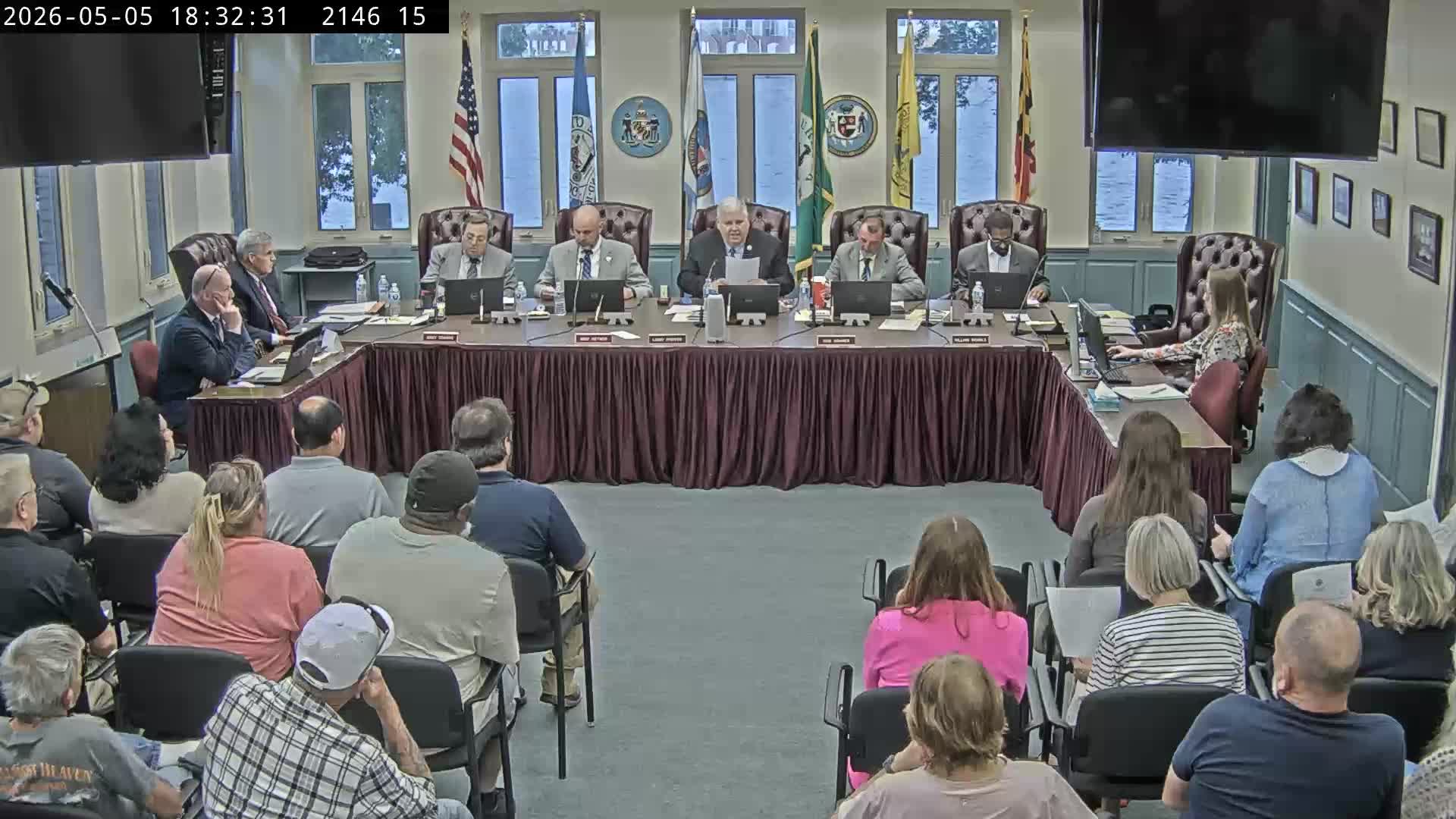
Maryland Department of Transportation representative Mark Crampton told the Dorchester County Council on May 5 that failing metal culverts at World’s End Turn will be replaced "like for like" with concrete pipe sections using a cofferdam and dewatering method intended to shorten the detour and construction time. Crampton said the metal pipes are corroding from tidal water and concrete pipes will be more durable, and that the work is being proposed as the quickest way to restore the roadway without changing hydraulic opening or triggering additional federal and state permits.
The proposal is to build a watertight containment area around the existing culverts, remove the metal pipes and set three 36‑inch concrete pipes in their place. "We're gonna freeze right to the road," Crampton said, describing cofferdam installation, signs, reflectors and depth gauges and adding that crews will work around the clock when conditions allow. He estimated the "bulk of the time" would be about three weeks for the core work but cautioned weather, tides and unforeseen subsurface conditions could lengthen the schedule.
Residents who live near World’s End Turn pushed back during a long public comment period. Lindsey Wheatley, who lives about two miles south of the turn, said the closing would be a "massive safety issue," recounting a time an ambulance met her family on Blackwater Bridge after a 58‑minute response to a severely injured child. "If it takes 3 weeks or 2 months, the economic impact for those who live down there is real — and in an emergency, that extra 10, 15 minutes could be the difference," Wheatley said.
Other speakers described long detours for commercial trucks, constraints for elderly residents, and recurring tide flooding on the detour route. Several asked whether temporary paving of the county detour or installing a Bailey bridge could reduce impacts; Crampton and county staff replied that permanent changes to hydraulic openings or bridge installation would require hydraulic modeling and additional permitting because they could alter flood behavior on adjacent properties.
Council members said they heard the community’s safety and economic concerns and pledged to pursue additional funding and intergovernmental coordination. The council approved a conditional motion to allow state or federal funds to be used to pave detour routes if those funds became available, and asked MDOT and county staff to continue outreach about real‑time project updates; Crampton said QR‑coded signs and an online status page would be used to share progress.
What happens next: County staff and MDOT will continue coordination on permitting, detour management and outreach; councilmembers said they would seek state and federal funding partners and provide a one‑month window to convene political and permitting stakeholders to explore alternatives while the emergency repair proceeds.