Get Full Government Meeting Transcripts, Videos, & Alerts Forever!
Get email alerts on the Pipeline Expansion topic
No spam. Unsubscribe anytime.
Arapahoe County conditionally approves Magellan/1 Oak pipeline expansion after debate over Bijou Creek protections
Summary
After extended questioning about environmental protections in Bijou Creek open space, the Arapahoe County Board of Commissioners voted to conditionally approve a use-by-special-review for the Magellan/1 Oak Denver Pipeline Expansion (UASI25Dash002), subject to negotiated open-space restoration and monitoring conditions.
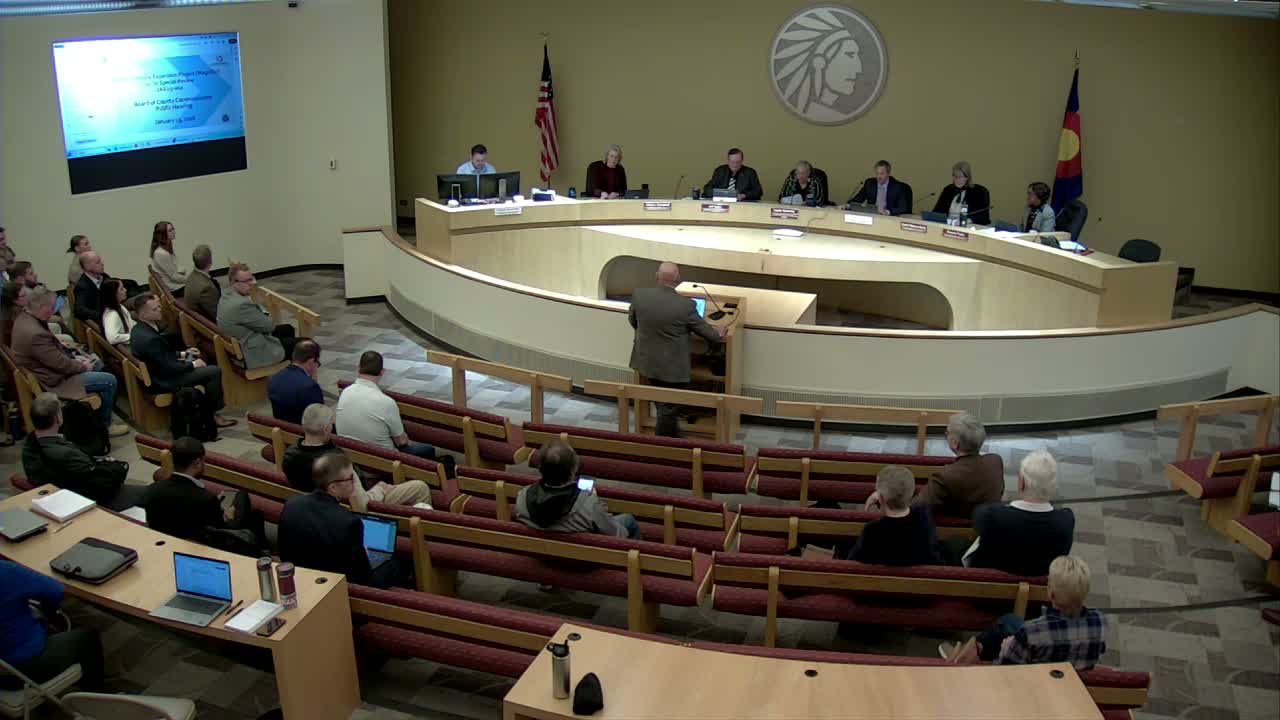
The Arapahoe County Board of Commissioners on Jan. 13 conditionally approved a use-by-special-review for the Magellan/1 Oak Denver Pipeline Expansion Project, motioning to adopt staff’s resolution and the conditions negotiated with the applicant and county divisions.
The board approved the permit following staff presentations, a multi-part applicant briefing and a lengthy round of commissioner questions focused on routing through county open space, monitoring and emergency response. Ernie Rose, senior planner, summarized staff’s recommendation and noted the project traverses roughly 32–33 miles in Arapahoe County and would impact about 360 county acres. Jason Brinkley, legal counsel for Magellan/1 Oak, told the board the 1973 line will remain in service and the new pipeline is being laid adjacent within existing easements to provide additional capacity and redundancy for the Denver metro area.
Why it matters: 1 Oak and Magellan said the project is intended primarily to increase jet-fuel capacity and resilience for Denver International Airport and to reduce truck deliveries. Commissioners and the county’s Open Space director pressed the applicant on how construction and future repairs would avoid or minimize damage to Bijou Creek and adjacent cottonwood stands.
Applicant and operations details: Company representatives described safety and monitoring systems they said will be used, including hydrostatic testing, automated shutdown and pressure monitoring, inline inspection tools sometimes called “smart pigs,” and a 24/7 SCADA control room. Joe Butler, 1 Oak vice president of operations and engineering, said the firm conducts extensive weld inspection and post-construction integrity monitoring: “We 100% x‑ray all of our welds, out in the field,” he told the board, adding that the company schedules regular smart-pig inspections and aerial patrols.
Open-space protections and restoration: County Open Space Director Jenny Pingenau told the board staff negotiated recording a use-and-restoration agreement that must be in place before executing the use-by-special-review; provisions include surface restoration requirements, removal of construction debris, responsibility for tree loss replacement and a restoration bond. Pingenau said the draft terms require Magellan to restore disturbed areas and reimburse the county if restoration work does not meet agreed thresholds.
Emergency response and leak detection: Commissioners asked how quickly the operator would detect large and small leaks. Joe Butler and other operations staff described a compensated volume-balance leak-detection system that can flag large leaks within minutes and smaller anomalies over a longer window, and they said emergency response drills with local fire departments are part of the operator’s program.
Public comment and record: Representatives of Denver International Airport and the airport fuel consortium, United Airlines, and multiple residents who live along the route supported the project, citing supply resilience and economic benefits. Open Space staff and several commissioners emphasized that approval hinged on conditions to protect Bijou Creek and to require firm commitments on restoration and communications.
The board’s action: Commissioner Warren Gully moved to conditionally approve the use-by-special-review (case UASI25Dash002); the motion was seconded and passed by voice vote. The resolution and conditions recorded in the staff packet and the recorded agreement with Open Space are the operative documents for county approval.
Next steps: County staff will record the use-and-restoration agreement and finalize exhibits with the applicant before construction within county open space areas begins. The applicant stated its target in-service date for the larger multi-state project is August 2026.