Get Full Government Meeting Transcripts, Videos, & Alerts Forever!
Get email alerts on the Montezuma Carbon Hub topic
No spam. Unsubscribe anytime.
Residents and environmental groups tell Solano supervisors to oppose Montezuma Carbon Hub carbon‑capture plan, citing safety and marsh risks
Summary
Multiple speakers at the county meeting urged the Board to stop a proposed plan to pipeline and inject concentrated CO2 near the Suisun Marsh, warning of leak risks, lethal plumes and threats to wildlife and drinking water; the project proponent had not provided required answers to county questions according to public testimony.
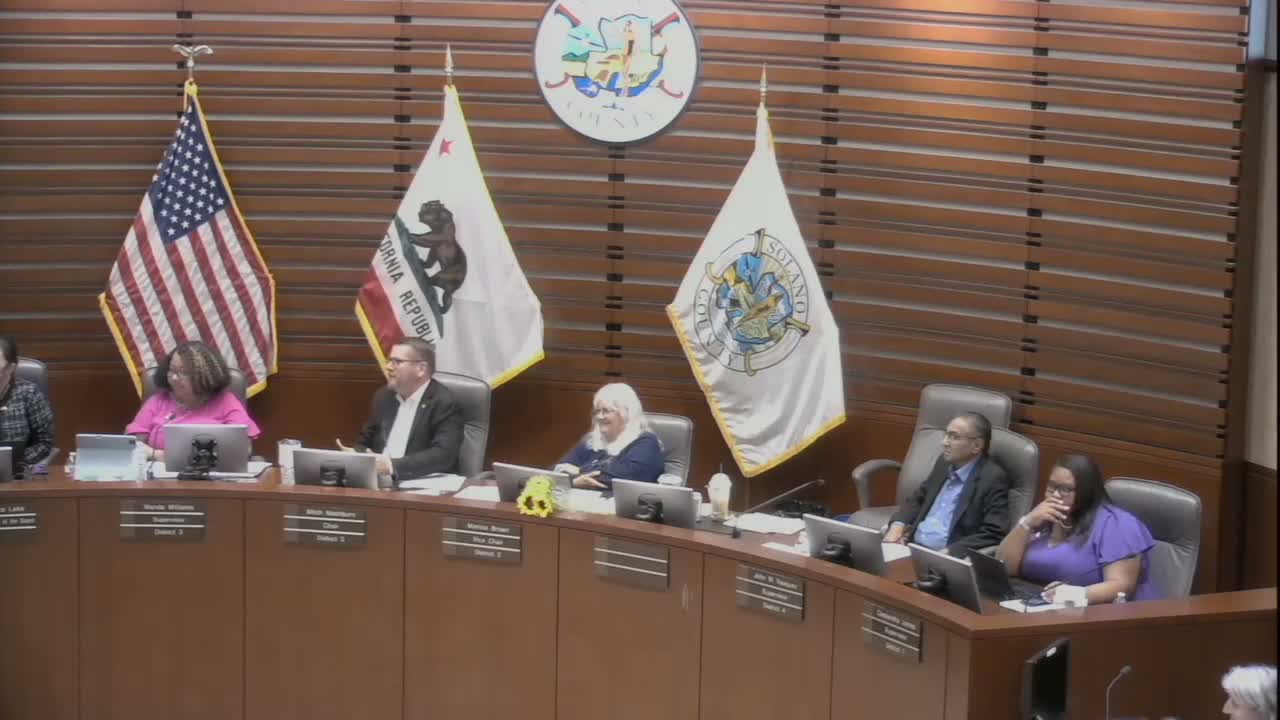
A string of public commenters at the Solano County Board of Supervisors’ Sept. 9 meeting urged elected leaders to oppose the Montezuma Carbon Hub proposal, a plan described by speakers as moving concentrated carbon dioxide from refineries for underground injection near the Montezuma Hills and Suisun Marsh.
Opponents' case: Several residents and regional advocates cited public‑safety and ecological risks from CO2 transport and underground injection. ‘‘The proximity of the proposed site poses danger to the residents of Solano County because of possible pipeline leaks, which would produce lethal compressed CO2 dead zones,’’ said Steve Federally, who identified himself as a Solano County resident. Bonnie Hamilton, a pediatrician, told the board the project ‘‘poses grave health, safety and environmental risk, putting our communities, wildlife and wetlands in harm’s way.’’ Others noted the developer had not answered county questions requested months earlier.
Why it matters: Concentrated CO2 (not the ambient gas in air) can act as an asphyxiant in high concentrations and has different hazard characteristics from hydrocarbon pipelines, speakers said. Several cited past incidents and argued county oversight and a robust regulatory review are required before any application moves forward.
Developers, timeline and county context: Public commenters said Montezuma LLC (project proponent) has submitted only partial information, and urged the county to insist on complete responses and thorough review. County staff clarified that the CO2 pipeline application itself was not an agenda item for this meeting; nevertheless, the issue drew sustained attention during the public‑comment period and was cited by other speakers as a reason to scrutinize any rapid legislative changes that could alter local review powers.
Board response: Board members acknowledged the public concerns and noted the project was not on the agenda; staff repeatedly told speakers that outstanding county questions to the developer remained unanswered. No formal county action on the Montezuma project was taken at the meeting.
Next steps: Speakers asked the supervisors to use their legislative and regulatory leverage to require complete responses from proponents and to keep county authority for environmental, land‑use and emergency‑response reviews intact.