Get Full Government Meeting Transcripts, Videos, & Alerts Forever!
Get email alerts on the Executive Session topic
No spam. Unsubscribe anytime.
Councilmember moves to enter executive session on potential litigation
Summary
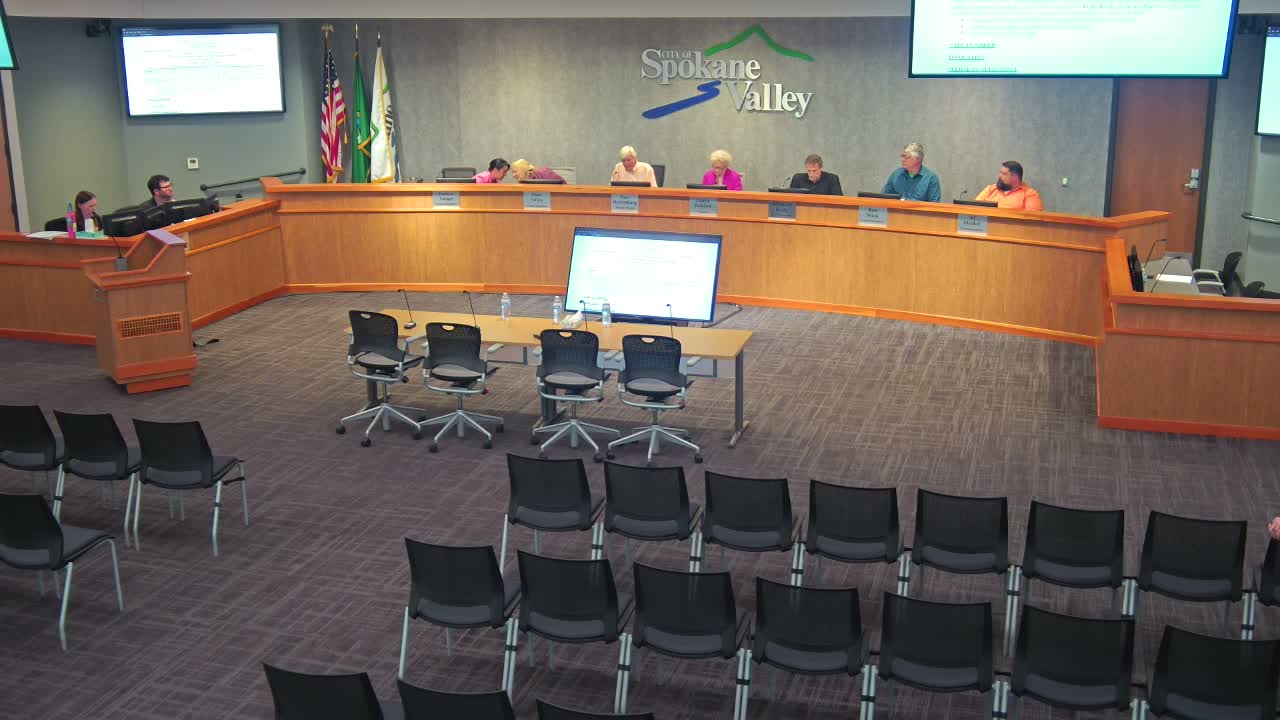
At a special Spokane Valley City Council meeting on April 28, 2026, a councilmember moved that the council adjourn into an approximately 45-minute executive session to discuss potential litigation; the motion passed unanimously and the recording was stopped.
A Spokane Valley City Council special meeting on April 28, 2026, adjourned into an executive session after a councilmember moved that the council convene for about 45 minutes to discuss potential litigation and that no action would be taken upon return to open session.
The motion was introduced by a councilmember (S1), who said, "I move council adjourn into executive session for approximately 45 minutes to discuss potential litigation and no action will be taken upon return to open session." The presiding officer (S2) noted a second and called for a voice vote.
The presiding officer declared the vote unanimous, saying, "It is unanimous." Following that announcement, the presiding officer stated, "We are adjourned to executive session," and the public recording was stopped. The transcript contains no public details of the executive session discussion; by law, executive sessions discussing litigation are not part of the public record.
Before the motion, the presiding officer asked Marcy to call the roll and named the mayor and council seats; responses were recorded as present. No formal votes on ordinances or other actions in open session were recorded in the public transcript.
The council moved into executive session with no further public action noted. The public record ends when the recording was stopped; no subsequent open-session actions or outcomes are provided in the transcript.